
DL snippet HL
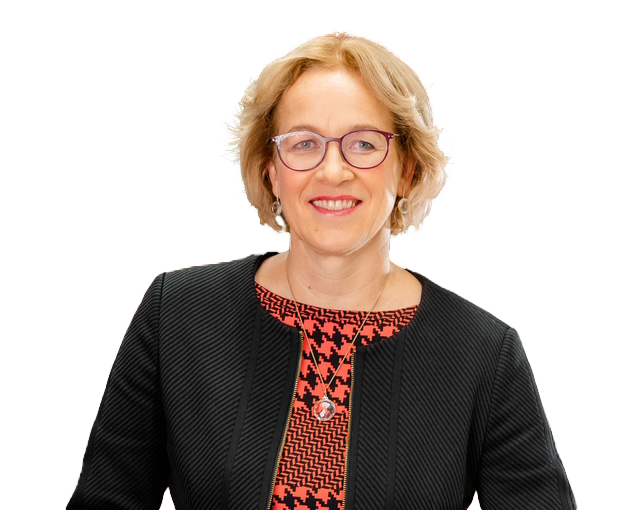
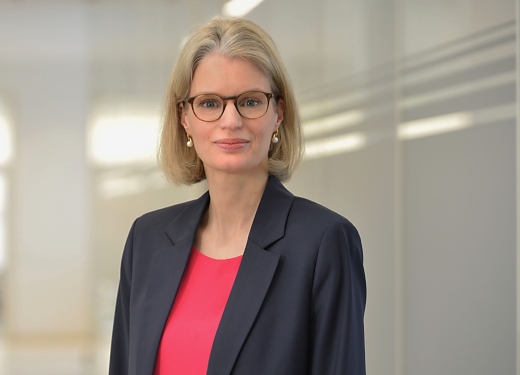
Anke Schmidt (55) has been appointed Head of Corporate Communications at Fresenius, effective June 1, 2025. She will succeed Dennis Hofmann, who has headed the global communications function at Fresenius since September 2022 and has decided to leave the company on his own request to pursue new opportunities. Anke Schmidt will report directly to the CEO of Fresenius, Michael Sen.
“With Anke Schmidt we have won an internationally experienced and highly recognized communications expert for Fresenius. With her many years of experience at DAX 40 companies, she will further strengthen our positioning as a leading global healthcare company and continue to build our brand, while also driving the strategic development of the communications function. Especially in this current phase of #FutureFresenius, Rejuvenate, it is about setting new impulses to shape an innovative, relevant, and sustainably successful Fresenius,” says Michael Sen, CEO of Fresenius. “Dennis Hofmann has reorganized and strengthened the global communications function at Fresenius in recent years. Under his leadership, the communications team played a decisive role in positioning Fresenius in the initial phase of its transformation. I would like to sincerely thank him for his great work and commitment and to wish him all the best for his future endeavors.”
Before joining Fresenius, Anke Schmidt served as Global Vice President Corporate Communications & Government Relations at Beiersdorf from 2020 onwards. Prior to that, she spent 24 years in various senior roles in Communications, Government Relations, and Human Resources at BASF, both in Germany and abroad. From 2016 to 2020, she was responsible for BASF Group’s Corporate Communications & Government Relations. Anke Schmidt studied French, economics, and political science at the University of Hamburg and the Université de Nantes in France.
# # #
Fresenius SE & Co. KGaA (Frankfurt/Xetra: FRE) is a global healthcare company headquartered in Bad Homburg v. d. Höhe, Germany. In the 2024 fiscal year, Fresenius generated €21.5 billion in annual revenue. Fresenius currently counts over 176,000 employees. The Fresenius Group comprises the operating companies Fresenius Kabi and Fresenius Helios as well as an investment in Fresenius Medical Care. With around 140 hospitals and countless outpatient facilities, Fresenius Helios is the leading private hospital operator in Germany and Spain, treating around 26 million patients every year. Fresenius Kabi’s product portfolio touches the lives of 450 million patients annually and includes a range of highly complex biopharmaceuticals, clinical nutrition, medical technology, and intravenous generic drugs and fluids. Fresenius was established in 1912 by the Frankfurt pharmacist Dr. Eduard Fresenius. After his death, Else Kröner took over management of the company in 1952. She laid the foundations for a global enterprise that today pursues the goal of improving people’s health. The largest shareholder is the non-profit Else Kröner-Fresenius Foundation, which is dedicated to advancing medical research and supporting humanitarian projects.
For more information visit the Company’s website at www.fresenius.com.
Visit our media center: www.fresenius.com/media-center
This release contains forward-looking statements that are subject to various risks and uncertainties. Future results could differ materially from those described in these forward-looking statements due to certain factors, e.g. changes in business, economic and competitive conditions, regulatory reforms, results of clinical trials, foreign exchange rate fluctuations, uncertainties in litigation or investigative proceedings, the availability of financing and unforeseen impacts of international conflicts. Fresenius does not undertake any responsibility to update the forward-looking statements in this release.
Fresenius SE & Co. KGaA
Registered Office: Bad Homburg, Germany / Commercial Register: Amtsgericht Bad Homburg, HRB 11852
Chairman of the Supervisory Board: Wolfgang Kirsch
General Partner: Fresenius Management SE
Registered Office: Bad Homburg, Germany / Commercial Register: Amtsgericht Bad Homburg, HRB 11673
Management Board: Michael Sen (Chairman), Pierluigi Antonelli, Sara Hennicken, Robert Möller, Dr. Michael Moser
Chairman of the Supervisory Board: Wolfgang Kirsch
Fresenius announced today that the internationally experienced and highly recognized communications expert Anke Schmidt has been appointed Head of Corporate Communications at Fresenius, effective June 1, 2025. She will succeed Dennis Hofmann, who headed the global communications function at Fresenius since September 2022 and has decided to leave the company on his own request to pursue new opportunities.
Anke Schmidt joins Fresenius from Beiersdorf, where she has served as Global Vice President Corporate Communications & Government Relations since 2020. Prior to that, she held various senior roles in Communications, Government Relations, and Human Resources at BASF over a period of 24 years, both in Germany and abroad.
Fresenius announced today that the Committee for Medicinal Products for Human Use (CHMP) of the European Medicines Agency (EMA) has issued a positive opinion for its denosumab biosimilar candidates for the treatment of osteoporosis and other bone-related conditions.
The biosimilars are recommended for approval for all indications of the reference products 1Prolia® (denosumab) and 2Xgeva® (denosumab) from AMGEN.
The CHMP positive opinion marks an important step in Fresenius Kabi's efforts to enhance patient access to biosimilar products and expand its capabilities and portfolio in biosimilars development. Developing the company's Biopharma platform is a key element of #FutureFresenius.
1Prolia® and 2Xgeva® are registered trademarks of Amgen Inc.
Fresenius announced today that the Committee for Medicinal Products for Human Use (CHMP) of the European Medicines Agency (EMA) has issued a positive opinion for its denosumab biosimilar candidates for the treatment of osteoporosis and other bone-related conditions.
The biosimilars are recommended for approval for all indications of the reference products 1Prolia® (denosumab) and 2Xgeva® (denosumab) from AMGEN.
The CHMP positive opinion marks an important step in Fresenius Kabi's efforts to enhance patient access to biosimilar products and expand its capabilities and portfolio in biosimilars development. Developing the company's Biopharma platform is a key element of #FutureFresenius.
1Prolia® and 2Xgeva® are registered trademarks of Amgen Inc.