
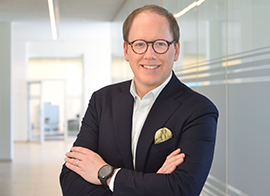
The Fresenius Supervisory Board has unanimously extended ahead of schedule the mandate of CEO Michael Sen (57) by five years. This will help to ensure continuity in the company’s leadership for the next phase in its #FutureFresenius strategy. His contract will now run until 2031.
Wolfgang Kirsch, Chair of the Supervisory Board of Fresenius, said: “Michael Sen has been instrumental in driving the company’s development with #FutureFresenius in the past three years. Today, Fresenius is more innovative and relevant – well positioned to leverage the significant opportunities in the healthcare industry. Michael Sen and his team have placed Fresenius on a growth path offering long-term profitability that benefits all stakeholders. We want to maintain this continuity. Both the Supervisory Board and I personally look forward to continuing our collaboration in the coming years.”
“I would like to thank the Supervisory Board for its trust and look forward to continuing to work with all Supervisory Board members, my management team, and our outstanding employees as well as our customers, partners, and shareholders. Over the past few years, we have made the company more innovative while remaining focused on delivering profitable growth. Today, Fresenius is more relevant than ever before. We want to continue this success Seite 1/3 story. In times of fundamental change shaped by rapid advances in new technologies such as AI and a transactional world order, we bear even greater responsibility as a leading global healthcare company. Now more than ever, our goal is to provide high-quality, reliable healthcare while making healthcare systems even more efficient and resilient,” adds Michael Sen, CEO of Fresenius.
Dr. Christian Pawlu succeeds Robert Möller
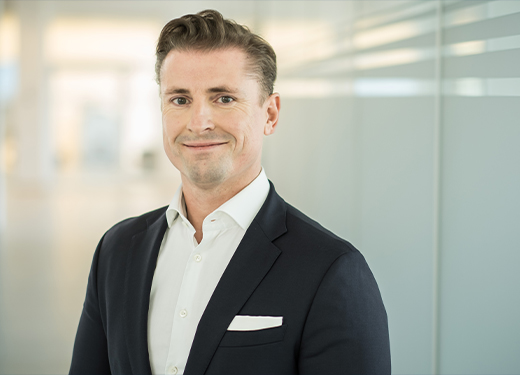
The Fresenius Supervisory Board has also unanimously appointed Dr. Christian Pawlu (48) to the Fresenius Management Board, effective July 1, 2026. He will oversee the businesses of Fresenius Helios, which includes the two private hospital chains, Quirónsalud in Spain and Helios Kliniken in Germany. He will succeed Robert Möller (59) on the Management Board, who will establish the company’s Office of the Management in Berlin and Brussels.
“On behalf of the Supervisory Board, I would like to sincerely thank Robert Möller for the excellent cooperation and successful leadership of Fresenius Helios in recent years. Through the formation of medical clusters and the focus on digitalization and excellent patient care, the two hospital chains are excellently positioned in Germany and Spain. I am therefore delighted that Robert Möller will continue to contribute his expertise to the company,” says Wolfgang Kirsch. He adds: “With Christian Pawlu, we have been able to acquire a physician and strategist with a broad international network for the Group’s Management Board. I am especially pleased that we could find an outstanding internal candidate who has already contributed significantly to the hospital business as Chief Operating Officer of Fresenius Helios. I wish Christian Pawlu a strong start in his new role.”
Michael Sen (57) has been CEO of Fresenius since October 1, 2022. He is also Chairman of the Supervisory Board of the listed dialysis provider Fresenius Medical Care. In April 2021, Michael Sen was appointed CEO of Fresenius Kabi. Before joining Fresenius, he was a member of the Management Board at Siemens AG, responsible for the healthcare and energy business. He took Siemens Healthineers public during this time. Prior to this, he was Chief Financial Officer at the energy group E.ON SE.
Dr. Christian Pawlu has been Chief Operating Officer (COO) of Helios in Germany since March 2025, and in September 2025 expanded his responsibilities as COO of Fresenius Helios including Helios in Germany and Quirónsalud in Spain. Prior to this, he served as Head of Corporate Development at Fresenius after joining Fresenius Kabi in Bad Homburg as Head of Corporate Development in April 2021. Page 2/3 From 2022 to 2025, he was a member of the Supervisory Board of the Fresenius subsidiary mAbxience, based in Spain. In his early career, Christian Pawlu was a member of Sandoz Group AG’s Executive Board, CEO of a private high-tech start-up, and a partner at McKinsey & Company management consultancy.
This release contains forward-looking statements that are subject to various risks and uncertainties. Future results could differ materially from those described in these forward-looking statements due to certain factors, e.g. changes in business, economic and competitive conditions, regulatory reforms, results of clinical trials, foreign exchange rate fluctuations, uncertainties in litigation or investigative proceedings, the availability of financing and unforeseen impacts of international conflicts. Fresenius does not undertake any responsibility to update the forward-looking statements in this release.
Fresenius SE & Co. KGaA Registered Office: Bad Homburg, Germany / Commercial Register: Amtsgericht Bad Homburg, HRB 11852
Chairman of the Supervisory Board: Wolfgang Kirsch
General Partner: Fresenius Management SE Registered Office: Bad Homburg, Germany / Commercial Register: Amtsgericht Bad Homburg, HRB 11673 Management Board: Michael Sen (Chairman), Pierluigi Antonelli, Sara Hennicken, Robert Möller, Dr. Michael Moser
Chairman of the Supervisory Board: Wolfgang Kirsch
Fresenius Kabi, an operating company of Fresenius, has entered a first-of-its-kind partnership with U.S. manufacturer Phlow Corp. to establish a fully domestic, end-to-end supply chain for Epinephrine Injection, USP — an FDA designated essential medicine frequently at risk of shortage in the United States.
Under the collaboration, Phlow will produce the U.S.-based API, while Fresenius Kabi manufactures the finished doses for hospitals and clinics across the country. With this initiative, Fresenius advances its local-for-local manufacturing strategy and supports national efforts to strengthen pharmaceutical security. The partnership reinforces the ambitions of #FutureFresenius as it expands Fresenius’ role as a leading global provider of lifesaving therapies, advancing resilient manufacturing that improves patient care and health-system stability.
Pending regulatory approvals, epinephrine produced through this collaboration could be available to U.S. hospitals in 2027.
SAP and Fresenius today announced that both companies intend to enter a strategic partnership to accelerate innovation for stronger digital healthcare delivery. Together, the companies plan to create the digital backbone for a sovereign, interoperable, and AI-supported healthcare system. The solutions will combine the expertise of Fresenius, one of the world’s largest healthcare companies, with future-oriented SAP technologies and meet high requirements for data sovereignty, security, and regulatory compliance. The plan is to provide an open, integrated, and data‑driven digital health ecosystem that enables hospitals and medical facilities worldwide to use AI securely and to handle health data responsibly.
Digital sovereignty for healthcare
SAP and Fresenius plan to jointly build an individual, scalable healthcare platform that enables connected, data-driven healthcare processes. Based on this, the companies will develop joint, future-oriented, and AI-supported healthcare solutions to sustainably increase quality, transparency, and efficiency across the entire care chain and set new standards for digital innovation in the healthcare sector. The foundation will be proven SAP technologies and products such as SAP Business Suite, SAP Business Data Cloud (SAP BDC), SAP Business Technology Platform (SAP BTP), and SAP Business AI. These core elements help create a unified, compliant, open, and expandable base for the more-secure exchange and use of data as well as for operating AI models in a controlled environment.
Together, the companies also plan to build a sovereign, European solution for an integrated healthcare ecosystem that supports the integration of modern hospital information systems (HIS) based on SAP’s “AnyEMR” strategy. Interfaces based on open industry standards such as HL7 FHIR will enable the more-seamless connection of HIS, electronic medical records (EMRs), and other medical applications.
“Together with SAP, we can accelerate the digital transformation of the German and European healthcare systems and enable a sovereign European solution that is so important in today’s global landscape. We are making data and AI everyday companions that are secure, simple, and scalable for doctors and hospital teams. This creates more room for what truly matters: caring for patients,” says Michael Sen, CEO of Fresenius.
“With SAP’s leading technology and Fresenius’ deep healthcare expertise, we aim to create a sovereign, interoperable healthcare platform for Fresenius worldwide. Together, we want to set new standards for data sovereignty, security, and innovation in healthcare. Thanks to SAP, Fresenius can harness the full potential of digital and AI-supported processes and sustainably improve patient care,” says Christian Klein, CEO and Member of the Executive Board of SAP SE.
As part of the joint transformation project, both companies plan to invest a mid three-digit million euro amount in the medium term to consistently drive the digital transformation of the German and European healthcare system through the use of digital and AI-supported solutions.
The partnership is implemented through several forms of collaboration. These include joint investments in startups and scaleups, joint technological developments, and close cooperation within coordinated governance structures between the two companies.
This release contains forward-looking statements that are subject to various risks and uncertainties. Future results could differ materially from those described in these forward-looking statements due to certain factors, e.g. changes in business, economic and competitive conditions, regulatory reforms, results of clinical trials, foreign exchange rate fluctuations, uncertainties in litigation or investigative proceedings, the availability of financing and unforeseen impacts of international conflicts. Fresenius does not undertake any responsibility to update the forward-looking statements in this release.
Fresenius has entered into a strategic development agreement with TQ Therapeutics to support the scalable and efficient manufacturing of cell and gene therapies, strengthening its role in advancing next generation treatments.
Under the agreement, operating company Fresenius Kabi receives an exclusive license to integrate TQ Therapeutics’ proprietary cell selection technology into its Cue® Cell Processing System. The combined solution aims to isolate high purity T cells in less than two hours, helping therapy developers streamline processes and accelerate development.
The collaboration is in line with Fresenius’ #FutureFresenius strategy to focus on high value healthcare platforms, strengthen core technologies, and improve patient access through operational excellence and innovation.
By enabling more automated, robust, and scalable cell therapy manufacturing, Fresenius Kabi and TQ Therapeutics aim to support the broader adoption of cell and gene therapies, including applications closer to the point of care.
mAbxience, a Fresenius entity, has entered into a collaboration with HP Inc. to develop an artificial intelligence (AI) solution aimed at making biomanufacturing more efficient and reliable.
The joint project uses AI and digital-twin technology to model and optimize key steps in the production of monoclonal antibodies and biosimilars. By simulating critical cell-culture parameters and predicting process outcomes, the system is designed to support more consistent yields, faster development cycles, and better control of large-scale manufacturing environments. This is a showcase of Fresenius’ pathway in leveraging AI and digital solutions, from production and supply-chain to care delivery, improving treatment quality, and expanding access to state-of-the-art therapies.
Both partners view the technology as a significant step toward more data-driven and tightly managed bioproduction. The prototype, developed with real manufacturing data and validated in an industrial setting, enables teams to test scenarios virtually before applying them on the shop floor.
This initiative is the first project under a broader strategic framework between HP and mAbxience at its manufacturing facility in Leon, Spain, and has the potential to be rolled out across additional sites. It represents another milestone in advancing Fresenius’ (Bio)Pharma platform and supports the goals of #FutureFresenius.
Fresenius in Spain
The global healthcare company Fresenius is deeply rooted in Spain. With Quirónsalud, the country’s leading hospital operator, and Fresenius Kabi, offering essential medicines and technologies for critically and chronically ill patients, the company makes a decisive difference in the life-quality of Spanish citizens. With the majority acquisition of mAbxience in 2022, Fresenius created a dedicated and vertically integrated biosimilars development and manufacturing platform. In line with its #FutureFresenius strategy, the company is further scaling in (Bio)Pharma to deliver simplification and drive efficiencies, underscoring its commitment to offering accessible, innovative, and high-quality healthcare solutions.
Fresenius announced today the launch of its denosumab biosimilars, Conexxence®1 (denosumab) and Bomyntra®2 (denosumab), in Europe.
These biosimilars received approval from the European Commission in July 2025 for all indications of the reference products Prolia®3 (denosumab) and Xgeva®4 (denosumab), respectively.
“Being the first biosimilar company with a pre-filled syringe for the denosumab oncology indication in Europe, showcases our commitment to offering new treatment options that support patient care and affordability across Europe,” said Dr. Sang Jin Pak, President Biopharma.
This milestone marks the next step in the company’s ambition to drive accessibility to high-quality biosimilar therapies, with multiple molecules in early and late-stage development. By continuing its successful track record in the biosimilars space, Fresenius further strengthens its (Bio)Pharma platform, a key pillar of the #FutureFresenius strategy.
1. Conexxence® is a registered trademark of Fresenius Kabi Deutschland GmbH in selected countries.
2. Bomyntra® is a registered trademark of Fresenius Kabi Deutschland GmbH in selected countries.
3. Prolia® is a registered trademarks of Amgen Inc.
4. Xgeva® is a registered trademarks of Amgen Inc.
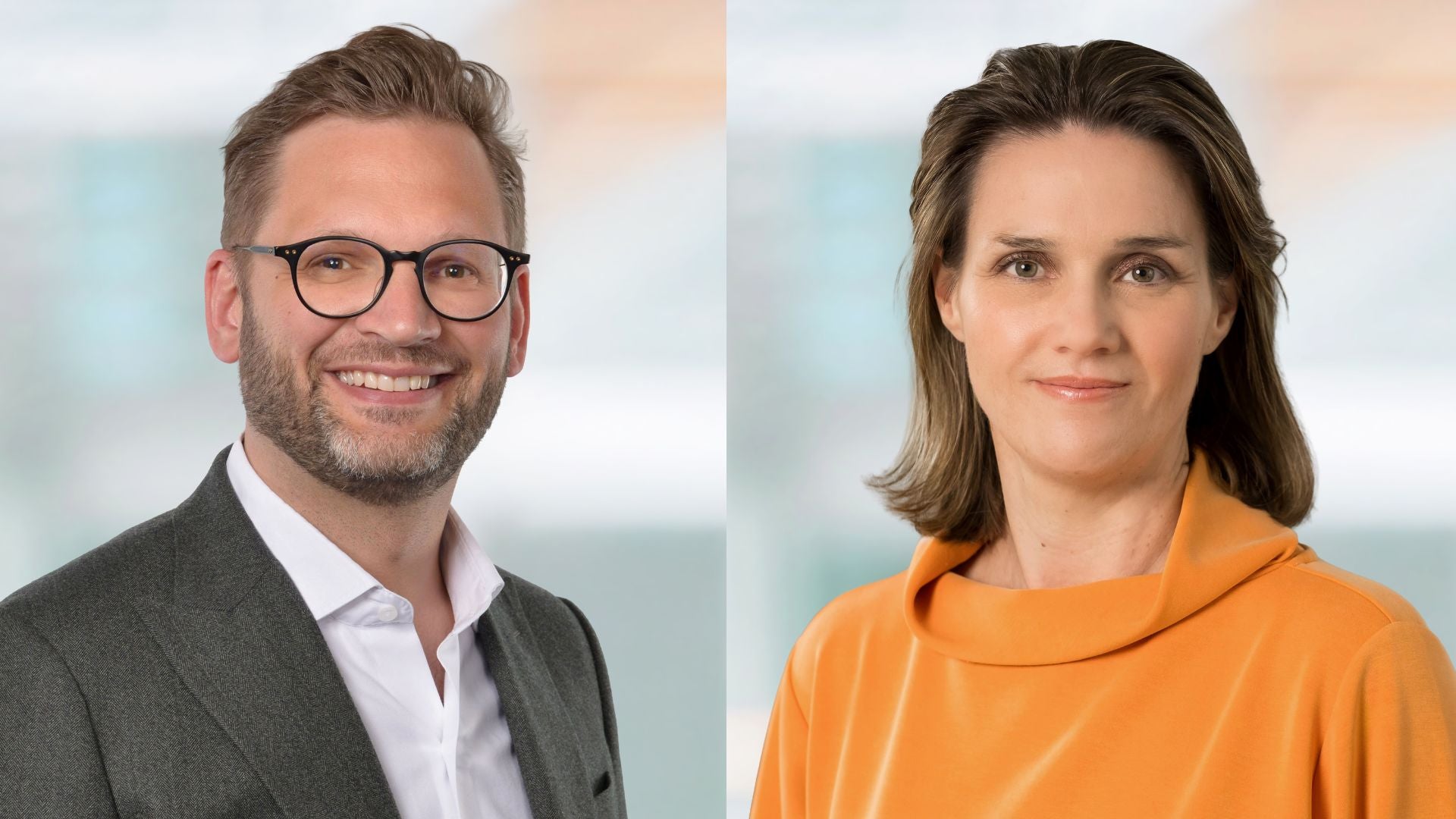
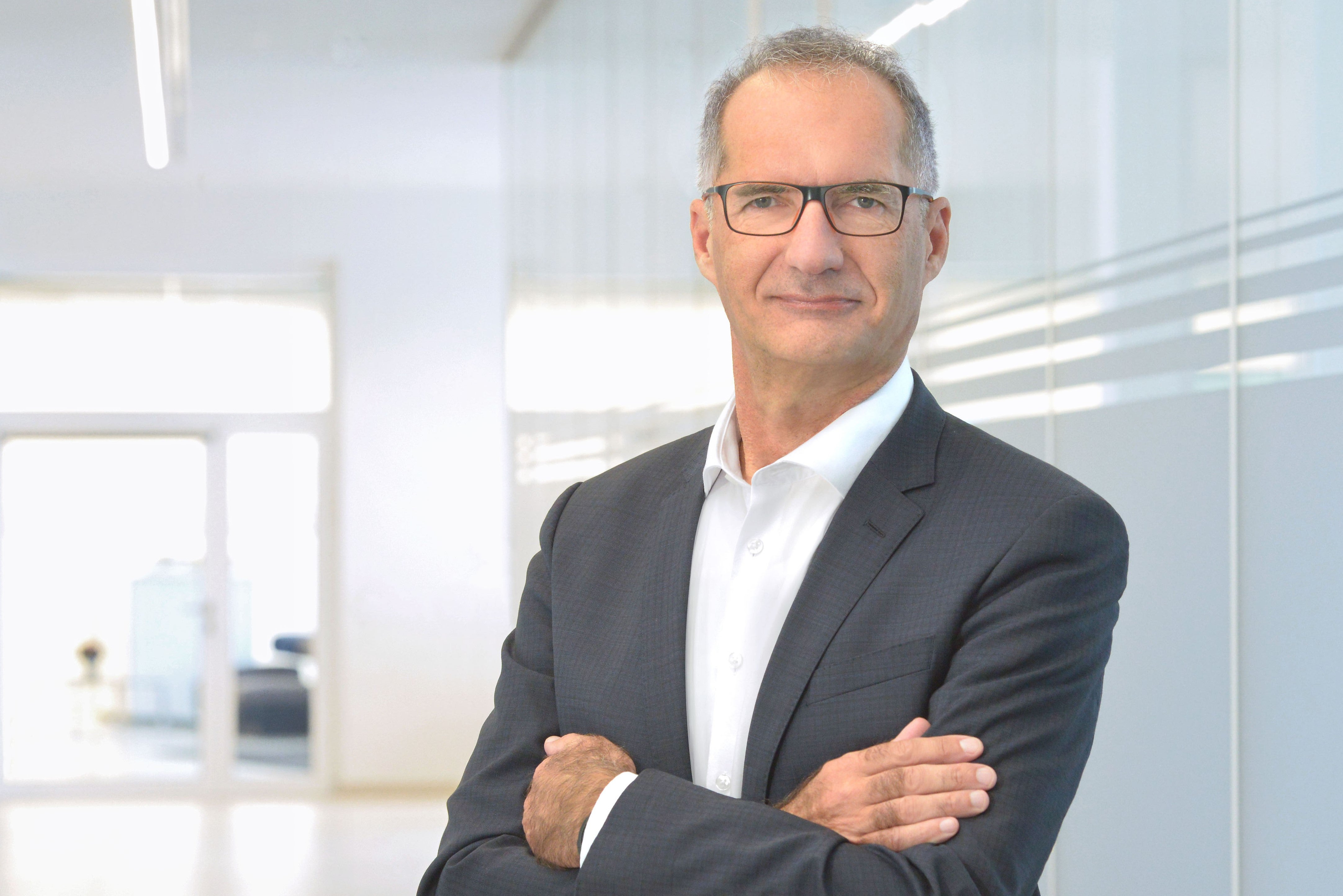
Effective immediately, Katrin Kerner (44) and Christian Wagner (39) will assume joint leadership of Group Communications at Fresenius. Both will assume the role on an interim basis and in addition to their current responsibilities as Head of CEO Relations and Head of Board Office. They will report directly to Fresenius CEO Michael Sen and succeed Anke Schmidt, who has led the communications function since June 2025 and has decided to leave the company at her own request.
“On behalf of the Management Board, I would like to express my sincere thanks to Anke Schmidt for her work and commitment. She has made an important contribution in a short period of time. We wish her all the best for her future endeavors”, says Michael Sen, CEO of Fresenius. “I am very pleased that Katrin Kerner and Christian Wagner will jointly assume this responsibility as a leadership team. Both have a deep understanding of the healthcare industry and are already actively shaping the strategic and cultural transformation of our company through #FutureFresenius. With their extensive experience in communications, finance, and corporate transformations at DAX-listed companies, they will further develop the communications function at Fresenius and continue to strengthen our brand.”
Katrin Kerner has been with Fresenius since 2023 and has served as Head of CEO Relations since 2024. In this role, she prepares CEO briefings, coordinates strategic company positions, and manages global partnerships. Before joining Fresenius, she held several leadership positions in communications functions at Siemens, Siemens Healthcare (today Siemens Healthineers), and Siemens Energy, including Head of Employee Communications at Siemens and Head of Executive Messages at Siemens Energy. During this time, she was actively involved in the IPO of Siemens Healthineers and the spin-off of Siemens Energy. Katrin Kerner studied Economics at the Friedrich-Alexander University Erlangen-Nürnberg and International Management at the Turku School of Economics in Finland.
Christian Wagner joined Fresenius in 2017, became Head of Corporate Finance in 2019, and has served as Head of Board Office since 2023. In this function, he plays a key role in steering and advancing Fresenius’s strategic direction. He is also responsible for Corporate Security. Before joining Fresenius, Christian Wagner worked in investment banking at Berenberg and at a subsidiary of Deutsche Bahn. He studied Finance at Goethe University Frankfurt and the Institut Supérieur du Commerce (ISC) in Paris, France.
This release contains forward-looking statements that are subject to various risks and uncertainties. Future results could differ materially from those described in these forward-looking statements due to certain factors, e.g. changes in business, economic and competitive conditions, regulatory reforms, results of clinical trials, foreign exchange rate fluctuations, uncertainties in litigation or investigative proceedings, the availability of financing and unforeseen impacts of international conflicts. Fresenius does not undertake any responsibility to update the forward-looking statements in this release.
Fresenius SE & Co. KGaA
Registered Office: Bad Homburg, Germany / Commercial Register: Amtsgericht Bad Homburg, HRB 11852
Chairman of the Supervisory Board: Wolfgang Kirsch
General Partner: Fresenius Management SE
Registered Office: Bad Homburg, Germany / Commercial Register: Amtsgericht Bad Homburg, HRB 11673
Management Board: Michael Sen (Chairman), Pierluigi Antonelli, Sara Hennicken, Robert Möller, Dr. Michael Moser
Chairman of the Supervisory Board: Wolfgang Kirsch
The German Association for Financial Analysis and Asset Management (DVFA) Scorecard for Corporate Governance serves as an important benchmark for assessing governance standards among DAX 40 companies in Germany. Fresenius has reached 2nd place in this year’s ranking – a significant leap from last year and thus the largest climb of all companies evaluated. This recognition reflects the significant progress made to further strengthen the company’s governance structures as part of the #FutureFresenius strategy.
Fresenius Kabi, part of the global healthcare company Fresenius, announced today it has received two awards for supply and service excellence from Vizient®, the largest provider-driven healthcare performance improvement company in the U.S.
The Supplier of the Year Awards recognize outstanding suppliers by category that support Vizient’s mission to strengthen providers’ delivery of better, more affordable care.
“These awards from Vizient are an important acknowledgment of the company’s commitment to long-term, sustainable drug supply,” said Arun Verma, president, Fresenius Kabi USA and a member of the Executive Leadership Team at Fresenius Kabi AG. “The Vizient Supply Assurance award is especially gratifying as it recognizes our efforts to assure continuity of supply for essential medicines and technologies."
The rate of change, a key parameter for determining the price increase for the reimbursement of hospital treatments in 2026 in Germany, has been set at 5.17%. The change in hospital costs is the other parameter used in the annual determination of the reimbursement increase. The final DRG inflator should be determined at the latest by the end of the year.