
Helios Germany has published its first sustainability report. Oriented to the internationally established standards of the Global Reporting Initiative, this 60-page document outlines the four main target groups and areas that Germany’s largest private hospital operator has defined for its sustainability strategy: Patients, employees, the environment and compliance. Along with numerous statistics and examples from Helios Germany hospitals, the report sets out the company’s goals for its future development. Titled ”Für eine gesunde Zukunft” (toward a healthy future), the report is now available in German on www.helios-gesundheit.de. An English version will be published soon.
Fresenius Helios is acquiring the Malteser Hospital (“MKHB”) in the western German city of Bonn. The 400-bed acute care hospital, with approximately 750 employees, treats approximately 13,000 patients annually. Its sales last year were about €66 million. Along with the hospital, Fresenius Helios will acquire two medical centers and a pharmacy with attached logistics center.
The MKHB offers a wide range of medical services, with specialties in general surgery, pulmonology and oncology, including palliative care. With certified centers for prostate, intestinal and lung cancers, it will superbly complement the existing Helios hospital in the neighboring city of Siegburg, which specializes in cardiovascular medicine and oncology.
Dr. Francesco De Meo, who is responsible for Helios on the Fresenius Management Board, said: “We are looking forward to working with the new colleagues, who will greatly strengthen our Helios team in North Rhine-Westphalia. With its medical offering, the MKHB is an outstanding fit for us and for our strategy of building specialized centers within regional clusters. Together with our existing facilities, we will be able to offer patients in this densely populated region even better medicine, tailored to meet their needs and all from a single provider.”
Fresenius Helios expects the acquisition, which is subject to approval by the German antitrust authorities, to close in the third quarter of this year. Following the closing, MKHB will be integrated into Helios Region West, which already includes 18 acute care hospitals, a rehabilitation clinic in Duisburg, several medical centers and three maximum care hospitals – in Duisburg and Krefeld, as well as the Helios University Hospital Wuppertal. Helios treats some 300,000 inpatients annually in the region, and is one of the largest healthcare employers in North Rhine-Westphalia and the adjoining state of Lower Saxony.
The seller is the Malteser humanitarian aid group. The parties have agreed not to disclose the purchase price. The acquisition will be accretive to Group earnings starting in 2021.
This release contains forward-looking statements that are subject to various risks and uncertainties. Future results could differ materially from those described in these forward-looking statements due to certain factors, e.g. changes in business, economic and competitive conditions, regulatory reforms, results of clinical trials, foreign exchange rate fluctuations, uncertainties in litigation or investigative proceedings, and the availability of financing. Fresenius does not undertake any responsibility to update the forward-looking statements in this release.
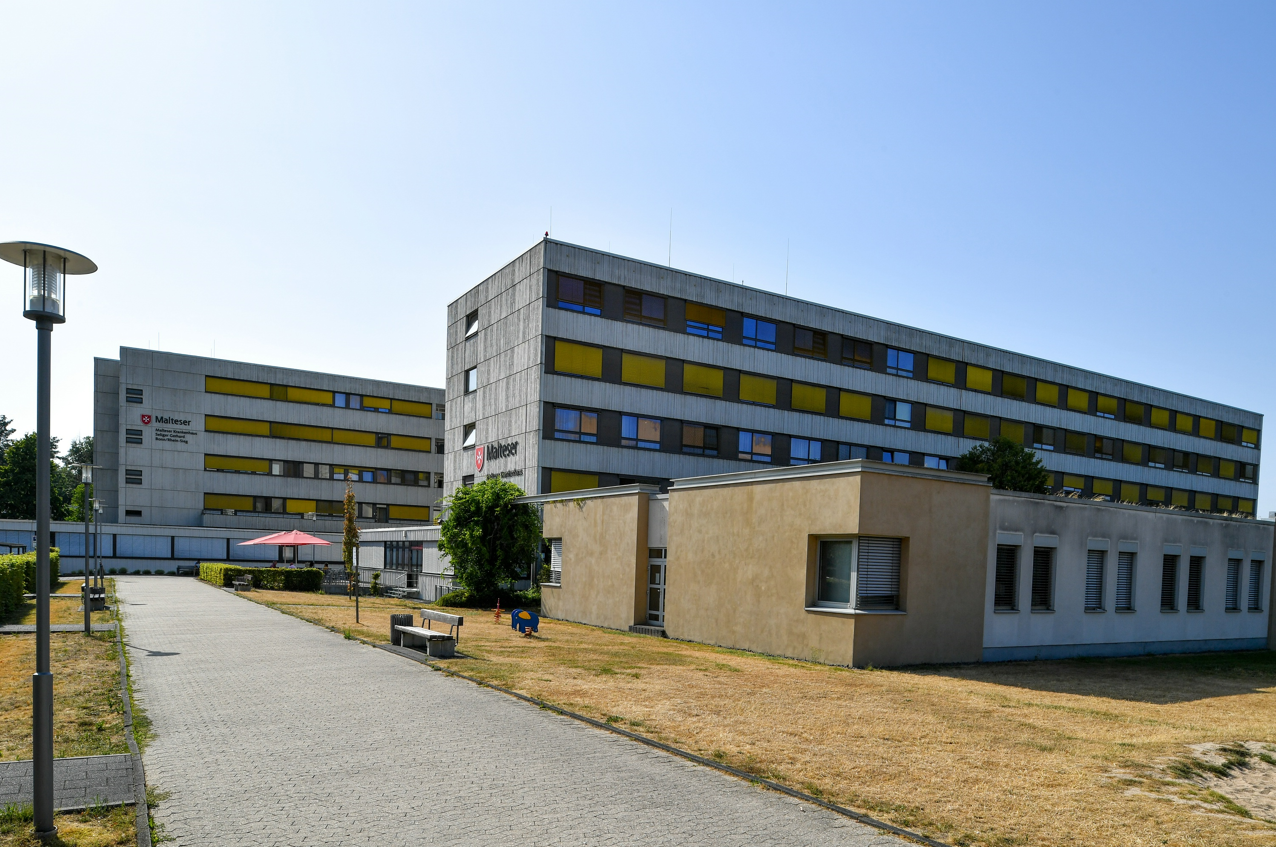
Fresenius Helios is acquiring the Malteser Hospital (“MKHB”) in the western German city of Bonn. The 400-bed acute care hospital, with approximately 750 employees, treats approximately 13,000 patients annually. Its sales last year were about €66 million. Along with the hospital, Fresenius Helios will acquire two medical centers and a pharmacy with attached logistics center.
The MKHB offers a wide range of medical services, with specialties in general surgery, pulmonology and oncology, including palliative care. With certified centers for prostate, intestinal and lung cancers, it will superbly complement the existing Helios hospital in the neighboring city of Siegburg, which specializes in cardiovascular medicine and oncology.
Dr. Francesco De Meo, who is responsible for Helios on the Fresenius Management Board, said: “We are looking forward to working with the new colleagues, who will greatly strengthen our Helios team in North Rhine-Westphalia. With its medical offering, the MKHB is an outstanding fit for us and for our strategy of building specialized centers within regional clusters. Together with our existing facilities, we will be able to offer patients in this densely populated region even better medicine, tailored to meet their needs and all from a single provider.”
Fresenius Helios expects the acquisition, which is subject to approval by the German antitrust authorities, to close in the third quarter of this year. Following the closing, MKHB will be integrated into Helios Region West, which already includes 18 acute care hospitals, a rehabilitation clinic in Duisburg, several medical centers and three maximum care hospitals – in Duisburg and Krefeld, as well as the Helios University Hospital Wuppertal. Helios treats some 300,000 inpatients annually in the region, and is one of the largest healthcare employers in North Rhine-Westphalia and the adjoining state of Lower Saxony.
The seller is the Malteser humanitarian aid group. The parties have agreed not to disclose the purchase price. The acquisition will be accretive to Group earnings starting in 2021.
This release contains forward-looking statements that are subject to various risks and uncertainties. Future results could differ materially from those described in these forward-looking statements due to certain factors, e.g. changes in business, economic and competitive conditions, regulatory reforms, results of clinical trials, foreign exchange rate fluctuations, uncertainties in litigation or investigative proceedings, and the availability of financing. Fresenius does not undertake any responsibility to update the forward-looking statements in this release.
Fresenius Helios has developed a secure and highly effective process for purifying medical protective masks so they can be safely reused. It is being employed for FFP2- and FFP3-type masks, which help protect medical and care personnel who are treating COVID-19 patients. Going well beyond the safety standard set out by the Robert Koch Institute, Germany’s government agency responsible for disease control and prevention, the process allows the purified masks to be used by any staff member – not just the previous user. Starting immediately, Helios Germany’s hospitals can purify 8,000 masks daily using the process, which was developed with the support of Fresenius Vamed and Fresenius Medical Care. The company has chosen not to commercialize the process and is making complete information about it available online, free of charge.
Fresenius Helios has developed a secure and highly effective process for purifying medical protective masks so they can be safely reused. It is being employed for FFP2- and FFP3-type masks, which help protect medical and care personnel who are treating COVID-19 patients. Going well beyond the safety standard set out by the Robert Koch Institute, Germany’s government agency responsible for disease control and prevention, the process allows the purified masks to be used by any staff member – not just the previous user. Starting immediately, Helios Germany’s hospitals can purify 8,000 masks daily using the process, which was developed with the support of Fresenius Vamed and Fresenius Medical Care. The company has chosen not to commercialize the process and is making complete information about it available online, free of charge.
To obtain and secure important data for research into SARS-CoV 2, Fresenius Helios has established a multi-center COVID-19 register. Since back in February a team of Helios experts, supported by the Brandenburg Medical School outside of Berlin, has been gathering pseudonymized data on patients treated for COVID-19 in Germany. The goal is to develop insights and knowledge for the battle against the new virus. First research findings from the project, which is scheduled to last a year and is financed by Helios, are now being readied for publication.
To obtain and secure important data for research into SARS-CoV 2, Fresenius Helios has established a multi-center COVID-19 register. Since back in February a team of Helios experts, supported by the Brandenburg Medical School outside of Berlin, has been gathering pseudonymized data on patients treated for COVID-19 in Germany. The goal is to develop insights and knowledge for the battle against the new virus. First research findings from the project, which is scheduled to last a year and is financed by Helios, are now being readied for publication.
- Helios Germany is increasing number of intensive care beds by two thirds
- Law to ease financial burden on hospitals likely to offset large part of sales losses and cost increases
- Digital healthcare offerings facilitate continuous medical care for chronically ill and rehabilitation patients
Helios Germany, Germany’s largest private hospital operator and part of the Fresenius Group, is undertaking comprehensive measures to combat the COVID-19 pandemic. In accordance with the German government’s request, surgical procedures are being delayed whenever medically justifiable. The freed-up capacity is reserved for the imminent treatment of COVID-19 patients. Postponed operations should be performed later this year and next. In parallel, Helios Germany will increase the number of ICU beds in its network by two-thirds, from 900 to more than 1,500. This will be accomplished by deploying centrally held equipment reserves across its network as well as by selectively upgrading intermediate care beds and converting operation theatres with already installed ventilator systems.
In order to utilize the incremental capacity most effectively, Helios Germany has selectively adjusted shift models and is prepared to deploy specialist staff across its network to hospitals with particular needs.
Helios Germany is closely monitoring its inventories of important hospital supplies – including disinfectants and protective clothing – and building additional reserves.
Stephan Sturm, CEO of Fresenius, said: “Society is facing very challenging weeks and months ahead. Commitment, sound judgement and close cooperation will all be needed to contain the spread of the coronavirus. At the same time, the best possible care must be provided to patients. Our deepest thanks go to doctors, nurses and care personnel, whether they work at Fresenius or elsewhere: They are needed more than ever, and show tremendous dedication day after day. As a healthcare Group we have a special responsibility in this situation. We must, and we will, meet this responsibility.”
To ease the financial burden on the country’s hospitals during the COVID-19 pandemic, Germany’s Federal Ministry of Health submitted earlier this week a draft law, which was passed by the Bundestag on Wednesday. Among its key provisions:
- Compensation payment of €560 per foregone treatment day compared to 2019.
- Reimbursement of care costs with a flat-rate payment of at least €185 per treatment day.
- Reimbursement of increased costs for protective clothing and other supplies with a flat-rate payment of €50 per patient.
- Public health insurers will settle all treatment invoices in 2020 within five days.
- Significant reduction of health insurers’ (MDK) audit quota and abolition of minimum fines for this year and 2021.
- Co-investment of €50,000 for each new intensive care bed; costs above this amount may be reimbursed by individual state governments.
Fresenius Helios generally welcomes these measures. Assuming the pandemic substantially subsides by the summer, management currently estimates that the financial impact on Helios Germany in 2020, although negative, will not be very significant.
Dr. Francesco De Meo, CEO of Fresenius Helios, said: “It is our approach to combine ethically responsible care for our patients with a high degree of efficiency. To this end, we have invested heavily in our clinics, in our medical technology and also in strengthening our staff in recent years. This is paying off now. The close networking of our hospitals gives us the necessary flexibility to deploy personnel and materials exactly where patients need them most. And we gain insights very swiftly by sharing experiences with our colleagues, through the European exchange that is embedded in Fresenius‘ global network. We are therefore ideally positioned in the joint fight against COVID-19.”
Fresenius is committed to the care of patients with a high infection risk. Given the current treatment restrictions and infection risks, there are significant challenges for the chronically ill to visit local medical practices and get the treatment and support they need. Particularly for these patients, digital healthcare offerings can be a suitable alternative. Following its acquisition of Digitale Gesundheitsgruppe, Fresenius’ subsidiary Curalie now offers an even wider range of digital healthcare services for patients with chronic illnesses such as diabetes, kidney disease and heart disease, through to rehabilitation patients in orthopedic aftercare. For the duration of the current COVID-19 pandemic, Curalie will make its digital healthcare services available free of charge. Thus, Fresenius and Curalie are helping to ensure continuous medical care to these vulnerable patients.
This release contains forward-looking statements that are subject to various risks and uncertainties. Future results could differ materially from those described in these forward-looking statements due to certain factors, e.g. changes in business, economic and competitive conditions, regulatory reforms, results of clinical trials, foreign exchange rate fluctuations, uncertainties in litigation or investigative proceedings, and the availability of financing. Fresenius does not undertake any responsibility to update the forward-looking statements in this release.
- Helios Germany is increasing number of intensive care beds by two thirds
- Law to ease financial burden on hospitals likely to offset large part of sales losses and cost increases
- Digital healthcare offerings facilitate continuous medical care for chronically ill and rehabilitation patients
Helios Germany, Germany’s largest private hospital operator and part of the Fresenius Group, is undertaking comprehensive measures to combat the COVID-19 pandemic. In accordance with the German government’s request, surgical procedures are being delayed whenever medically justifiable. The freed-up capacity is reserved for the imminent treatment of COVID-19 patients. Postponed operations should be performed later this year and next. In parallel, Helios Germany will increase the number of ICU beds in its network by two-thirds, from 900 to more than 1,500. This will be accomplished by deploying centrally held equipment reserves across its network as well as by selectively upgrading intermediate care beds and converting operation theatres with already installed ventilator systems.
In order to utilize the incremental capacity most effectively, Helios Germany has selectively adjusted shift models and is prepared to deploy specialist staff across its network to hospitals with particular needs.
Helios Germany is closely monitoring its inventories of important hospital supplies – including disinfectants and protective clothing – and building additional reserves.
Stephan Sturm, CEO of Fresenius, said: “Society is facing very challenging weeks and months ahead. Commitment, sound judgement and close cooperation will all be needed to contain the spread of the coronavirus. At the same time, the best possible care must be provided to patients. Our deepest thanks go to doctors, nurses and care personnel, whether they work at Fresenius or elsewhere: They are needed more than ever, and show tremendous dedication day after day. As a healthcare Group we have a special responsibility in this situation. We must, and we will, meet this responsibility.”
To ease the financial burden on the country’s hospitals during the COVID-19 pandemic, Germany’s Federal Ministry of Health submitted earlier this week a draft law, which was passed by the Bundestag on Wednesday. Among its key provisions:
- Compensation payment of €560 per foregone treatment day compared to 2019.
- Reimbursement of care costs with a flat-rate payment of at least €185 per treatment day.
- Reimbursement of increased costs for protective clothing and other supplies with a flat-rate payment of €50 per patient.
- Public health insurers will settle all treatment invoices in 2020 within five days.
- Significant reduction of health insurers’ (MDK) audit quota and abolition of minimum fines for this year and 2021.
- Co-investment of €50,000 for each new intensive care bed; costs above this amount may be reimbursed by individual state governments.
Fresenius Helios generally welcomes these measures. Assuming the pandemic substantially subsides by the summer, management currently estimates that the financial impact on Helios Germany in 2020, although negative, will not be very significant.
Dr. Francesco De Meo, CEO of Fresenius Helios, said: “It is our approach to combine ethically responsible care for our patients with a high degree of efficiency. To this end, we have invested heavily in our clinics, in our medical technology and also in strengthening our staff in recent years. This is paying off now. The close networking of our hospitals gives us the necessary flexibility to deploy personnel and materials exactly where patients need them most. And we gain insights very swiftly by sharing experiences with our colleagues, through the European exchange that is embedded in Fresenius‘ global network. We are therefore ideally positioned in the joint fight against COVID-19.”
Fresenius is committed to the care of patients with a high infection risk. Given the current treatment restrictions and infection risks, there are significant challenges for the chronically ill to visit local medical practices and get the treatment and support they need. Particularly for these patients, digital healthcare offerings can be a suitable alternative. Following its acquisition of Digitale Gesundheitsgruppe, Fresenius’ subsidiary Curalie now offers an even wider range of digital healthcare services for patients with chronic illnesses such as diabetes, kidney disease and heart disease, through to rehabilitation patients in orthopedic aftercare. For the duration of the current COVID-19 pandemic, Curalie will make its digital healthcare services available free of charge. Thus, Fresenius and Curalie are helping to ensure continuous medical care to these vulnerable patients.
This release contains forward-looking statements that are subject to various risks and uncertainties. Future results could differ materially from those described in these forward-looking statements due to certain factors, e.g. changes in business, economic and competitive conditions, regulatory reforms, results of clinical trials, foreign exchange rate fluctuations, uncertainties in litigation or investigative proceedings, and the availability of financing. Fresenius does not undertake any responsibility to update the forward-looking statements in this release.
- All Quirónsalud hospitals are fully operational and managed by Quirónsalud in close coordination with the health authorities
- Rumors about a “nationalization” are without any basis
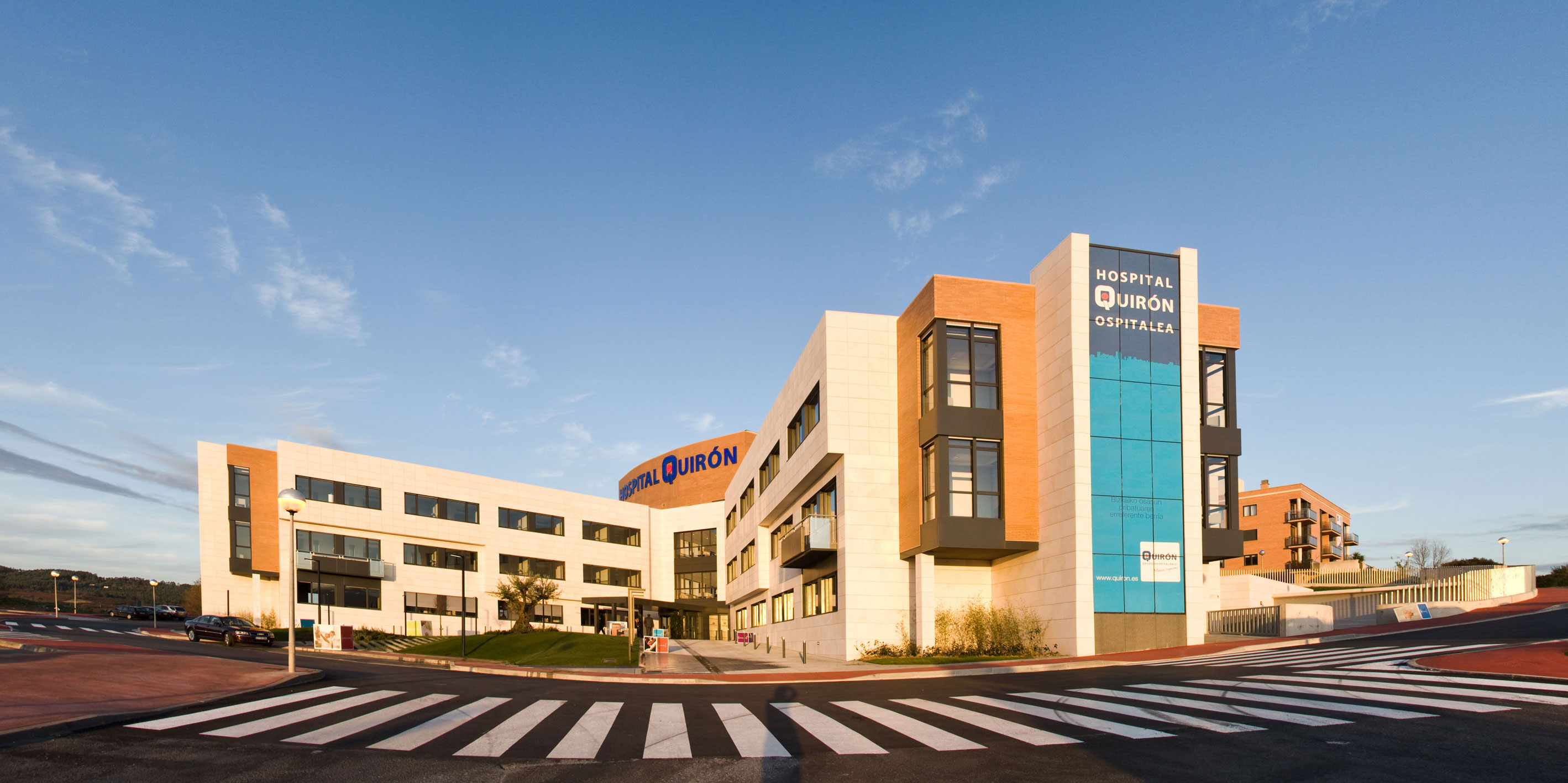
Quirónsalud, the largest private hospital group in Spain and part of Fresenius Helios, is fully committed to supporting the national effort against COVID-19 with all available resources. Since the start of the crisis, Quirónsalud has worked in close and trustful cooperation with national and regional healthcare authorities to provide the best possible treatment to the greatest possible number of patients.
Quirónsalud’s network currently comprises about 400 ICU beds for adults in almost 50 hospitals across Spain. The company is undertaking significant efforts to further increase this number in the short term, while continuing to treat other patients who urgently need medical support such as for chemotherapy, giving birth, and other emergencies.
Despite the high number of suspected and confirmed COVID-19 cases entering Quirónsalud’s hospitals, the company has kept every hospital fully operational. This is to a large extent due to the outstanding commitment of Quirónsalud’s medical and nursing staff, who deserve the utmost recognition and gratitude. So far, Quirónsalud has also been able to secure sufficient quantities of medical materials for all its hospitals, despite rapidly rising demand for critical supplies.
In the course of the formal declaration of a ‘State of Alarm’, the Spanish government has temporarily obtained the right to direct all hospitals in the country, allowing the healthcare authorities to leverage all available resources to treat COVID-19 patients as effectively as possible. Such an option is embedded in the established crisis management plans of many other European countries as well. Quirónsalud fully supports this measure, as it allows centralized capacity management, and hence rapid responses to changing circumstances and a full dedication of the entire system to fight the coronavirus.
Rumors about a “nationalization” of Spain’s private hospital system are clearly wrong and without any basis. Quirónsalud continues to manage its hospitals, and is already operating the additional beds requested by the authorities, in the joint effort against the COVID-19 threat for the benefit of Spain and the broader society.
This release contains forward-looking statements that are subject to various risks and uncertainties. Future results could differ materially from those described in these forward-looking statements due to certain factors, e.g. changes in business, economic and competitive conditions, regulatory reforms, results of clinical trials, foreign exchange rate fluctuations, uncertainties in litigation or investigative proceedings, and the availability of financing. Fresenius does not undertake any responsibility to update the forward-looking statements in this release.