
-
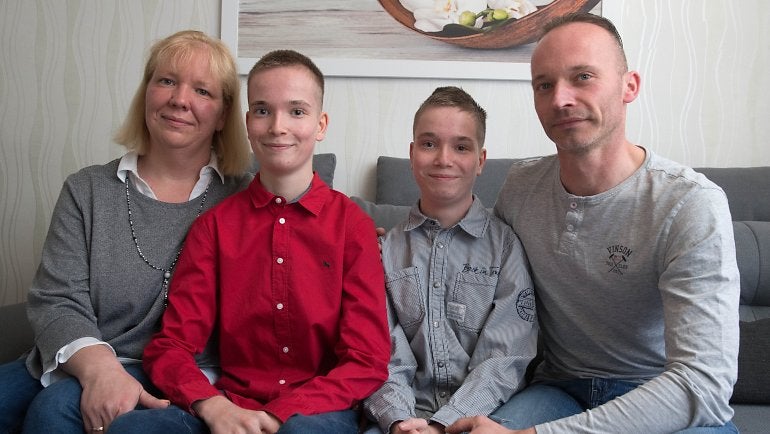
Following the boys' eight weeks of hospitalization, the Schimmels are all together at home again. -
![]()
Everybody at the Heart Center Leipzig is both happy and proud of the achievement. It was the first time a situation like this had occurred in a cardiac unit anywhere in the world.
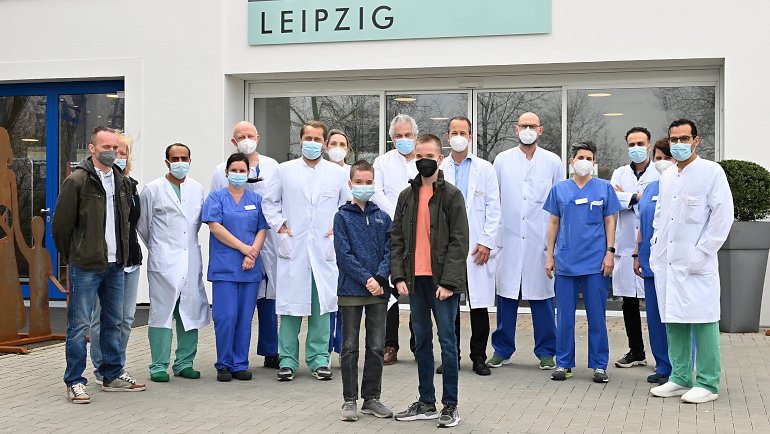
The hours-long wait is agonizing: Every time Mareen and Roy Schimmel glance at the clock, it seems like time is standing still. As their son Kilian undergoes a heart transplant, his brother Jamie is fighting for his life in the intensive care unit.
(Published: June 2021)
Kilian, the somewhat taller and stronger of the 13-year-old twins, first experienced heart pain in 2017, after a soccer practice. His parents thought it was only a persistent cold, but took him to a doctor anyway. The physician opted to refer his young patient to the Fresenius Helios Heart Center Leipzig for a more detailed diagnosis.
“The diagnosis by pediatric cardiology specialists showed Kilian had a genetic heart weakness. We knew we were in good hands at Helios so, at first, we accepted the diagnosis calmly,” said Mareen. As a precaution, the parents took Jamie, who has a slighter build than his brother, to a pediatrician in 2019 for a thorough examination. The blood test, as was the case earlier with Kilian, indicated he also had a genetic heart disorder: In medical terms, a cardiac insufficiency.
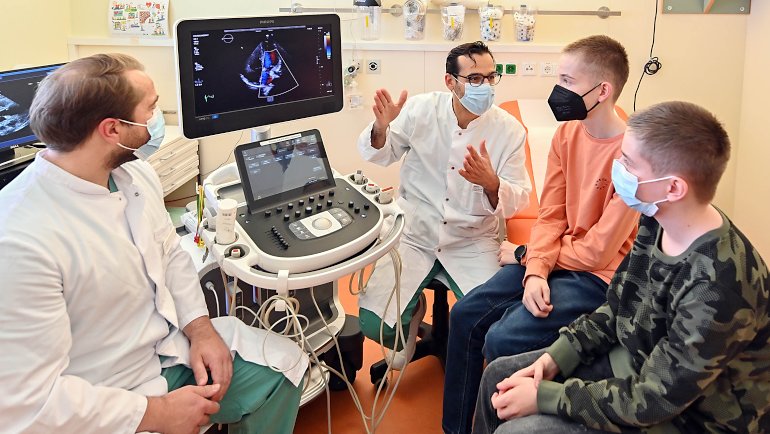
This was the start of the family’s ordeal. In May 2020, the parents had to call for emergency assistance after Jamie displayed symptoms consistent with the onset of a stroke. “As before with Kilian, Jamie was transported from Magdeburg to the Heart Center Leipzig, where they implanted a pacemaker with an integrated defibrillator,” said Roy. Shortly thereafter, doctors had to perform the same operation on Kilian.
The sense of security that followed proved to be short lived. The boys’ strength declined steadily to the point that they could rarely walk more than a few hundred meters without taking a break. Doctors at the Heart Center Leipzig placed both boys on the high-priority list for a donor heart.
On the afternoon of February 21, 2021, Mareen got a phone call. “The heart center told us there was an organ available for Kilian. I cannot describe what went through my head when I heard this,” she said. A short time later an ambulance stood at the door. As this was happening, Jamie was already at the heart center, where he had been undergoing extended treatment.
Preparations at the Fresenius Helios hospital began under an established routine. Kilian was prepared for the operation and received anesthesia around midnight. Prof. Dr. Diyar Saeed, Managing Senior Physician for Heart Transplants and Artificial Hearts, and Dr. Marcel Vollroth, Senior Physician for Pediatric Heart Surgery, performed the life-saving surgery. They were assisted by an experienced team of anesthesiologists and nurses. Of the 339 heart transplants performed in 2020 in Germany, 41 were done at the Heart Center Leipzig. “However,” said Dr. Vollroth, “all of them were performed on adults. The last time we transplanted a child’s heart here was in 2010.”
Doctors at the Heart Center Leipzig placed both boys on the high-priority list for a donor heart.
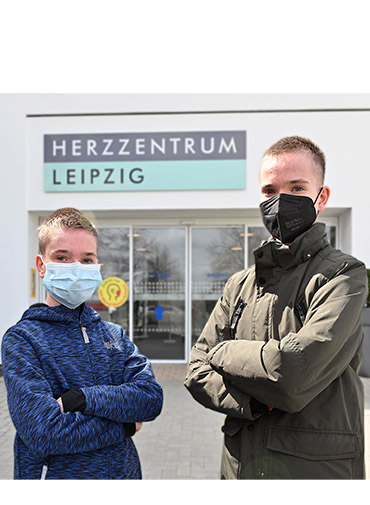
At about 4:30 in the morning, Mareen and Roy received a call that all had gone well. “Professor Saeed told us there were no complications during the operation and that Kilian was doing as well as could be expected,” Mareen said.
But this good news was dampened by Jamie’s condition. The boy was noticeably declining, weakening drastically to the point where his condition had become life threatening. The reason Kilian and not Jamie had received the new heart was the size of the donor organ. “It was too big for Jamie,” explained Dr. Vollroth. Early on, the parents had ruled out making a decision on which boy should be given priority. “For us, the boys were never in a competition with each other,” said Roy.
To keep Jamie alive, doctors decided to implant an artificial heart. This decision, however, was soon superseded: Out of the blue came word from Eurotransplant, an organization distributing donor organs in eight European countries, that they also had a heart for Jamie. “This meant spooling back to the beginning for the entire operation team,” said Dr. Vollroth. Same doctors, same team and the same professional process. For Jamie, this start to a new life began around midnight and ended nearly five hours later.
“For us, the boys were never in a competition with each other.”
-
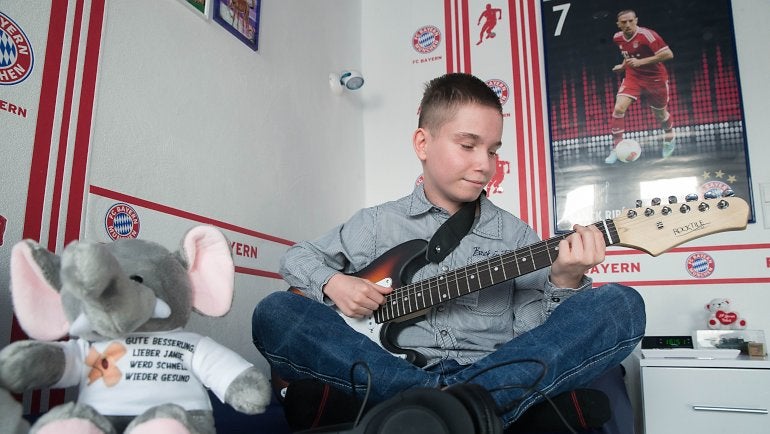
Jamie can already practice the guitar again, -
![]()
and Kilian ride his bicycle in the yard.
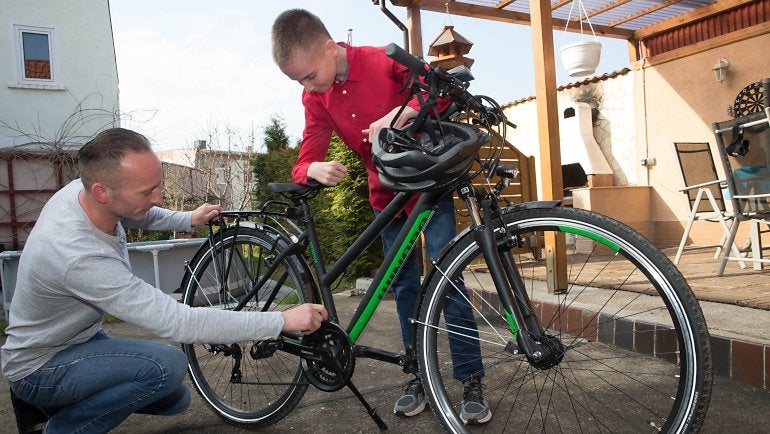
Following eight weeks of hospitalization, the family is together again. The boys have gotten used to their new lives as transplant patients with the accompanying mountain of pills. Visits with friends and relatives will have to wait. Even without the COVID-19 pandemic, the risk of infection would be too great. For now, Jamie must content himself with practicing the guitar and Kilian with riding his bicycle in the yard.
Everybody at the Heart Center Leipzig is both happy and proud of the achievement. It was the first time a situation like this had occurred in a cardiac unit anywhere in the world. The successful transplantations for the twins also had a signal function. “In the future, we will again place emphasis on performing heart transplants for children from about seven years of age,” promised Dr. Vollroth, who can count on continued support from Prof. Saeed.
Related Links
Making mistakes to avoid them A little heart at the center of a complex surgery Fresenius Helios HospitalsContact
Helios Kliniken GmbH
Friedrichstr. 136
10117 Berlin
Germany
T +49 30 521 321-0
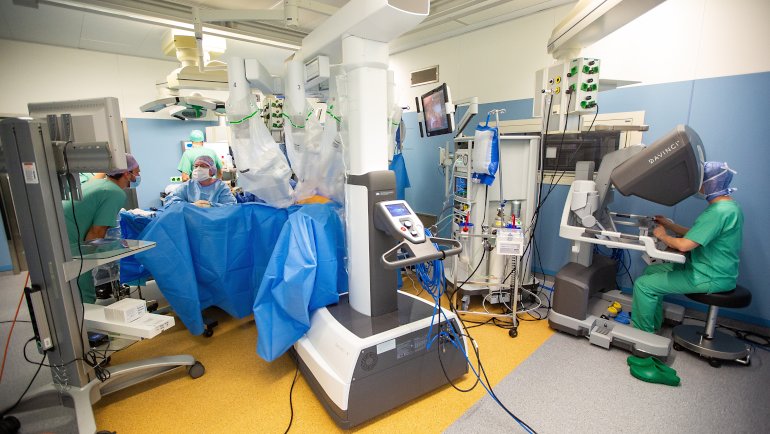
The robot arms move above the patient’s stomach as if guided by an invisible hand. Monitors on each side of the operating table show an oversized, 3-D image of the stomach’s interior. Two meters (about six feet) away, Dr. Markus Mille sits fully absorbed at the control console.
(Published: February 2021)
His hands are directing the movements of four robot arms: Three of them hold surgical instruments – scissors, forceps and tongs – while the fourth holds the camera that is transmitting the images from inside the stomach cavity. The doctor’s feet, meanwhile, are operating pedals that allow him to coordinate the robot’s actions and engage the individual arms. To get a better feel for what he is doing, he has removed his shoes.
The patient has colon cancer. Dr. Mille, Chief Senior Physician of the General and Visceral Surgery Clinic at Helios Hospital Erfurt under Chief Physician Prof. Dr. Albrecht Stier, starts by removing the tumor and a piece of the large intestine. He then reconnects the large intestine with the small intestine. To make space for the instruments between the abdominal wall and the organs, and perform what is known as a hemicolectomy, carbon dioxide has been injected to expand the stomach to twice its normal size.
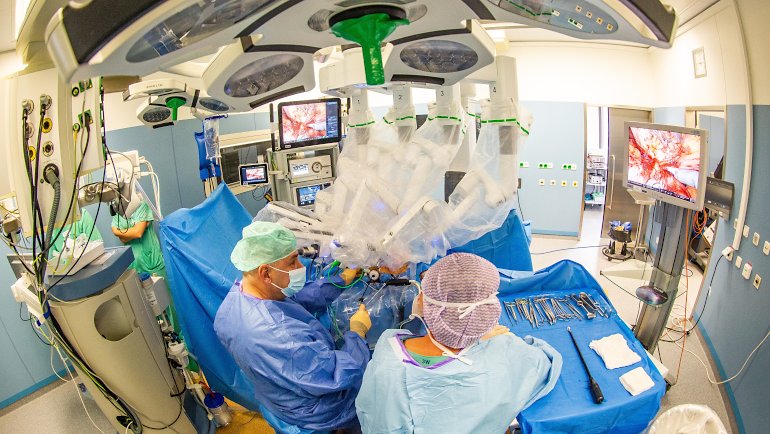
Robot-assisted surgery enables even more precision
In a consultation with Dr. Mille at the hospital in Erfurt, in the eastern German state of Thuringia, the patient opted to undergo the operation with the robot. “In cases like this,” the surgeon explains, “we can operate much more precisely with robot-assisted intervention – it’s easier on the patient and we can discharge them sooner from the hospital.” The surgical incisions are at most two centimeters – less than an inch – in length, and leave only small scars.
Using a robot in the operating room also has advantages for surgeons. The robot arms allow supple movements with a greater range of motion. This makes possible a more precise intervention than the conventional minimally invasive surgery, which uses fixed instruments. Surgeons assume a sitting position during the operation, which prevents weariness and back pain. In addition, the expanded monitor display of the area being operated on facilitates recognition of minute, delicate structures such as nerves and blood vessels.
“It is very impressive what can be achieved with the help of a robot. Now I am convinced: This is the future.”
-
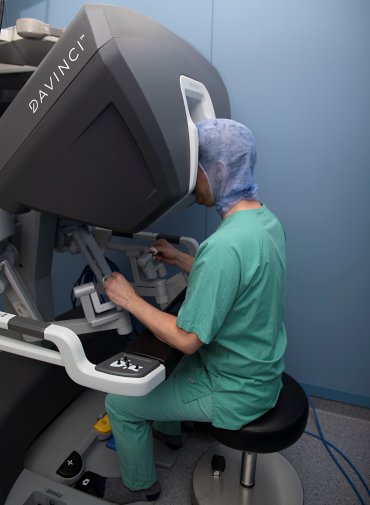
At the surgeon's console, Dr. Mille directs the movements of the robot arms. -
![]()
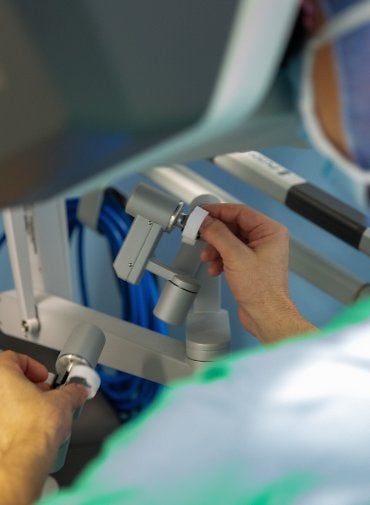
The robot is called the da Vinci Xi, and costs about €2 million ($2.4 million). It is not capable of action on its own, but can perhaps best be described as an extended arm of the surgeon – one capable of neutralizing any shaking or vibrations of the hands. The surgical system consists of three components: The surgeon’s console, a patient cart – where the instruments are installed – and a so-called vision cart, which contains the computer devices that control communications between the components.
“The first time I heard about operating-room robots like these, I thought they were just some technical gimmick,” says Dr. Mille. “Then I immersed myself in the topic and undertook several study visits. It is very impressive what can be achieved with the help of a robot. Now I am convinced: This is the future.”
Before using the robot for the first time on a patient, the surgeon underwent weeks of comprehensive preparation with multiple training courses and study visits. Using computer simulation, he learned how to move the robot’s arms correctly, then traveled to a special robotics training center in Belgium to use the da Vinci Xi for the first time on a model.
“Stepping up to the operating table and just starting, which you may know from before, doesn’t work here,” Dr. Mille explains. “You must learn systematically how to handle the technology and deal with the different way of operating, and then train intensively.” The surgical team that works with the medical robots also received special training.
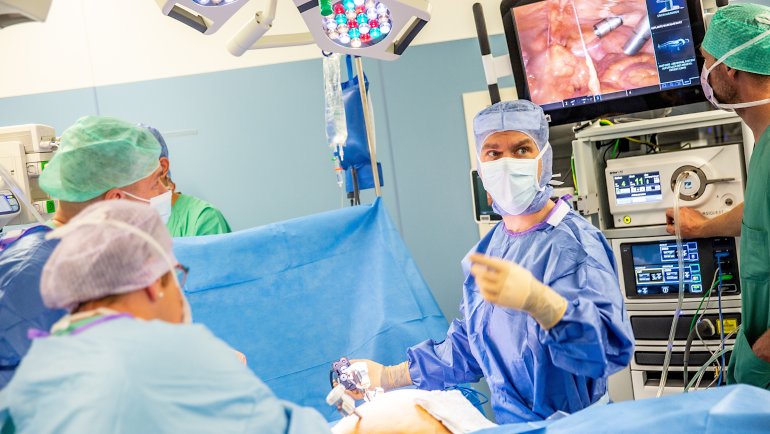
Use of robot-assisted surgery is growing
The colon surgery was Dr. Mille’s 88th surgical procedure using the robot. One operation that remains vivid in his memory was the removal of an 85-year-old patient’s esophagus: For this complex surgery, Dr. Mille – in a first in Thuringia state and at Helios – deployed the robot twice during the same procedure, once on the stomach and then in the chest area. Eight days later, the patient could leave the hospital.
In addition to General and Visceral Surgery, the robot is being used at Helios Hospital Erfurt in Gynecology, Thoracic Surgery and Urology. It can assist in surgery on various organs in the stomach, chest areas and pelvic areas, such as the lungs, liver, uterus or prostate.
Surgery is also being performed with da Vinci surgical systems at several other Helios hospitals, including in the German cities of Wuppertal, Schwerin, Krefeld, Duisburg and Aue. This is part of a larger trend in medicine: According to the manufacturer, more than 7.2 million operations were carried out with this surgical system in 2019.
Related Links
Making mistakes to avoid them A little heart at the center of a complex surgery Fresenius Helios Inpatient and Outpatient TreatmentsContact
Helios Kliniken GmbH
Friedrichstr. 136
10117 Berlin
Germany
T +49 30 521 321-0
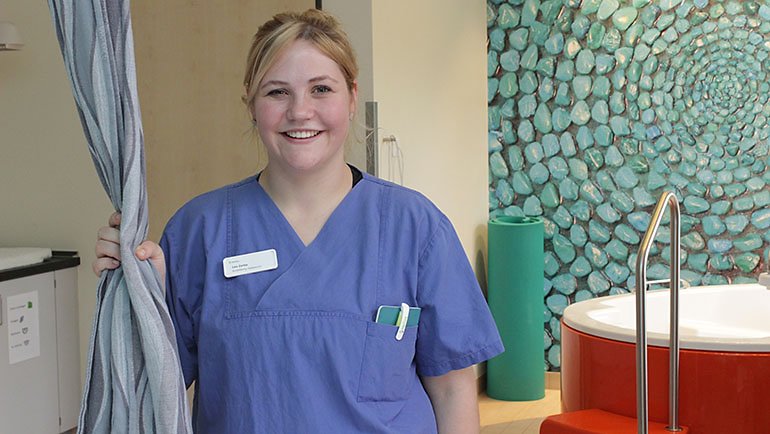
Following the birth of her son Joona in April 2018, Lea Zerbe is certain: “I want to become a midwife.” It is a courageous decision that comes from the heart. She leaves her old job and, after her paternity leave ends, begins studies to become a midwife.
(Published: July 2020)
Lea had always been torn between two main interests: “On the one hand I love everything creative; culture and music – on the other hand I have always been a people person.” After her pregnancy, the 28-year-old made up her mind. “People are more important.”
Upon leaving high school, her outlook was a little bit different. Lea considered several career paths before deciding on a curriculum of cultural studies and business administration at the University of Lüneburg in northern Germany – opening the door to a career in the world of culture. “Even then I knew that it probably wouldn’t be permanent,” she recalls. “I’m not an office person. I want to work with people as much and as closely as possible.”
With her studies completed, she found work organizing music and film festivals, but it fell short of her expectations. “I had played with the idea of becoming a professional midwife for a long time, but I couldn’t really come to grips with it until I got pregnant,” Lea says, thinking back to the time when she not only was carrying new life, but was also ready to try something new. Lea wanted to know everything about the development of a child, churning through book after book and taking courses. Pregnancy was a beautiful experience for her, during which she learned more and more about the midwife profession.
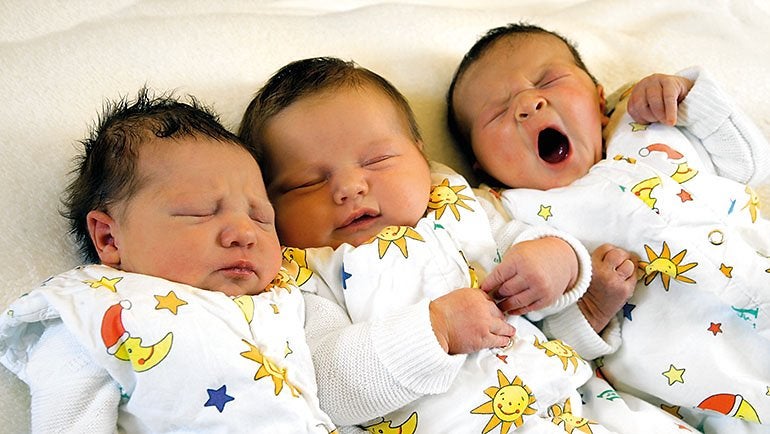
The shortage of midwives in Germany is a big problem. For that reason, expectant mothers are advised to look for a midwife right from the onset of pregnancy, in order to secure someone who can lend support in the early stages. Even if this is often a time of great joy, there are also uncertainties and complaints; nausea, for example. And should it come to a tragic situation like a miscarriage or infant mortality, a midwife can lend support and make the necessary arrangements.
“Through my own pregnancy, I saw how important the work of a midwife is, and how good it feels when someone is there to help the expectant family along,” Lea says. And this ultimately led her to apply for a trainee position at Helios Mariahilf Hospital. The dual study program lasts four years and culminates in a Bachelor of Science degree. Together with two other trainees, she is learning how to best accompany women before, during and after birth.
The profession is multifaceted, with many options for trainee midwives to find employment in an area that suits them. The duties of a midwife extend well beyond those which are visible in a hospital. Births, naturally, are at the center of what midwives do. However, their duties can cover the entire spectrum from family planning through the woman’s pregnancy and on to postnatal care.
Midwives can perform the same precautionary examinations as gynecologists during pregnancy – with the exception of ultrasound. Midwives also help with the complaints and burdens that can result from a pregnancy. In addition, they prepare expectant mothers and their partners for the birth, and make home visits to advise on supplementary foods and breastfeeding in the days following birth. Some midwives also teach, explaining the stages of pregnancy and birth as part of sex education for primary-school students.
Lea is optimistic about her future as a midwife. “In school, they always talk about the supreme discipline of birth, but I think it is the complete package that is important. I simply want to be there for women in this most special time in their lives.”
Contact
Helios Kliniken GmbH
Friedrichstr. 136
10117 Berlin
Germany
T +49 30 521 321-0
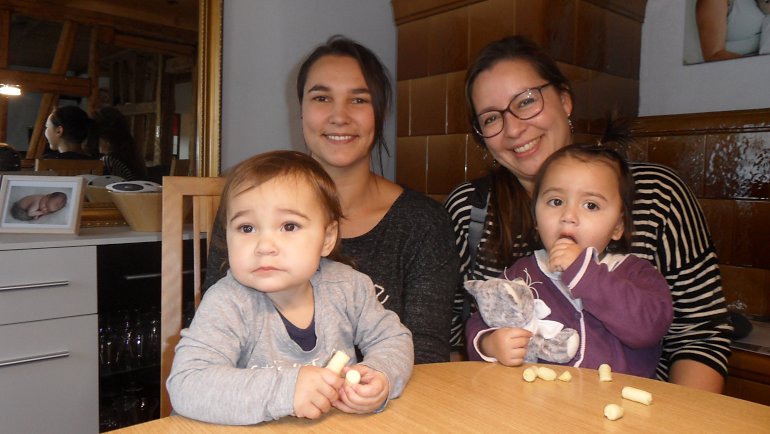
They are two little charming heroines: When Emma and Ana romp gleefully around the living room, look at their toys with curiosity, or crawl at lightning speed on their knees across the room and make it acoustically known when something is not okay, you would think you were in a totally normal nursery somewhere in Switzerland. If you take a closer look, however, you will see that the two happy children are connected to two colorful bags via white spiral cables that peek out from underneath their clothes. These are the infusion lines leading to the infusion pumps and bags that supply the nutrient solutions for the parenteral nutrition that the two children have needed ever since they were born.
(Published: February 2019)
Parenteral nutrition becomes necessary when a person’s stomach or intestines cannot perform their designated tasks flawlessly, for example due to an operation or a disease. The special liquidized nutrition and the fitting device for administering it are designed to bypass the usual process of digestion and supply the patient with all necessary nutrients such as amino acids, lipids, minerals, and vitamins.
How long these administering processes take depends on the individual case of the patient – Ana needs infusions 18 hours a day and Emma 21 hours a day. Therefore, the parenteral nutrition has to be administered overnight while they are asleep and for several hours during the day. Portable infusion pumps and a backpack system ensure as much freedom of movement as possible for the children. Remarkably, the two see their particular circumstances and all the resulting implications as something totally normal. Their mothers preparing the infusions in the evening before they go to bed, connecting the infusions to the backpacks, the occasional beep the infusion pumps make when an infusion tube gets blocked, or the cleaning of the catheter are all part of their daily rituals. Ana is already able to put her backpack on by herself.
Even interaction with siblings and other children is per the customary rules of a child’s world, be it playing roughly or, through Emma’s masterful charm offensive, getting a boy to wear her backpack, for example. For Ana, going for walks together with her parents and the family dog Aiva is always a special event. Provided the catheter is sufficiently protected, the girls are able to go swimming and splash around, something which creates lots of happy moments, particularly in the summer months out in the garden. Despite their parenteral nutrition, eating and drinking together at the family table allows them to feel part of the family unit and to enjoy their favorite meal.
Ana and Emma’s families got to know each other through the pediatric clinic and have remained on close terms with each other ever since. In addition to the social side of things, the practical tips and mutual exchange of experience are invaluable as far as daily caregiving tasks are concerned. Being accurate throughout the overall treatment and maintaining high levels of hygiene are basic prerequisites for successful and safe parenteral nutrition at home. Both families perform these challenging tasks unfailingly. A specialized outpatient care organization (Kinderspitex) is on hand to provide assistance when needed. At the pediatric clinic, the children are examined and have various lab tests done every month.
The employees in the FresuCare department of Fresenius Kabi in Switzerland are in charge of planning and organizing the supply of nutrient solutions and all of the devices needed for providing pediatric patients with parenteral nutrition at home. Our FresuCare colleagues identify the individual needs of the patients at their home and act as a go-between between families, the pediatric clinic, and the logistics department of Fresenius Kabi. In-house staffs process the families’ online orders, arrange deliveries, and lay the administrative foundations for the direct settlement of costs with the insurers. The FresuCare organization of Fresenius Kabi Switzerland has been able to expertly provide patients with comprehensive clinical nutrition at home for over 25 years, thereby creating significant value for chronically and critically ill patients.
Ana and Emma’s parents especially value the fact that, by being well prepared, the whole family can even go on long journeys and, as a result, are also able to go and see relatives who live far away or visit holiday destinations.
Contact
Fresenius Kabi AG
Else-Kröner-Str. 1
61352 Bad Homburg
Germany
T: +49 6172 686-0
-
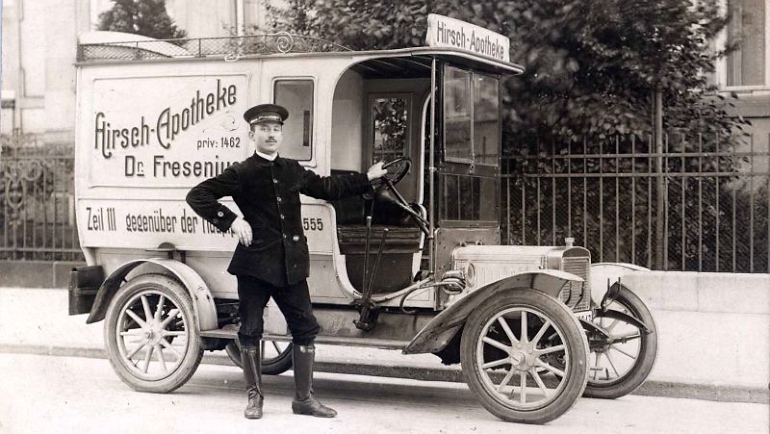
Operated by the Hirsch Pharmacy under Dr. Eduard Fresenius, a service for delivering products by automobile was something special at the time the company was founded in Frankfurt. -
![]()
In 1934, Dr. Fresenius moved his business to the former premises of a chocolate factory at Gluckensteinweg 5 in Bad Homburg.
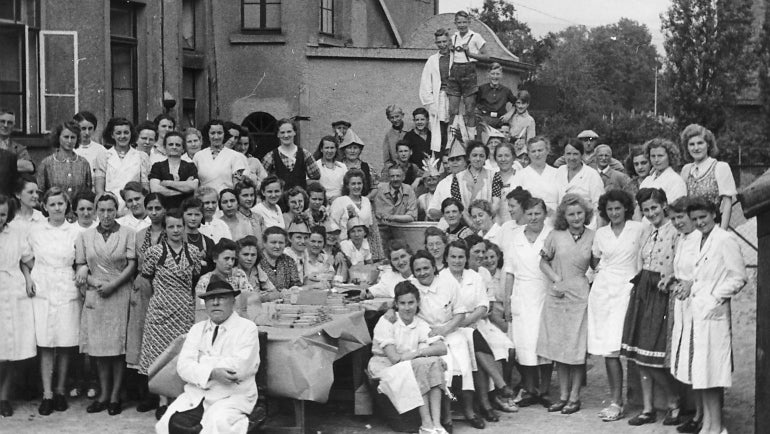
A car rattles as it turns the corner. It pushes and weaves its way through the streets of downtown Frankfurt – passing bicycles, pedestrians and horse-drawn carriages. The year is 1912. The car belongs to the Hirsch Pharmacy, one of the oldest apothecaries in the city. And the pharmacy head is Dr. Eduard Fresenius.
Stored in the trunk of the car are various preparations for treatment of skin conditions and colds, as well as sterile solutions for injection. The driver is on his way to sanitariums located on the outskirts of Frankfurt. He makes regular deliveries of Hirsch Pharmacy products to the spas. Pedestrians watch as the car goes by. This is an age when traffic on the streets is characterized by horse-drawn conveyances and bicycles – the car draws attention. Nevertheless Eduard Fresenius invests in the new technology as soon as he takes over the pharmacy from this father. Speedy delivery of pharmaceuticals to patients is a priority for him.
The Hirsch Pharmacy has a long tradition: Its history can be traced back to the 15th Century. The Fresenius family becomes the owners in the 1870s. When Eduard Fresenius takes charge, he has big plans. In 1912 he founds “Dr. Eduard Fresenius chemisch-pharmazeutische Industrie,” in a back room of the pharmaceutical wholesaler. This lays the foundation for today’s healthcare group. A modest pharmaceutical company is born out of the pharmacy laboratory.
Solutions made from the purest distilled water are a specialty of Eduard Fresenius. The quick success of the company also is due to the numerous collaborations that Eduard Fresenius enters into with well known physicians. For Nobel Prize winner Paul Ehrlich, Fresenius develops the “Injectio Fresenius” solvent used in his syphilis cure. Under the name Ampuwa, an abbreviation for ampule water, the solvent to this day is part of the Fresenius inventory."A pharmacy today? we need to expand it or add something new to it." (Dr. Eduard Fresenius)
-
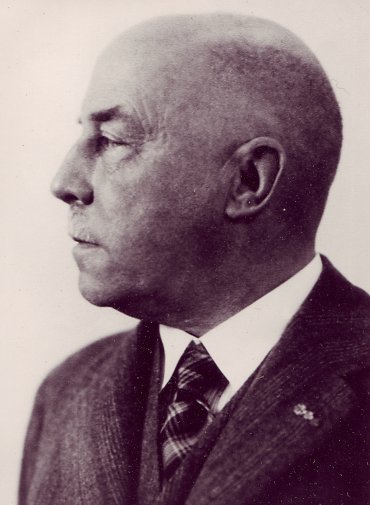
The Frankfurt pharmacist Dr. Eduard Fresenius (1874-1946) established the Dr. Eduard Fresenius chemisch-pharmazeutische Industrie KG company in 1912. -
![]()
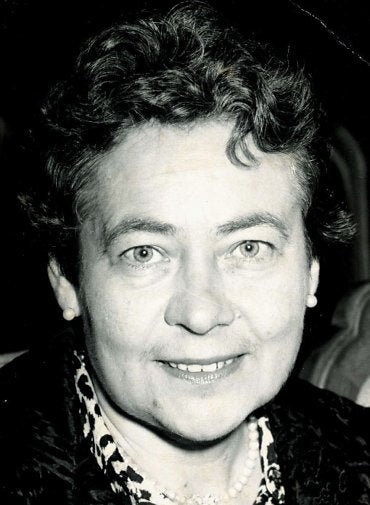
He died suddenly in 1946, leaving the business to his 21-year-old foster daughter, Else Fernau. -
![]()
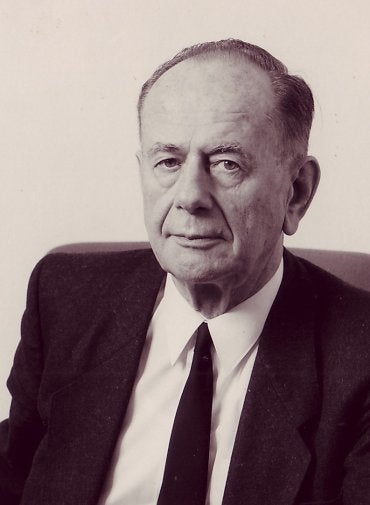
She later married Hans Kröner, and over the following decades the couple together developed the manufacturing operations into an international healthcare group.
Eduard Fresenius runs the pharmacy in Frankfurt until 1934, when he relocates company headquarters to Bad Homburg. The company founder is full of ideas on how to gain recognition for his company. Often he is ahead of his time with these ideas. Early in the 1930s he begins distributing a Hirsch Pharmacy magazine for customers. A few years later he opens a diet pavilion in Bad Homburg. During summer months guests consume fresh fruit and vegetable juices. Fresenius employees also prepare special drinks for diet patients based on doctors’ prescriptions. Particularly popular were the milk mix drinks, an early form of the milkshake.
Realizing great ideas is expensive. In financial matters, Eduard Fresenius is unlucky. And the years to come are challenging ones for the businessman. During the Second World War he loses contact with a lot of important business partners. He does not join the Nazi party. Supplying the German army with medications like the Freka frostbite cream helps for a time to maintain company production.
The end of the war finds Eduard Fresenius standing before the rubble that was his existence: Allied bombs have completely destroyed the Hirsch Pharmacy. Raw material shortages make production in Bad Homburg impossible. In the midst of reorganizing the company, Dr. Fresenius dies suddenly in 1946. He names his foster daughter, Else Kröner, née Fernau, as benefactor of his estate.
Just 26 years old, she inherits the Hirsch Pharmacy and the leadership of the company. As a newly licensed pharmacist, Else Kröner knows her way around pharmaceutics, but when it comes to business management she soon reaches her limits. She obtains the needed skills by attending evening classes at a private business school in Frankfurt. She spends nearly 12 hours a day in the company and doggedly works to rebuild the firm during difficult years. Her efforts earn her a great deal of respect and admiration among the staff. She eventually turns over running the Hirsch Pharmacy to a fellow pharmacist. Her main focus now is running the company in Bad Homburg. With a lot of effort, she and her eventual husband, Hans Kröner, develop Fresenius over the following years into a global healthcare group.
-
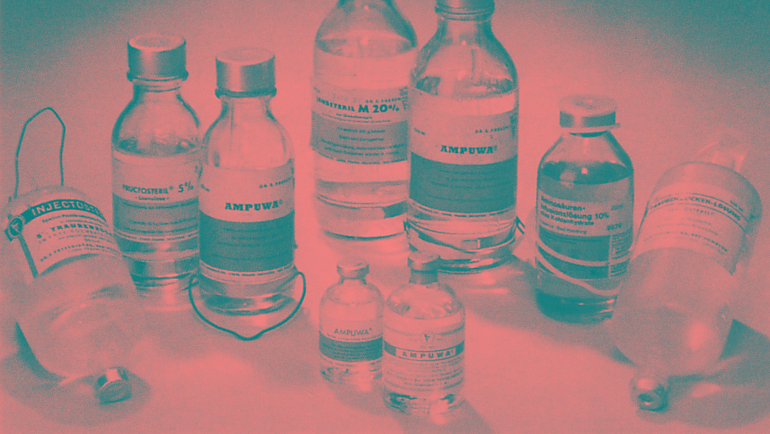
In the 1950s, the infusion solutions product range is expanded. -
![]()
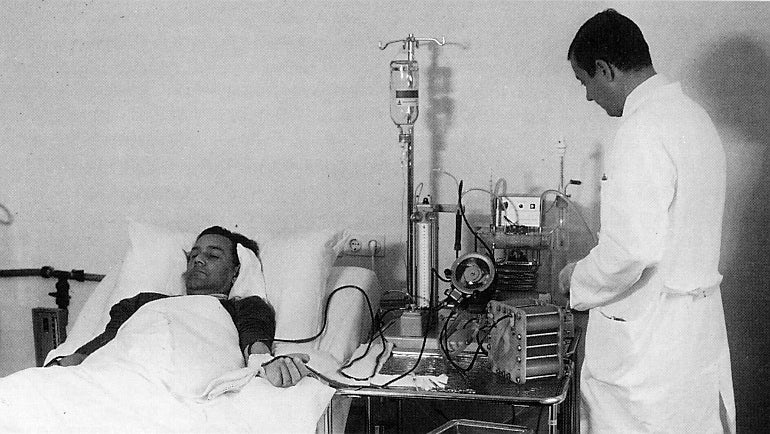
A momentous step came in 1966, when the company started selling imported dialysis machines and dialyzers.
Else and Hans Kröner realize they can only keep the company going if they succeed in growing with new ideas. With their employees, they begin searching for new horizons – and soon find one. Since the early days, the expertise of the company has been infusion solutions. Over the next years Fresenius continuously expands its product range, developing new nutrition- and volume replacement solutions such as Generika, which are administered by infusion. The company does more than develop its solutions, it also improves their packaging. Into the 1960s infusion solutions are still stored in glass bottles. Fresenius succeeds in developing special plastic bags and bottles. These are easy to handle, and break proof plastic containers become an immediate market success.
As a medium-sized company producing solutions for dialysis, Fresenius first comes into contact with dialyzers in the 1960s. Dialyzers are blood filters used during a dialysis treatment of patients with chronic kidney failure to purify their blood. This treatment is life saving for kidney patients – but at the time it is very laborious and expensive. Only a few patients can be treated. Through media reports, Fresenius learns of the desperate situation facing many kidney patients, and begins to import American dialysis machines. As they maintain the machines, Fresenius workers gain technical know-how. In the 1970s the company develops its first dialysis machines in a newly acquired plant in Schweinfurt. Constant advancements in materials and technology over the next years enable the company to continue improving dialysis treatment for kidney patients. Fresenius in the 1980s succeeds in developing a capillary made from polysulfone that purifies blood almost as efficiently as a human kidney. To this day blood filters made from this material are the standard in dialysis.
-
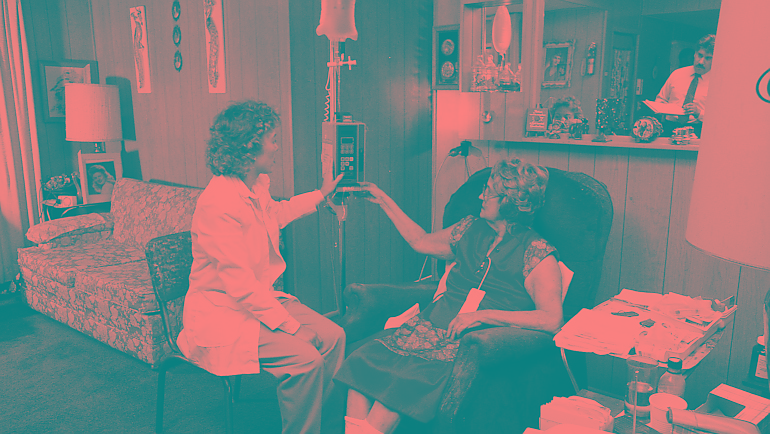
In 1996, the merger of Fresenius' dialysis business with the U.S. dialysis provider National Medical Care resulted in the creation of Fresenius Medical Care, the world's leading dialysis provider. -
![]()
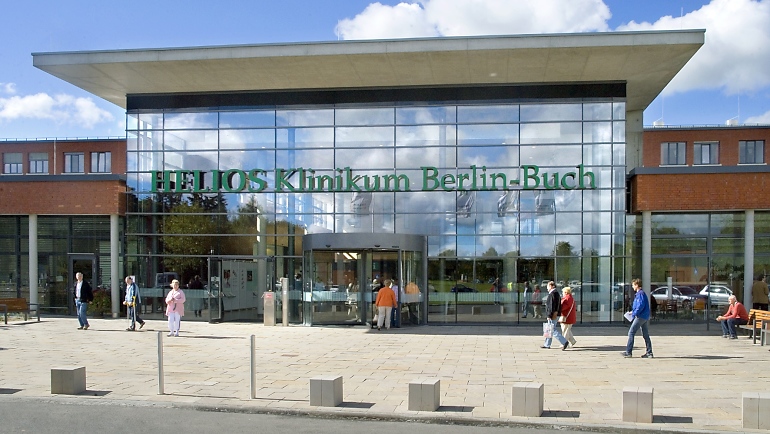
In 2005, Fresenius acquired the HELIOS Kliniken Group, today Germany's largest private hospital operator.
Numerous strategic acquisitions are a hallmark of the next years: 1996 brings the merger of the Fresenius dialysis unit with American dialysis provider National Medical Care to form a new division, Fresenius Medical Care. As a result Fresenius becomes one of the world’s largest providers of dialysis services. In the same year, Fresenius acquires a majority stake in the hospital services provider VAMED AG. Originally founded to plan and build the Vienna General Hospital, VAMED becomes a new business leg for the healthcare group. Acquisition in 1999 of the international infusion business of Pharmacia & Upjohn leads to creation of the business unit Fresenius Kabi.
There are more acquisitions around the world, through which the company also enters the US pharmaceuticals market and assumes a leading role in the global market for generic IV drugs. In 2005, Fresenius takes over the private hospital chain HELIOS Kliniken GmbH and fuses it with Wittgensteiner Kliniken, which it acquired in 2001. This creates the Fresenius Helios division. Fresenius Helios in 2013 acquires 41 hospitals from Rhön-Kliniken, making it the largest hospital operator in Germany.
Hardly any European company in past years has been able to match the dynamic growth of Fresenius. Currently more than 300,000 employees around the world work for the healthcare group. What began as a small pharmacy laboratory is today a leading global healthcare group with a presence in more than 80 countries. The small family operation that Dr. Eduard Fresenius led until his death is different from today’s company in many respects. However the fundamental values of our company are unchanged. To preserve lives and improve the quality of life for sick people has been our motivation for more than 100 years. “Forward thinking healthcare,” symbolizes what we want in the future: constant improvements in medicine for more and more people.
100 Years of Fresenius
Fresenius has been working for over 100 years to improve the lives of seriously ill people around the world. This film, made on the occasion of the company's Centennial in 2012, tells the company's history through the stories of people who have been helped and are still being helped by Fresenius.
-
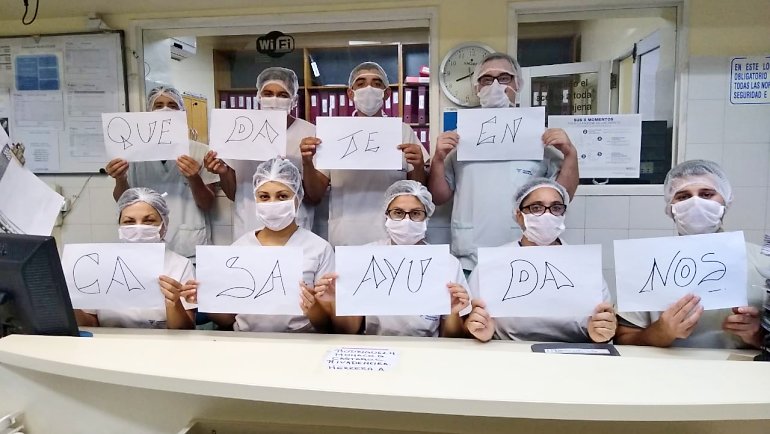
The message is simple: Stay at home! -
![]()
The message is simple: Stay at home! -
![]()
The message is simple: Stay at home!
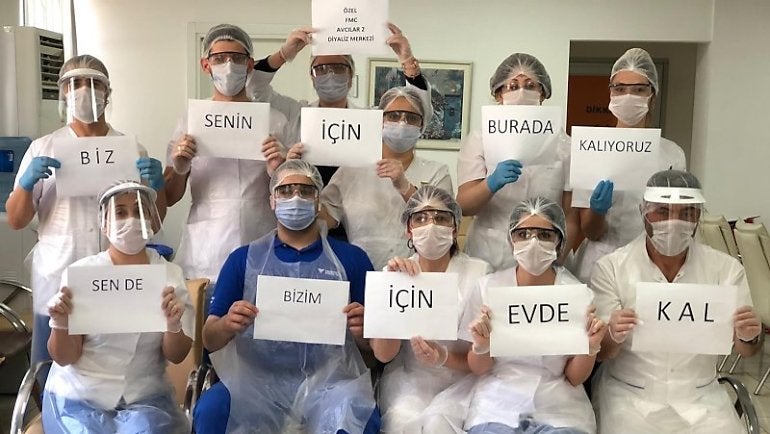
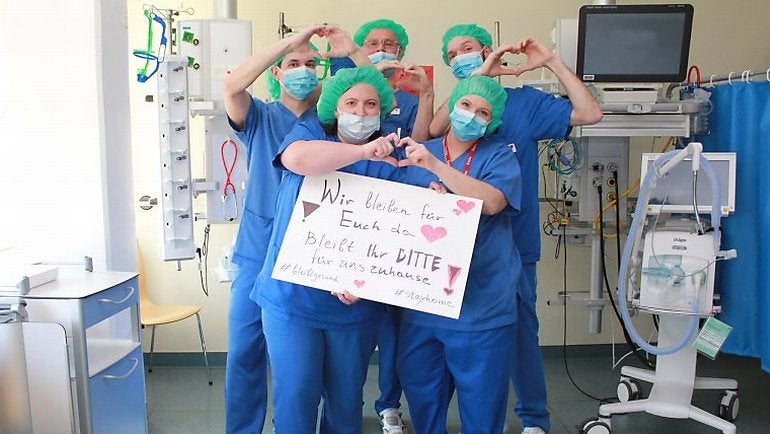
The COVID-19 pandemic also presents Fresenius with unprecedented challenges, and our company is doing everything it can to continue providing the best possible care to our patients worldwide. We are not only making every effort to maintain the production and distribution of our products, which are often vital, but to adapt to the new situation and, as far as possible, expand. Our highest priority is the health and safety of patients, caregivers and our own employees.
On this page we are listing a few examples of our activities during the coronavirus crisis. Please keep in mind that this only represents a small selection of our current activities, and that the situation can change at any moment. (Updated: April 30, 2020).
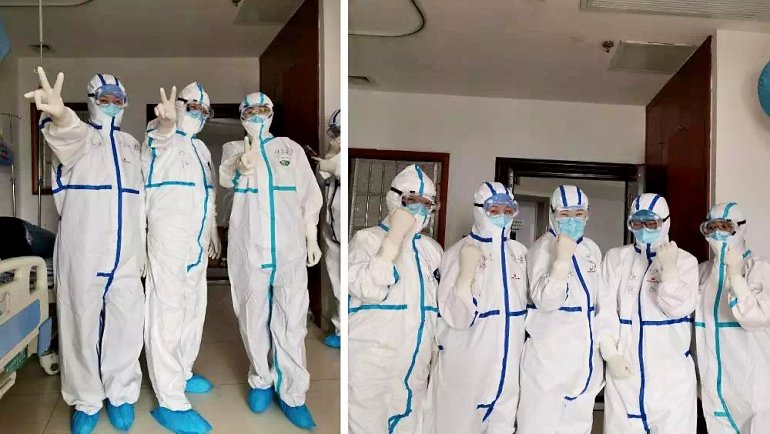
Helios, Germany’s largest private hospital operator and a part of the Fresenius Group, is postponing surgical procedures when medically justifiable and thereby expanding its capacity to care for COVID-19 patients. In addition, the company has increased the number of intensive beds in its hospital network by two-thirds, from 900 to more than 1,500. For this purpose, material reserves are being mobilized and intermediate care beds as well as operating rooms are being equipped and modified with preinstalled ventilation systems.
In order to utilize this additional capacity as effectively as possible, Helios Germany has adjusted some work shifts and taken precautions to send professionals where they are needed most within the company’s hospital network. In addition, several Helios hospitals have admitted COVID-19 patients from Italy in order to help relieve hospitals there. To obtain and secure important data for research into SARS-CoV 2, Helios has established a multi-center COVID-19 register.
In Spain, where conditions are especially strained, Quirónsalud, the country’s largest private hospital operator and also a part of Fresenius Helios, is fully supporting the Spanish government’s efforts to battle the COVID-19 pandemic with all available resources. Quirónsalud increased the number of intensive care beds on short notice. The company is also making every effort to continue providing care for all other patients who urgently need medical support for cases such as chemotherapy and childbirth, as well as emergencies.
"Our employees are all doing extraordinary things. Even at this very difficult time they are still there for our patients."
Thanks to employees’ extraordinary commitment, all Quirónsalud hospitals are successfully maintaining operations despite the high increase in patients with suspected and confirmed cases of the coronavirus. Furthermore, Quirónsalud has succeeded thus far in ensuring that all its hospitals are well-stocked with important medical supplies, despite the sharp increase in demand. And teams of Helios doctors and nurses have already travelled from Germany to Spain to aid their Quirónsalud colleagues.
In Austria, Fresenius Vamed is now using resources from its rehabilitation facilities and clinics to help relieve acute care hospitals. For the time being, the only rehabilitation areas to continue operating will be those where patients urgently need treatment and care, or those that treat patients who would otherwise require acute care. In this regard, the company is also in ongoing contact with healthcare authorities in Germany and Switzerland.
Fresenius Medical Care has further strengthened the existing safety and hygienic standards of its roughly 4,000 dialysis centers worldwide, and taken extensive precautions to ensure patients can continue to receive their lifesaving dialysis treatment. In the United States, Fresenius Medical Care has teamed up with other dialysis providers to create joint capacities for providing isolated treatment of dialysis patients who are infected or may be infected with COVID-19. Furthermore, the company is making 150 additional dialysis machines available to U.S. hospitals for the emergency treatment of COVID-19 patients
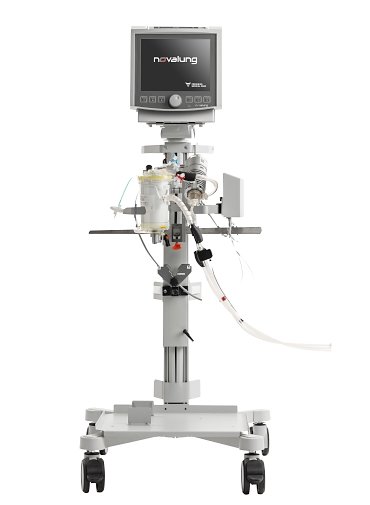
The company is also resolutely working to maintain the manufacture and distribution of products for dialysis and extracorporeal therapies. Xenios, a subsidiary of Fresenius Medical Care, has considerably expanded its capacity to produce Novalung, a heart and lung support system for the treatment of acute respiratory or cardiopulmonary failure, and in February delivered a large number of these devices to Wuhan, China, a city hit hard by the pandemic. In Poland, Fresenius Medical Care is making devices for acute dialysis available to hospitals free of charge.
Fresenius Kabi is responding to the significant increase in worldwide demand for essential drugs for the treatment of COVID-19 patients, especially medicines used for sedation such as Propofol and pain management drugs. The company is maximizing supply with all compatible manufacturing capacity now dedicated to these vital drugs. Fresenius Kabi has made significant, future-oriented investments in recent years into both automation and capacity in its manufacturing facilities; these are now enabling treatment for more patients worldwide. Moreover, the company commits itself to keeping prices for essential drugs for COVID-19 patients stable during the pandemic.
In China, Fresenius Kabi was able to bring manufacturing back up to the normal level. Despite some restrictions due to the COVID-19 pandemic and quarantine measures, it has not experienced any interruption in production. This means Fresenius Kabi is still in a position to provide the public with important pharmaceutical and medical products.
Our Chief Executive Officer, Stephan Sturm, thanks the employees for their exceptional dedication in this crisis: “You are all doing extraordinary things: At this very difficult time you are still there for our patients, and sometimes even seem to do the impossible. I can only express, once again, my most sincere thanks. You are Fresenius!”
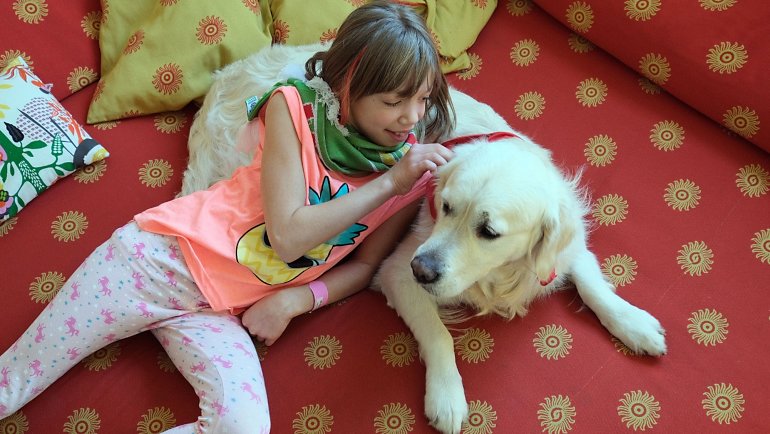
This friendly golden retriever has been bringing fun, energy and affection into the daily routine of the hospital. Along with his owner Simone Siemke, a family and children’s nurse , Paul supports the medical treatment on the children’s psychosomatics, geriatrics and palliative care wards by coming in and lifting patients’ spirits two or three times every week.
(Published: January 2019)
“On the children’s ward, the little ones can give Paul commands, teach him tricks or give him a reward,” said Siemke. “Some of the children are very shy and lack self-confidence, but when they’re playing with the dog they forget that, and really come out of their shells.” For the older patients, and those suffering from dementia, part of Paul’s training was to learn simple cognitive and motor-function exercises that he can “play” when he goes into the geriatrics ward.

Dogs are proven to have a positive effect on the mood and morale of all kinds of people. A dog doesn’t prejudge anyone, shows affection without expecting anything, and makes an outstanding companion. In particular, a trained therapy dog like Paul can often help ill people to rediscover feelings of happiness, affection and responsibility. Treatments that incorporate the use of therapy dogs can bring improvement in patients suffering from a wide range of mental and physical illnesses; the only precondition is that the individual patient is not allergic to the animals or in any way afraid of them, and agrees to the visits.
Paul’s most challenging assignment so far? “Right at the start a patient in the palliative care ward asked if she could pet a dog one more time ,” Siemke said. “Oftentimes what is needed is Paul’s mobility, but this time it was his very calm and peaceful temper. He just laid quietly on the patient’s bed for half an hour and let her stroke him. It was very warm in the room, and that was the hardest thing for him, but he handled it just great.”
Life in the hospital is not all fun and relaxation for Paul – in fact, it’s sometimes a very difficult job, both physically and emotionally. Like a human employee, he has a contract, which stipulates how often and for how long he should work and when he is free to just be a regular dog. Away from the hospital he can let loose with his full energy – Paul is only two-and-a-half years old – while playing with other dogs, or enjoying long walks with Siemke.
A therapy dog must be very carefully selected and trained. “Generally, all breeds can work as therapy dogs – the only important factors are that they have no potential for aggression and get along well with their owners,” said Siemke. Along with Paul, she completed a 20-month course of training. For Siemke, it included the practical and theoretical aspects of handling and supervising a therapy dog. For Paul, the emphasis was on resistance to stress, patience and obedience.
Therapy dogs are used most commonly in kindergartens and schools, psychiatric hospitals and, occasionally, prisons and other correctional facilities. In Germany, at least, they are being used so far in only a handful of hospitals, and Paul is the first in the Hildesheim region.
Bringing animals into hospitals is generally prohibited for reasons of hygiene, and allowing a therapy dog inside the Helios Hospital Hildesheim is an absolute exception made only under very clear hygienic guidelines and with very strict limitations. This means Paul is allowed to use only a few corridors and stairways, which are cleaned immediately after he passes.
Paul must also undergo veterinary testing and be regularly inoculated, dewormed, bathed and brushed. Before and after each human contact with him, hands and surfaces are disinfected – for the safety of both the patients and their much-loved canine friend.
Contact
Helios Kliniken GmbH
Friedrichstr. 136
10117 Berlin
Germany
T +49 30 521 321-0
-
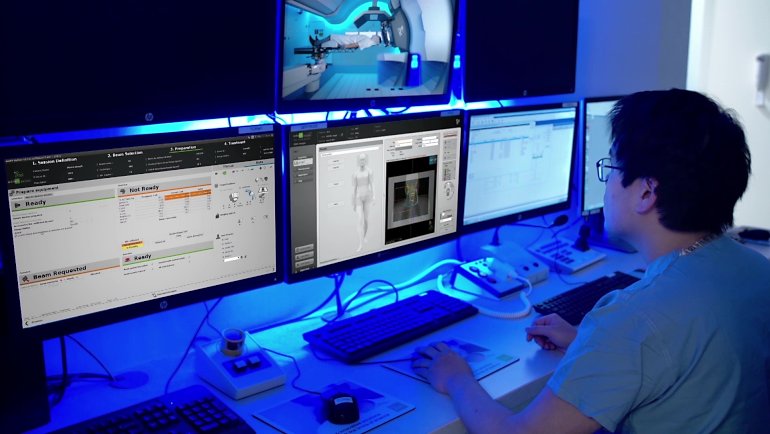
Unlike others systems, Proteus One allows all the technology necessary for treatment to be grouped together in one multifunctional room. -
![]()
Quirónsalud is planning to open the new center in 2020.
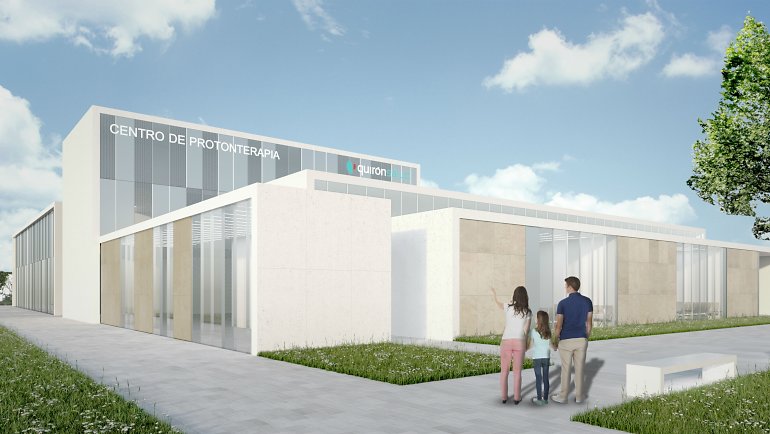
Cancer remains one of the greatest challenges facing healthcare systems worldwide. One in every six people dies of this disease, making it the world’s second leading cause of death.
(Published: July 2018)
Yet one of the most modern weapons in the battle against cancer is almost inconceivably tiny, measuring less than one millionth of a millionth of a millimeter across: the proton. In 2020, Quirónsalud, the Spanish hospital group of Fresenius Helios, is planning to open Spain’s first proton beam therapy center.
One of the most advanced cancer treatments, proton beam therapy works by radiating the tumor with positively charged hydrogen atoms, and has major advantages over traditional radiation therapy: The proton beam is narrower, and can be more precisely targeted, which reduces or even eliminates radiation exposure to the surrounding, healthy tissue. As a result, a significantly higher dose can be targeted directly at the tumor, even as the overall amount of radiation used – and the accompanying side effects – are reduced. This makes proton beam therapy especially beneficial for children.
Proton beam therapy has major advantages over traditional radiation therapy.
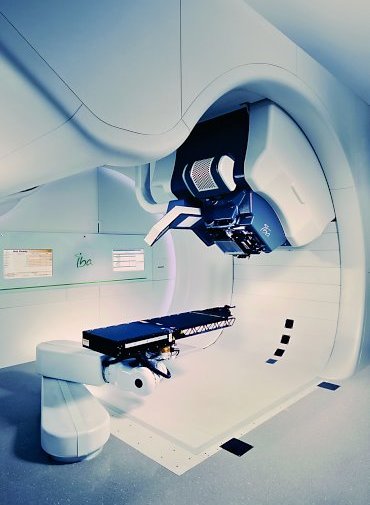
The secret is in the nature of the proton itself. X-ray radiation, the most commonly used form of radiation therapy, permeates the entire body and its energy decreases exponentially. The initial dose, therefore, must be especially high in order to ensure it still has enough strength to destroy cancer cells when it reaches the tumor. On the way there, and after, it can damage healthy tissue. But because protons only release energy at the end of their trajectories, their impact can be directed to the millimeter.
There are currently only about 20 proton beam therapy centers in Europe, including in Germany, France and Italy. The new Quirónsalud proton beam therapy center, which was built in Madrid, has required an investment of about €40 million.
Quirónsalud has opted for the Proteus One, a unique proton beam therapy system which, unlike others systems, allows all the technology necessary for treatment to be grouped together in one multifunctional room. It includes a tumor-scanning system to help doctors determine the optimal dose for each part of the body being treated, as well as a state-of-the-art imaging systems. And Proteus One can rotate 360 degrees, to direct the beam from any desired angle.
“The investment in building a proton beam therapy center shows how we are continuously seeking better treatment options for our patients,” said Dr. Leticia Moral, General Director for Assistance and Quality at Quirónsalud. “This new equipment and technology will not only enable us to treat cancer patients very effectively and with minimal side effects, but will aid us in researching new types of treatment.”
-
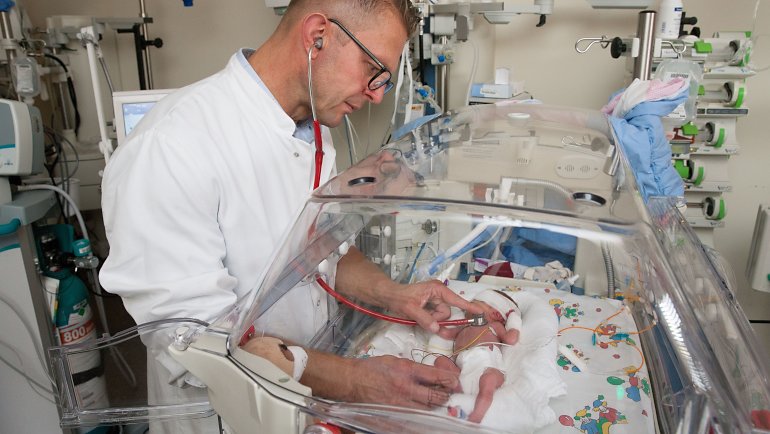
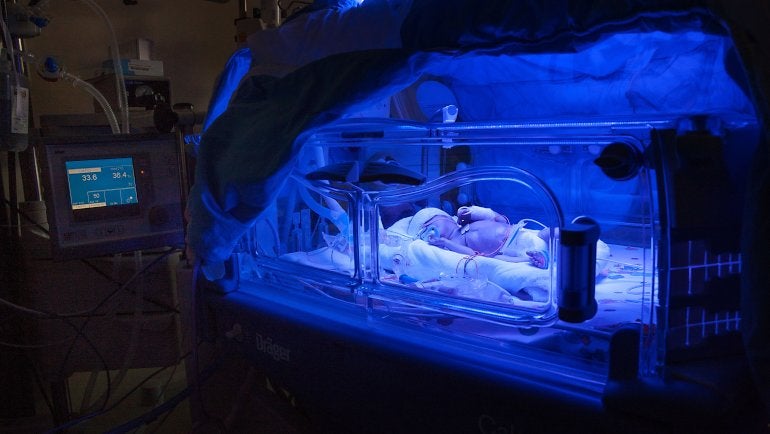
Dr. Olaf Kannt, Chief Physician, examines the breathing of one of the premature babies on the Neonatology ward. Second photo: A “preemie” is receiving light therapy against neonatal jaundice. -
![]()
Dr. Olaf Kannt, Chief Physician, examines the breathing of one of the premature babies on the Neonatology ward. Second photo: A “preemie” is receiving light therapy against neonatal jaundice.
6 a.m.: The smell of tea wafts through the nurses’ station where a dozen women, steaming mugs in hand, are gathered. The handover from the night shift to the day shift on the Neonatology ward starts on schedule. After everyone is updated, Head Nurse Ines Niemann assigns nurses to the different care rooms. There the shift handover continues in smaller teams: from incubator to incubator, from crib to crib.
(Published: December 2016)
The 22 “beds” on the ward are spread over seven rooms, connected by a long corridor painted in a waterworld theme. Vividly patterned fish, corals, boats, lighthouses and beaches bring brightness and color into a place where they sometimes seem to be in short supply. More than 400 babies born prematurely or with illnesses are treated annually in the Neonatology ward at the HELIOS hospital in Schwerin, a northern German city between Hamburg and Berlin. The ward has four Intensive Care rooms, each with space for three incubators, as well as three Intensive Monitoring rooms with four heated beds in each. There are also three “rooming-in” rooms – called ‘Shark,’ ‘Seahorse’ and ‘Whale’ – with two beds each so that mothers can be with their newborns around the clock.
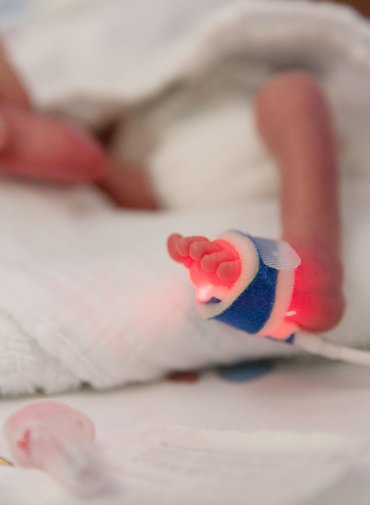
Babies born before the mother’s 37th week of pregnancy are classified as premature but, as Chief Physician Olaf Kannt explains, “not all children born before the 37th week are in the same danger. The more premature the child is, the greater the challenges in treatment and the higher the risk of complications.” Among them: An overburdened intestine and the inability to take nourishment or breathe without assistance.
All of these complications increase the danger of cerebral hemorrhages, Dr. Kannt explains. “Because those are so difficult to treat, we do everything we can to prevent them.” The specific preventive measures to be taken by the staff are included on a special list prepared by HELIOS. In this document, “minimal handling” is the key term in connection with “preemies,” who must always be handled as delicately as possible and only taken from, or placed back in their incubators or heated beds with extreme care.
The Intensive Care rooms are kept very warm – about 26 degrees Celsius, or 79 degrees Fahrenheit. Medical devices and hi-tech incubators, along with all the hoses, cables and monitors connected to them dominate the room where Nurse Nicole, 39, is caring for Mattes and Emil. She feeds and changes the twins, who were born when their mother was only 28 weeks pregnant, takes their temperatures and administers their medications. They are also turned over regularly, because pressure sores can easily develop on their highly sensitive skin.
Once every shift, Nurse Nicole measures the babies’ blood pressure, and once a week – today is the day – takes blood samples. “We do that first thing in the morning so that the results are available when the doctors make their morning round,” says the nurse. With a practiced technique she takes gentle hold of a tiny heel, carefully punctures a miniscule hole into it and draws a small quantity of blood into a tube. It will be tested to determine the acid-base balance, which will tell if the infusion therapy needs to be adjusted.
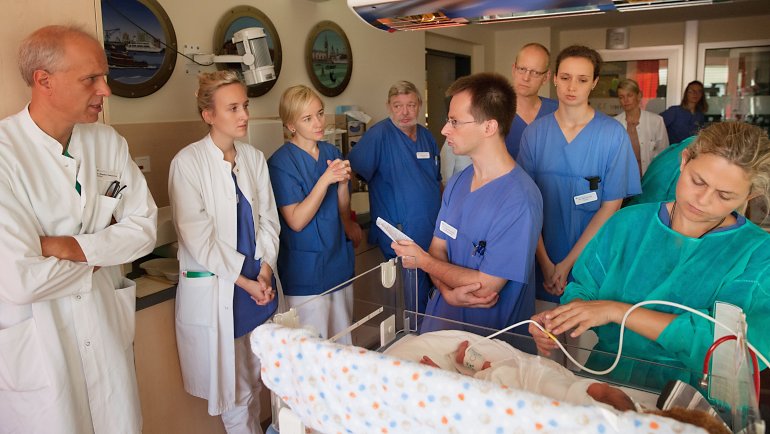
8 a.m.: Dr. Kannt starts the morning round, this time accompanied by an unusually large group of doctors and nurses: Once a week, the Neonatology and Obstetrics teams jointly do the round to discuss the status of the babies in the Neonatology ward. In one of the incubators lies Freja. She was born in the 36th week, so the gestation period is less a concern than the fact that she was born with an intestinal obstruction. As a newborn she had to undergo two operations. Today, the visiting doctors decide Freja’s stitches can be removed.
10 a.m.: The first mothers arrive. One of them is Xenia Dräger, Mattes und Emil’s mother. Ever since she has been allowed to care for her sons, she has been staying in a rooming-in room and from 10 a.m. until midnight washes and changes them, keeps a watchful eye as they sleep, and talks to them. The twins lie in heated, transparent plexiglas incubators, fed through tubes that enter the nose and continue down to the stomach. The room is quiet, except for the peeping from monitors and other assembled medical equipment.During the daytime, parents take the lead in care, with nurses always nearby, ready to advise them or take over if necessary.
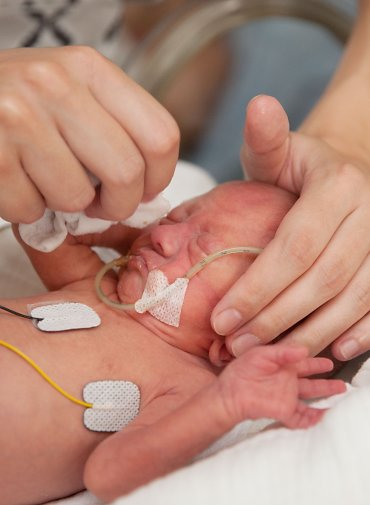
Because their lungs are not yet developed enough for the twins to breathe unassisted, they are attached to respirators. Their tiny faces are almost invisible behind the breathing masks, which make them look almost like miniature skin divers. Electrodes attached to their chests and feet monitor circulation. One suddenly sounds an alarm: Emil’s breathing has been interrupted and his heart rate is dropping. Xenia, who is standing beside the incubator, has been taught by a Neonatology nurse how to respond: she gently massages her son’s chest and presses against his feet. He starts to breathe regularly again, and the monitor goes quiet.
“Mattes does it very nicely, but Emil unfortunately still has frequent interruptions in his breathing,” Xenia says, gently stroking his head. “He still has to learn that.” Twice daily, the twins lay at her breast for one to two hours for so-called “kangarooing.” The term might be humorous, but the practice has a serious purpose: Studies show that it quiets the babies, making both breathing and the heart rate more stable.
2 p.m.: Arriving for the late shift is Nurse Konstanze, who no longer works in the Intensive Care rooms. “Since I became a mother it has been difficult for me to look after the tiny little ones who are struggling for life,” she says. “I feel better here in the Intensive Monitoring rooms.” In these rooms it is the babies’ own rhythms that dictate the care: lying in their warm beds, they are generally monitored only through a small cuff wrapped around a foot.
During the daytime, parents take the lead in care, with nurses always nearby, ready to advise them or take over if necessary. “A lot of parents are nervous dealing with their children, especially when the kids are still sick,” says Nurse Konstanze. “First and foremost, it’s our job to take away that fear, show them how to handle their kids and make them feel secure about it.”
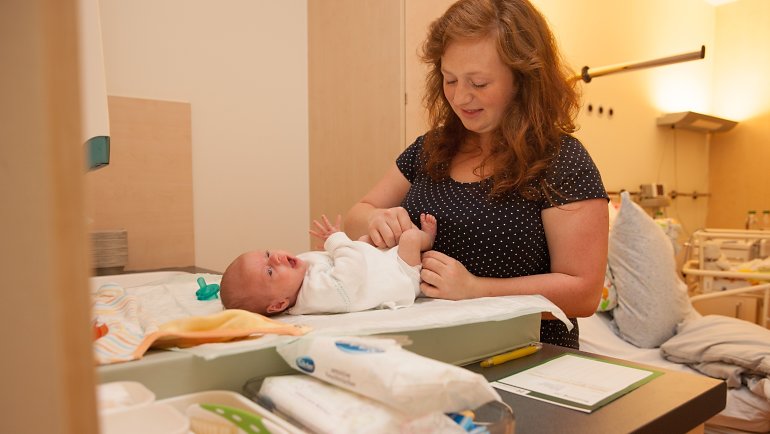
4 p.m.: It’s cuddling time for newborn Freja and her mother, Lisa Dierenfeld, who announces proudly: “She took my breast for the first time today.” There is both joy and relief in the young mother’s voice. “We knew during my pregnancy that Freja had an intestinal obstruction that ended outside of her stomach. We knew that she would have to undergo surgery right after she was born, and be in the ward for premature babies.”
Freja was delivered by caesarean four weeks early, and what followed was also difficult for her mother. “I couldn’t see my baby until two days after her birth,” Lisa recalls. “All the equipment around her bed, the cables and the monitors; it was a shock – I just cried. On the third day I could take Freja in my arms, and that was the first time I really felt like I had given birth.” But the patience and waiting for her daughter to improve have paid off: Lisa will finally be able to move into a rooming-in room later in the day, and she’s full of confidence.
“I am moving in there and I’ll stay until my daughter and I can go home together,” the young mother declares.
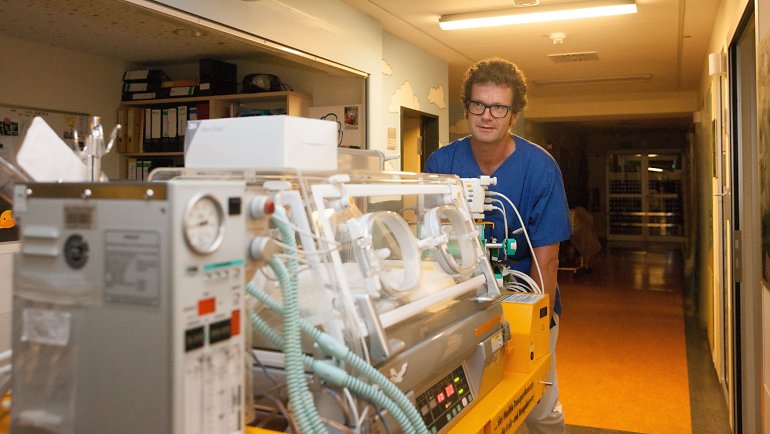
8 p.m.: It’s quiet time until 11 p.m., when the next care round will begin. The only sounds on the ward are the low swooshing of the respirators and the occasional alarm signaling that a baby has forgotten to breathe, which sends the nurses rushing in to massage tiny chests or feet until regular breathing starts again. A member of the night shift team is Nurse Janet, who works in the Intensive Monitoring rooms and now has six babies in her care. The 44-year-old nurse does not realize yet that there will be a seventh before the night is out.
10:30 p.m.: The late shift duty doctor, Senior Physician Christian Güttel, arrives and begins checking on what he should expect overnight. He then takes a close look at all the babies, examining some of them, and turns to Nurse Janet. “In the delivery room there’s a woman in her 34th week,” he says. “Don’t be surprised if we get an addition tonight.” It turns out he’s right: The call comes an hour later and, together, doctor and nurse wheel a mobile incubator out of the Neonatal ward and return a short time later with Robin, who is only minutes old.
Dr. Güttel examines the baby boy – the lack of wrinkles under the soles of the feet and the fingernails that don’t yet reach the fingertips are clear signs of a premature birth. “Every child born before the 37th week of pregnancy comes to Neonatology for monitoring,” he says. “With our knowledge and medical equipment we try here to stimulate development as it is in the mother’s womb. Our kids get all the medical help they need.”
3:30 a.m.: The rest of the night is quiet, and already it’s time for the last care round before the shift ends. Nurse Janet draws charts for the day ahead and fills the infusion and disinfectant dispensers. Someone is making tea so that it will be ready when the colleagues from the day shift arrive.
Contact
Helios Kliniken GmbH
Friedrichstr. 136
10117 Berlin
Germany
T +49 30 521 321-0
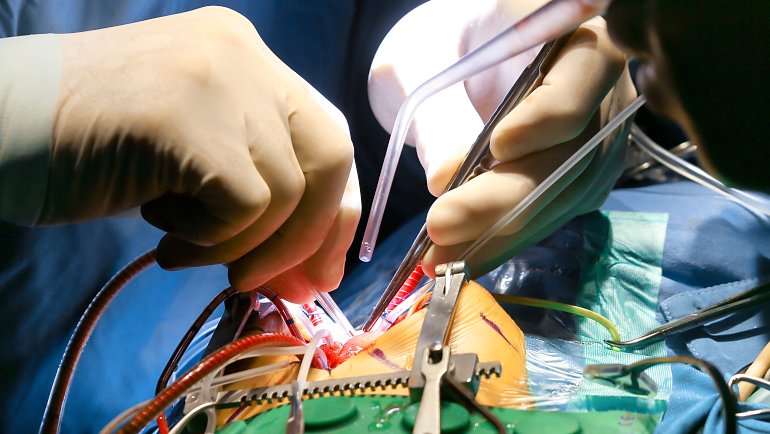
8:30 a.m. In the children's operating room of the Leipzig Heart Center, final preparations are underway. Philipp, just nine days old, is already under anesthesia on the operating table in the middle of the room.
(Published: February 2018)
The regular beeping of the ECG and the lines on a monitor indicate that his heart is working normally, and yet Philipp suffers from a very serious congenital heart defect: His pulmonary artery and aorta are transposed, which causes the blood and pulmonary circulation to run in parallel instead of in sequence, as they should. The baby’s body is barely getting enough oxygen, and only surgery can correct this anatomical defect and save his life.
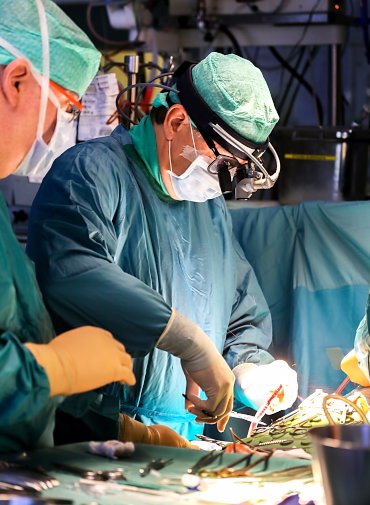
The procedure is challenging, but Philipp is in very good hands. His pediatric cardiac surgeon, Prof. Martin Kostelka, is one of the world’s best. He has performed more than 10,000 operations during his 30-year career, with a 99 percent success rate. The youngest child Prof. Kostelka has operated on was a premature baby born in the 25th week of pregnancy and weighing just 460 grams (a little more than one pound); the oldest “child” was a woman who was 77 when her congenital heart defect was detected.
In an average week, Prof. Kostelka will operate seven times in the children's operating room of the Leipzig Heart Center, assisted by his team of surgical nurses, anesthesiologists, perfusionists, junior doctors and surgical assistants. Among them is Ingrid Conradt, a surgical nurse who has worked at the Leipzig Heart Center for more than 20 years. "We are a very experienced team," she explains. "We can rely on each other 100 percent."
9 a.m. Prof. Kostelka makes an incision in Philipp's chest and opens the rib cage to expose the heart, which is about the size of a walnut. The next step is for the perfusionist to connect a heart-lung machine especially adapted for children. Prof. Kostelka gives brief instructions. Temperature, speed, the flow in the heart-lung machine, pressure … everything must be just right when the machine takes over the work of Philipp's heart to pump blood through his body. Shortly after 10 a.m., with Philipp's heart stopped, Prof. Kostelka's real work begins – the delicate transplanting of tiny coronary arteries and the transposed large vessels so that, when all is done, they will extend from the proper ventricle.
12 noon. While silent concentration dominates the children's operating room, it’s a bit louder two floors down in the electrophysiology (EP) laboratory, where Professor Andreas Bollmann, Chief Physician in the Department of Cardiac Rhythmology, is calling out for 35 watts. "We rhythmology specialists are essentially cardiac electricians," he says with a grin. "We’re able to treat hearts that are beating too fast, too irregularly or too slowly, by using ablations or by fitting defibrillators and pacemakers, which offer a great chance of healing."
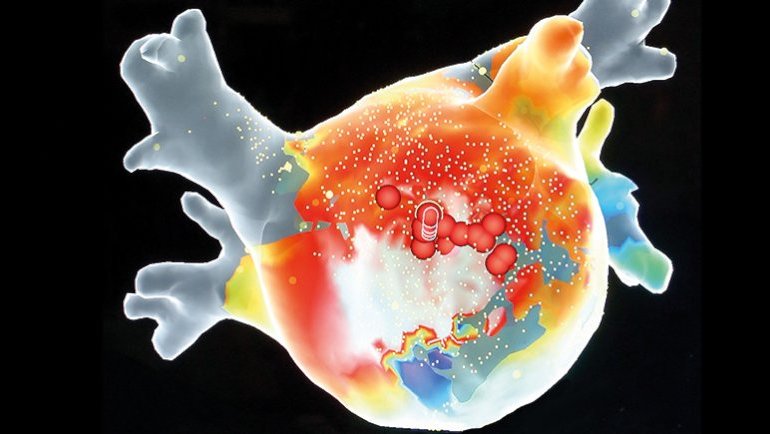
Lying before Prof. Bollmann is Guenther K., who suffers from atrial fibrillation, one of the most common cardiac arrhythmias. The doctor threads a catheter with an electrode into the 67-year-old patient's heart via an opening in the groin, which allows the points that are conducting the abnormal stimulus to be gradually neutralized. On a huge screen, he can see not only the lines of the ECG and an X-ray image of the heart but also a bright, almost amoeba-like 3D structure. "That is the left atrium with the pulmonary veins draining into it. With the help of this exact representation, we work out the precise route above the sites to be neutralized," Prof. Bollmann explains. While he guides the catheter, his team stands at what resembles a control center consisting of various monitors and apparatus. They provide the required electrical impulses, according to his instructions, measure parameters, and check imaging.
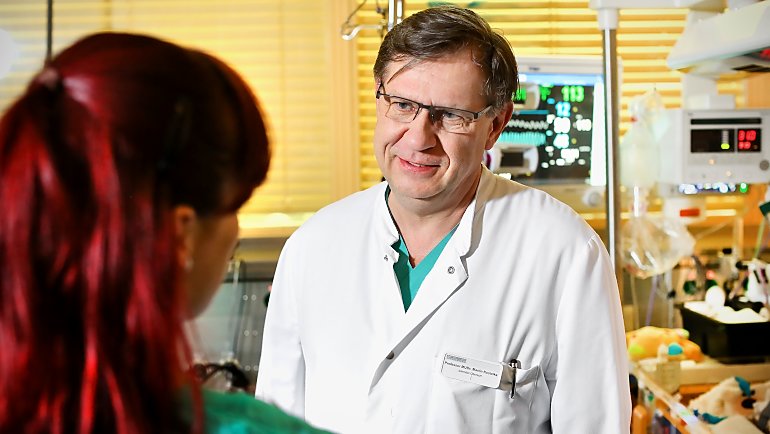
"We not only have the world's largest EP lab here, we also have the most innovative technology and imaging in this field," Prof. Bollmann says. In 2015, Fresenius Helios invested more than €5 million in the Leipzig Heart Center’s EP labs.
But it is not just modernity and innovation that make the heart center in Leipzig, a major city in eastern Germany with a population of 560,000, internationally attractive: Ongoing research in all fields of cardiovascular medicine attracts doctors from all over the world, who receive advanced training here or transfer permanently to the Leipzig Heart Center. In the Department of Cardiac Rhythmology alone there are doctors representing eight nationalities. Overall, people from more than 40 countries work at the Leipzig Heart Center.
5:30 p.m. Back in the pediatric intensive care unit, Philipp has survived the complex surgery. The four hours originally scheduled for the baby’s operation turned into nearly eight, and Prof. Kostelka looks tired, but happy. "Sometimes during an operation, the situation turns out to be much more complex than first assumed,” the surgeon says. “Then you have to deviate from your routine, react and find solutions. That’s how it was with Philipp. Due to an anatomical abnormality of the coronary arteries we had to start again three times, which meant that we also stopped the heart three times. As you can imagine this was a tremendous strain for the little boy.”
“However,” adds Prof. Kostelka, smiling, “we managed it, and now I am really happy and optimistic."
Only three weeks later, Philipp is well enough to leave the hospital with his mother. The infant is doing well, and can now begin to enjoy a healthy life with his family.
Pictures: © Thomas Oberländer, Helios
Contact
Helios Kliniken GmbH
Friedrichstr. 136
10117 Berlin
Germany
T +49 30 521 321-0