Reports on possible human rights or other types of compliance violations can be reported around the clock, either anonymously or by name, via our whistleblower system*:
The reporting on the respect for human rights for the year 2024 and following can be found in our Sustainability Report (CSRD Report). Further information on Fresenius' human rights program is available on this website.
As a global healthcare company, we have a responsibility towards people – in our daily operations, our business relationships, and throughout our value chains. Our business activities may be connected to impacts on different stakeholder groups. Respect for human rights is therefore a fundamental part of how we conduct business.
The graphic below illustrates how our business activities may be connected to potential human rights impacts and which stakeholder groups may be affected.
The persons and stories depicted in this image are purely fictional. Any resemblance to actual persons is purely coincidental and unintentional.
Anjing and Lisa work on preliminary products which we obtain from our suppliers. We then process these products in our own production facilities – to manufacture medical technology, for example, that helps treat people in hospitals. We expect our suppliers to respect the human rights principles laid out in our Human Rights Statement and our Codes of Conduct for Business Partners – in both their own activities and in their value chains. This is because the work carried out by people such as Anjing and Lisa, who are part of our value chain, may involve human rights risks or even violations of human rights. We are committed to doing everything within our power to take appropriate preventive or remedial activities.
Dunya lives with her children next to one of our production sites. Even though she is neither working on preliminary products nor employed by Fresenius, her human rights must be respected. For instance, Fresenius is responsible for preventing water and air pollution and excessive noise pollution to support the well-being of people like Dunya and her children.
Alejandro works for a logistics company that helps Fresenius in transporting medical products and medical technology. As a direct contractual partner, his company is an important part of our value chain. We take a risk-based approach and analyze the potential impacts on people like Alejandro. Where necessary, we take additional preventive activities.
Chi, Benjamín, Shiva, and Carmen work for Fresenius. Despite their different professions and areas of responsibility, they have one thing in common: Their employer Fresenius is responsible for respecting their human rights in the workplace by providing appropriate protective equipment when dealing with patients. It also includes making sure that people like Chi, Benjamín, Shiva, and Carmen are trained to handle equipment and adhere to at least the statutory break and rest periods.
We do our best every day to keep millions of patients like Najuk and Valentina healthy. Whether in hospital, at home, or as outpatients, they are part of our value chain. While Najuk is treated in hospital, Valentina receives our medication at home. The well-being of Najuk, Valentina, and all our patients is at the heart of our human rights due diligence obligations.
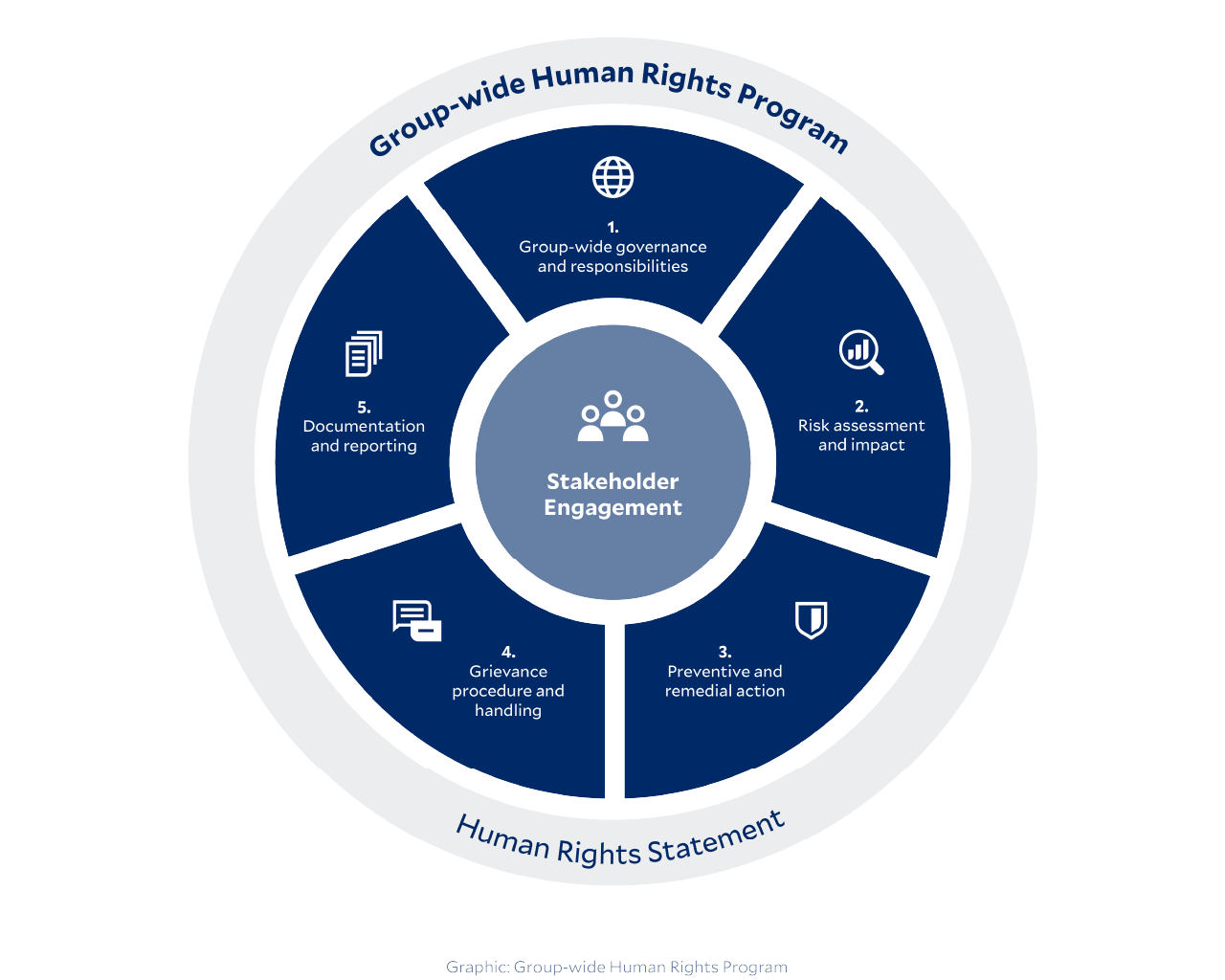
The core elements of our human rights program
The examples above illustrate how our business activities may be connected to people and potential human rights impacts. To identify, assess, and responsibly address such risks, we have established a Group-wide Human Rights Program rooted in our commitment to respect human rights in our own operations and throughout our value chain.
The Program consists of five core elements. Together, they translate the principles of our Human Rights Statement into concrete processes, responsibilities, and activities across all Operating Companies.
A key objective of our Human Rights Program is to understand the perspectives of potentially affected people and their representatives and to incorporate them into our human rights due diligence processes.
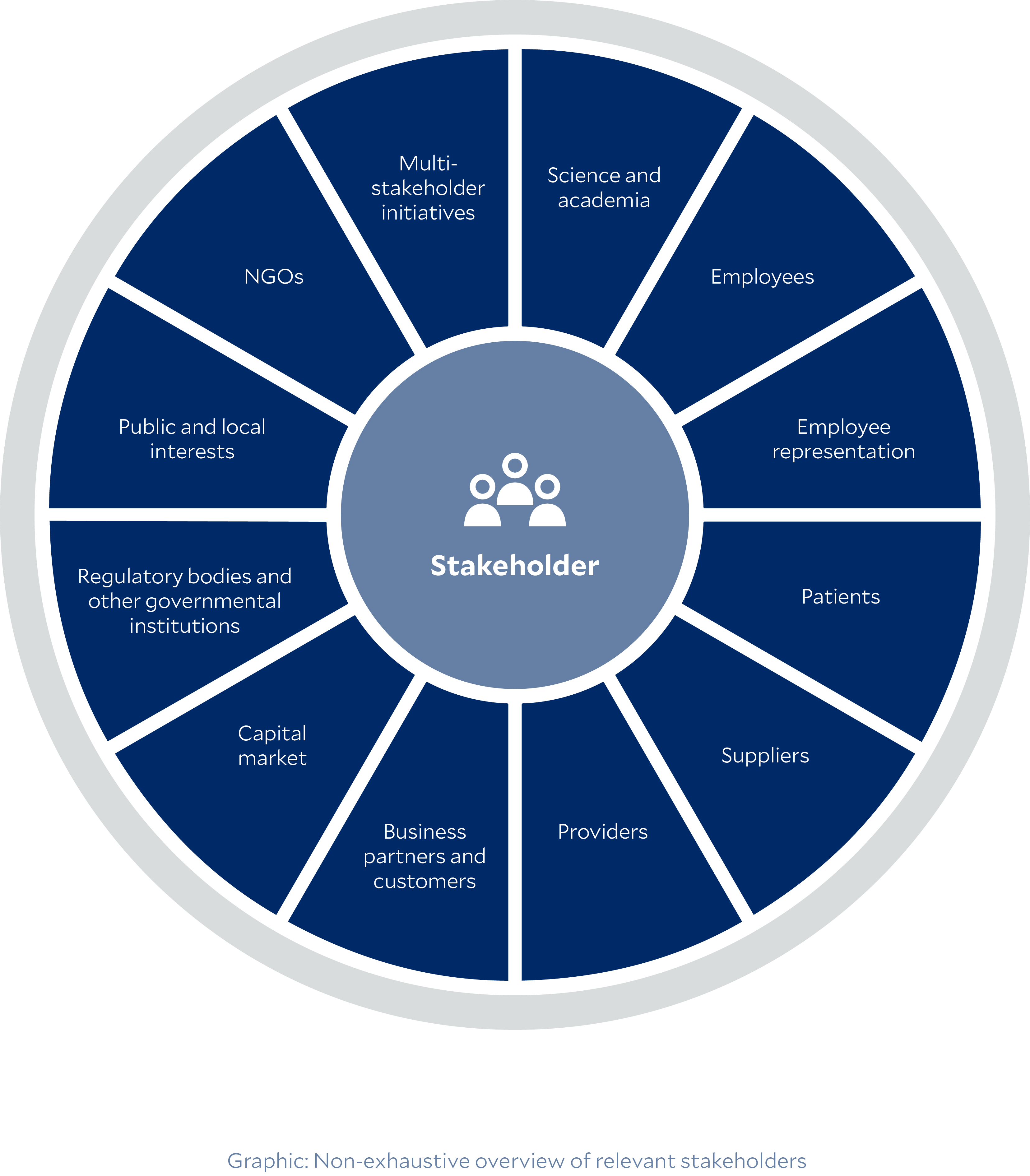
We therefore seek ongoing dialogue with relevant stakeholders and their representatives and continue to expand these efforts. Their experiences and perspectives help us better understand risks, set priorities, and continuously enhance our Human Rights Program.
The graphic below provides illustrative examples of stakeholder groups that may be particularly exposed to such risks. The overview is not exhaustive.
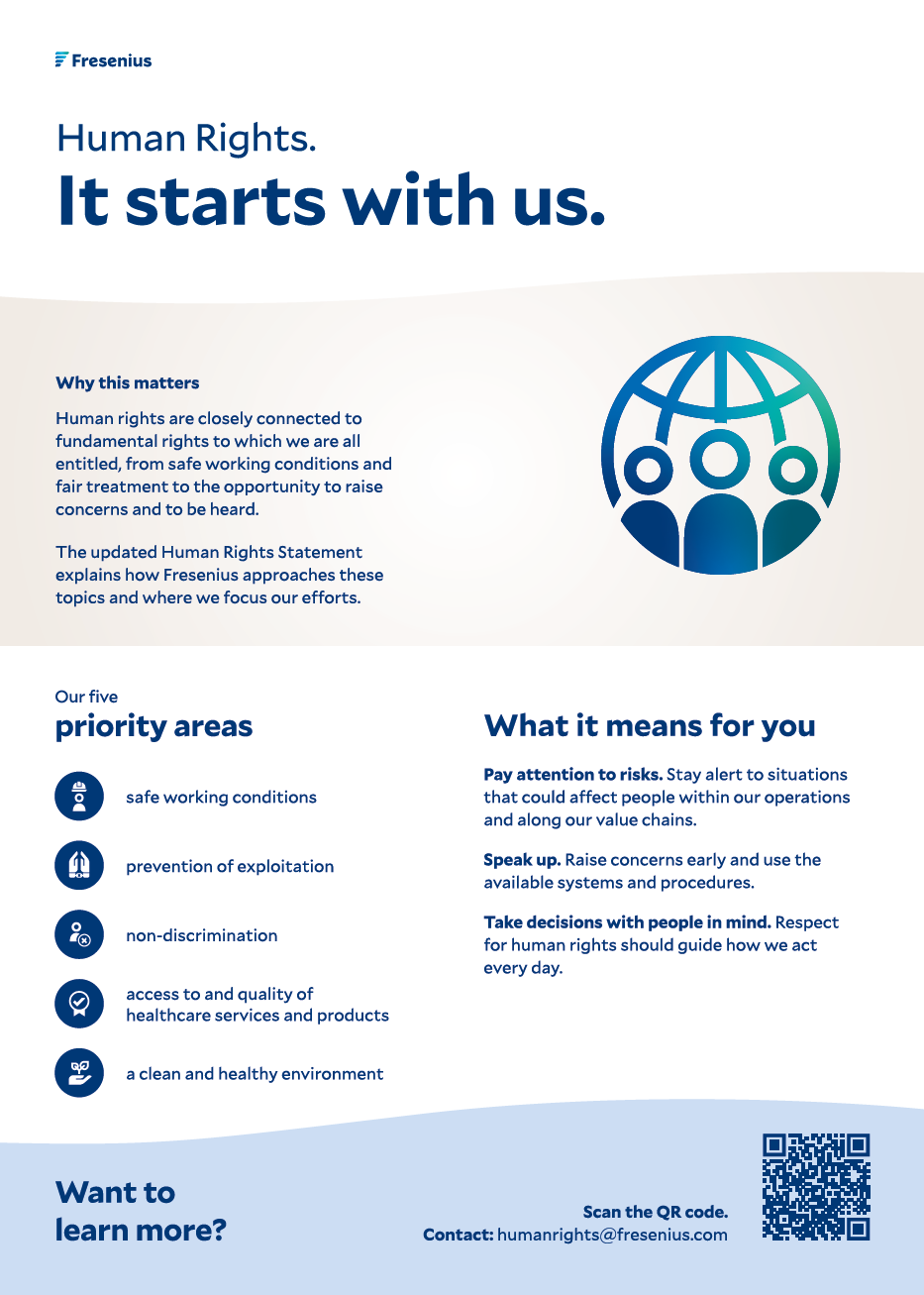
Human rights priority areas
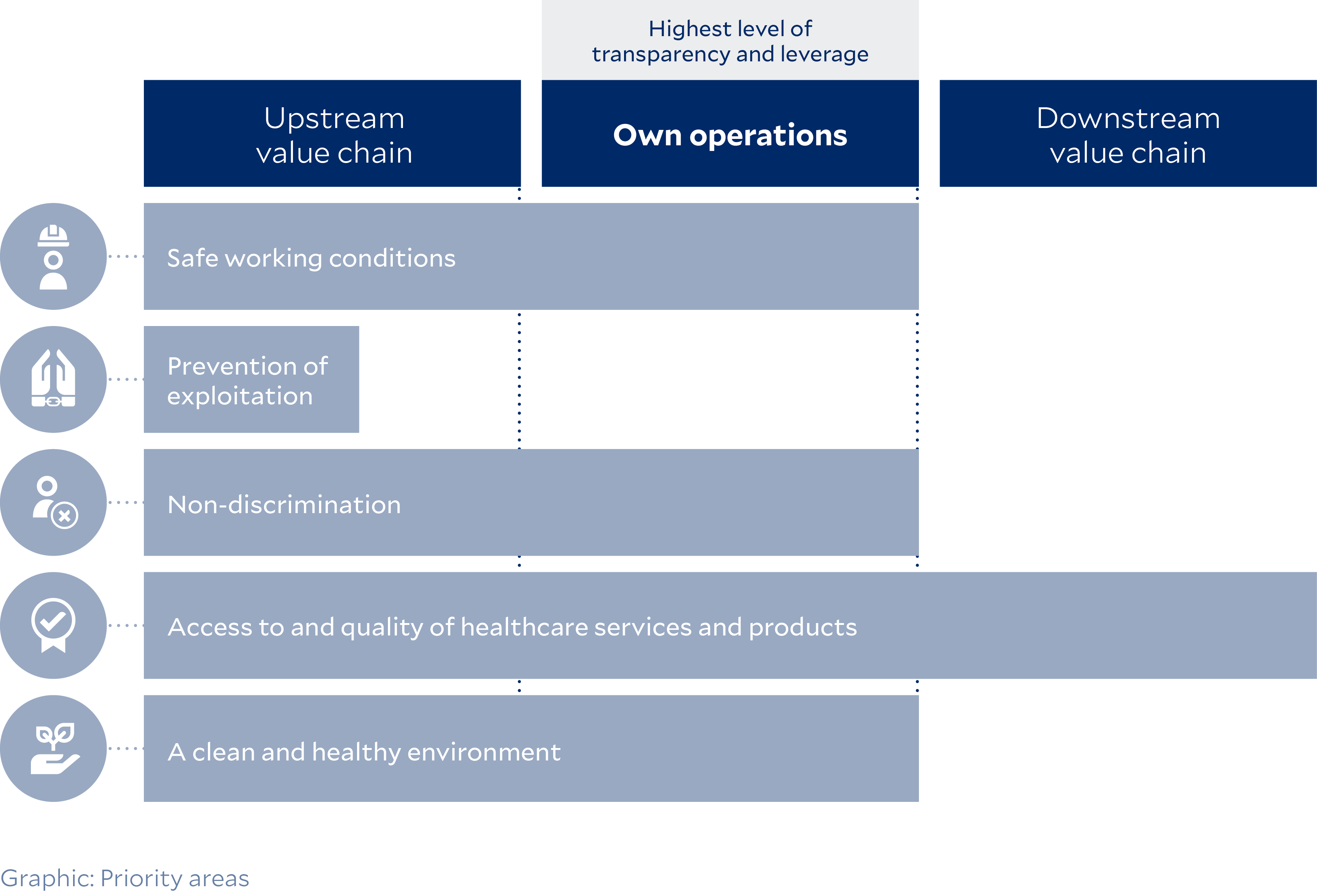
Based on our business activities, procurement structures, and global footprint, we have identified five strategic human rights priority areas. These highlight where human rights risks are more likely to arise and where our business activities may potentially impact people.
The priority areas were defined through a structured assessment of potential human rights impacts across our own operations and throughout our value chains. As our business activities and operating environment continue to evolve, these priority areas are subject to regular review.
Understanding the priority area
We operate across complex global value chains involving a wide range of workers and activities. In some countries and sectors, workers may face heightened human rights risks, including unsafe working conditions, restrictions on freedom of association, excessive working hours, wages below the legal minimum, or harmful recruitment practices. These risks may affect both Fresenius employees and workers throughout our value chains, particularly in areas where transparency is more limited.
How we address the priority area
We are committed to fostering a respectful workplace with safe and healthy working conditions and wages that meet or exceed local requirements. We respect and uphold workers' freedom of association, in line with applicable laws. These commitments are embedded in our internal standards, including the Group Social Labor Standards Guideline and the Group Code of Conduct, and are supported through training and awareness-raising activities. We expect our business partners to uphold similar principles, as outlined in our Third-Party and Supplier Codes of Conduct. In addition, our sites may apply externally certified standards and management systems, where appropriate.
Understanding the priority area
Forced labor and child labor remain significant human rights risks in global value chains, particularly in upstream supply chains where transparency may be limited. Depending on the country, sector, and workforce composition, workers may face coercion, deception, debt bondage, or other forms of exploitation. Children may be exposed to work that interferes with their education, development, or wellbeing. Such risks can arise in activities such as raw material extraction, manufacturing, or certain service sectors, and may be more prevalent where labor protections are weak or where low-skilled or migrant labor is common.
How we address the priority area
We strictly reject all forms of forced labor, child labor, coercion, and violence, and support adherence to applicable minimum age requirements. Employment must always be voluntary, and employees may leave their employment with reasonable notice in accordance with local laws. These expectations are reflected in our internal standards, including the Group Code of Conduct and the Group Social Labor Standards Guideline. We continuously strengthen our controls and other preventive activities to support their implementation. We also expect our business partners to uphold comparable standards, as set out in our Business Partner or Third-Party Codes of Conduct.
Understanding the priority area
Discrimination can occur in the workplace and in the provision of healthcare across Fresenius’ operations and value chains. In certain regulatory, social, or sectoral contexts, workers, job seekers, and patients may face unequal treatment based on personal characteristics. Such risks may arise in processes such as recruitment, remuneration, working conditions, career advancement, and access to healthcare. Individuals from marginalized groups may be particularly affected.
How we address the priority area
We are committed to ensuring equal opportunities for all and oppose discrimination of any kind. Our approach is guided by applicable laws and anti‑discrimination regulations, and we expect all workplace interactions to be guided by respect, fairness, and appreciation. Insults, harassment, and any other form of discriminatory behavior are not tolerated. These principles are reflected in our internal standards, including the Group Social Labor Standards Guideline and the Group Code of Conduct, and are supported through training and awareness-raising activities. We also expect our business partners to uphold comparable standards, as set out in the Third-Party and Supplier Codes of Conduct used by the Operating Companies.
Understanding the priority area
Our mission is to save and improve human lives through accessible, high‑quality healthcare. Risks to the human rights of patients and clinical trial participants may arise if healthcare services, products, or related processes are unsafe, ineffective, inaccessible, or if personal health information is not adequately protected. Such risks may include inadequate clinical care as well as issues related to the safety, quality, or accessibility of products and services.
How we address the priority area
We are committed to providing patients with safe, effective, and high‑quality care, as reflected in the Group‑wide Code of Conduct. We deliver medical products and healthcare services that are subject to rigorous quality and safety standards. Our Group-wide quality management systems support the safety, quality, and accessibility of our products and services across their life cycle and throughout our value chains. In both production and clinical settings, quality controls help reduce risks, prevent defects, and support the consistent delivery of products and services that meet applicable quality and safety requirements.
Understanding the priority area
Our operations and value chains can have environmental impacts that may affect the health and wellbeing of people and local communities. These impacts can arise throughout the life cycle of pharmaceutical and medical technology products, including raw material extraction, manufacturing, transportation, use, and waste management. Relevant environmental topics include climate-related emissions, water use and resource consumption. In some cases, the release of antimicrobial substances into the environment may also contribute to antimicrobial resistance (AMR), creating broader public health risks.
How we address the priority area
We are committed to continuously improving our environmental performance and to preventing, reducing, and mitigating adverse environmental impacts. These commitments are reflected in our Environmental Policy and supported by environmental management systems, environmental targets, and adherence to applicable laws and regulations. We have our systems reviewed by external partners and regulatory bodies and continue to expand the number of sites certified according to ISO 14001 and ISO 50001. We also work to reduce antibiotic residues in wastewater and seek to achieve AMR Industry Alliance-certification for an increasing number of antibiotics across our sites.
Review of appropriateness and effectiveness
Implementing the core elements of our Human Rights Program is not a one-time exercise. We therefore continuously review and improve our due diligence processes. To assess their appropriateness and effectiveness, we regularly consider insights from human rights risk assessments, audits, internal control activities, whistleblowing and grievance mechanisms, as well as regulatory developments. These insights help us identify areas for improvement, set priorities, and continuously enhance our processes and methodologies.
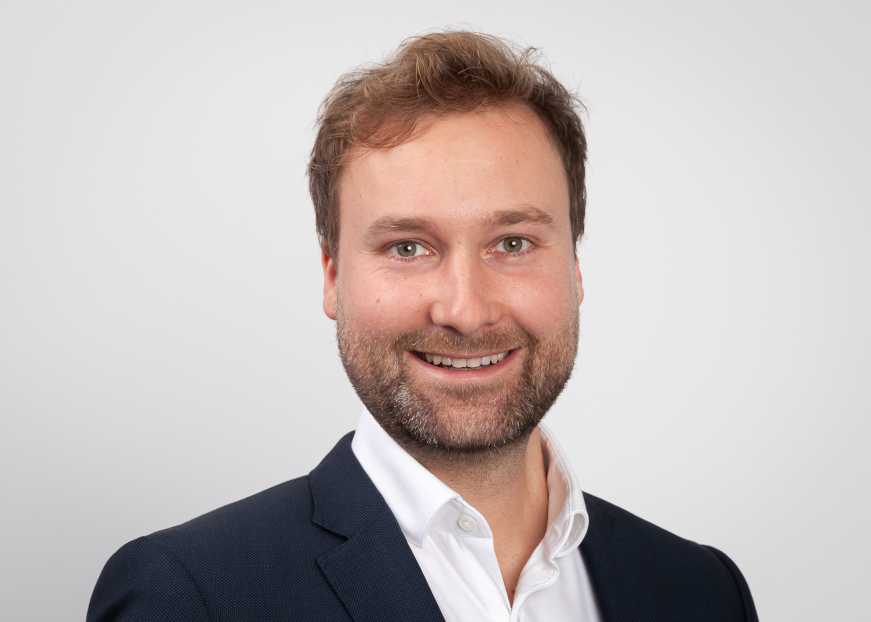
“Our commitment to human rights goes beyond legal compliance and rhetoric. It is closely linked to our values and our promise: Committed to Life.”
− Lasse Kowalewski, Head of Group Sustainability Strategy & Head of Group Human Rights Office
Reports on possible human rights or other types of compliance violations can be reported around the clock, either anonymously or by name, via our whistleblower system*:
The reporting on the respect for human rights for the year 2024 and following can be found in our Sustainability Report (CSRD Report). Further information on Fresenius' human rights program is available on this website.
mAbxience, a Fresenius Kabi majority-owned group, and Egis have entered a strategic commercialization agreement for two biosimilar candidates in key Central and Eastern European markets.
Fresenius Kabi, an operating company of Fresenius, continues to reinforce its biopharma business and strategic network through this new agreement with Egis. This directly underscores the mutual commitment of both companies to broadening access to essential, high-quality biosimilar therapies in markets where affordability and accessibility are critical. The agreement strengthens Fresenius Kabi’s presence in Central and Eastern Europe and reaffirms its dedication to drive innovation and accessibility of life-saving treatments in global healthcare, all in line with #FutureFresenius.
mAbxience, a Fresenius Kabi majority-owned group, and Egis have entered a strategic commercialization agreement for two biosimilar candidates in key Central and Eastern European markets.
Fresenius Kabi, an operating company of Fresenius, continues to reinforce its biopharma business and strategic network through this new agreement with Egis. This directly underscores the mutual commitment of both companies to broadening access to essential, high-quality biosimilar therapies in markets where affordability and accessibility are critical. The agreement strengthens Fresenius Kabi’s presence in Central and Eastern Europe and reaffirms its dedication to drive innovation and accessibility of life-saving treatments in global healthcare, all in line with #FutureFresenius.
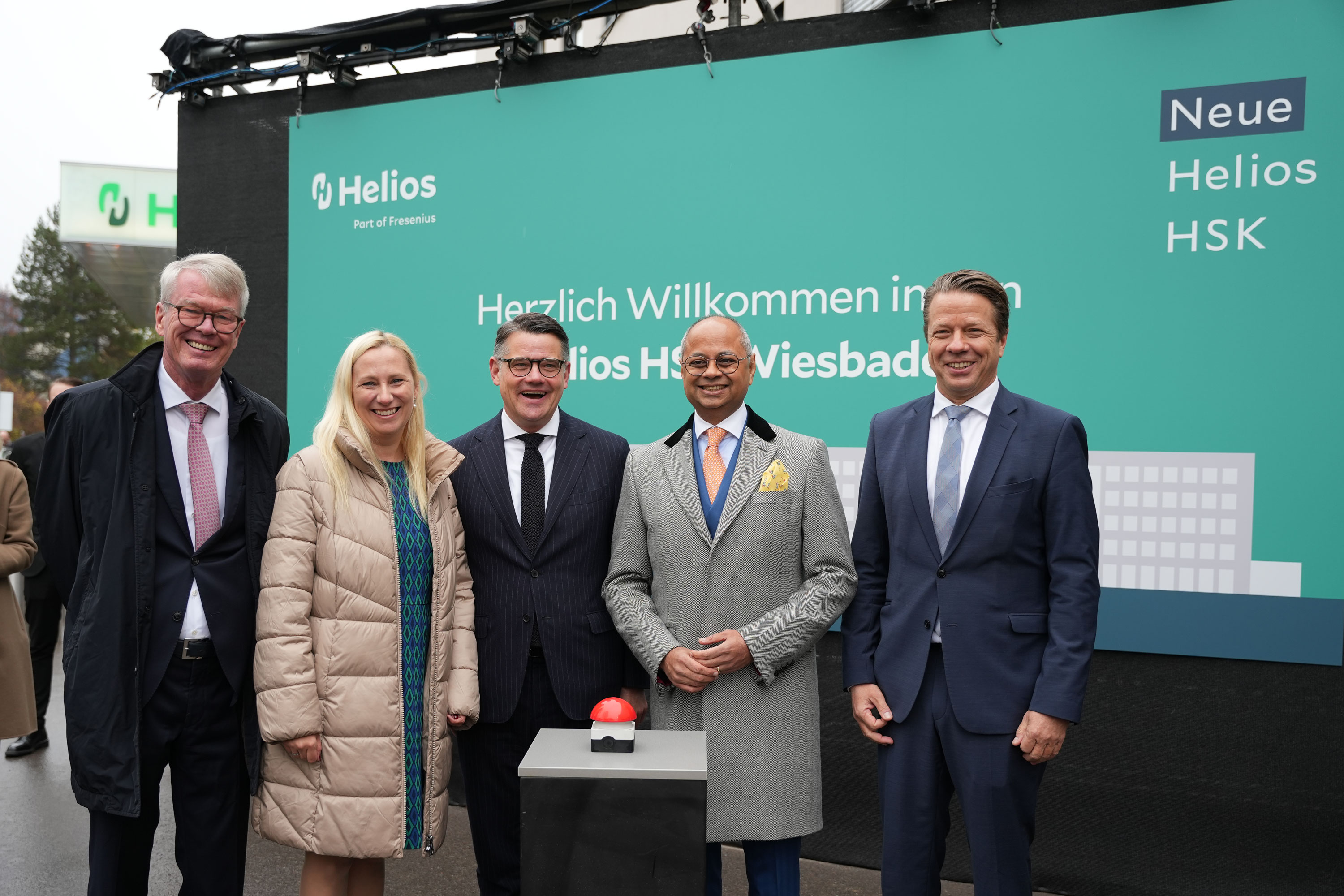
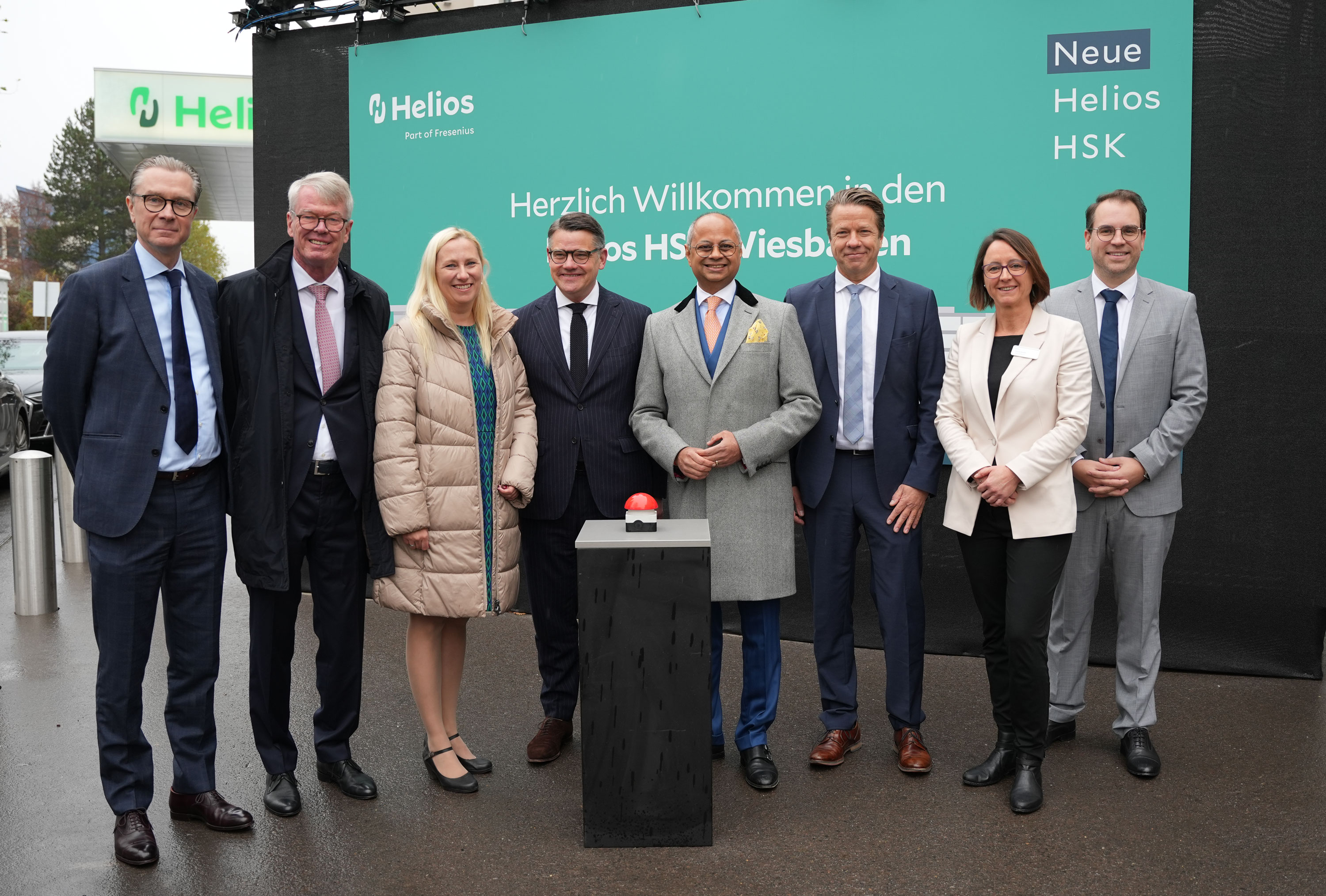
starting left: Prof. Michael Stumpf [Medical Director of Helios HSK], Wolfgang Kirsch, Diana Stolz, Boris Rhein, Michael Sen, Robert Möller, Diana Kirscht [Nursing Manager of Helios HSK], Sven Axt [Manager of Helios clinics Wiesbaden-Taunus]
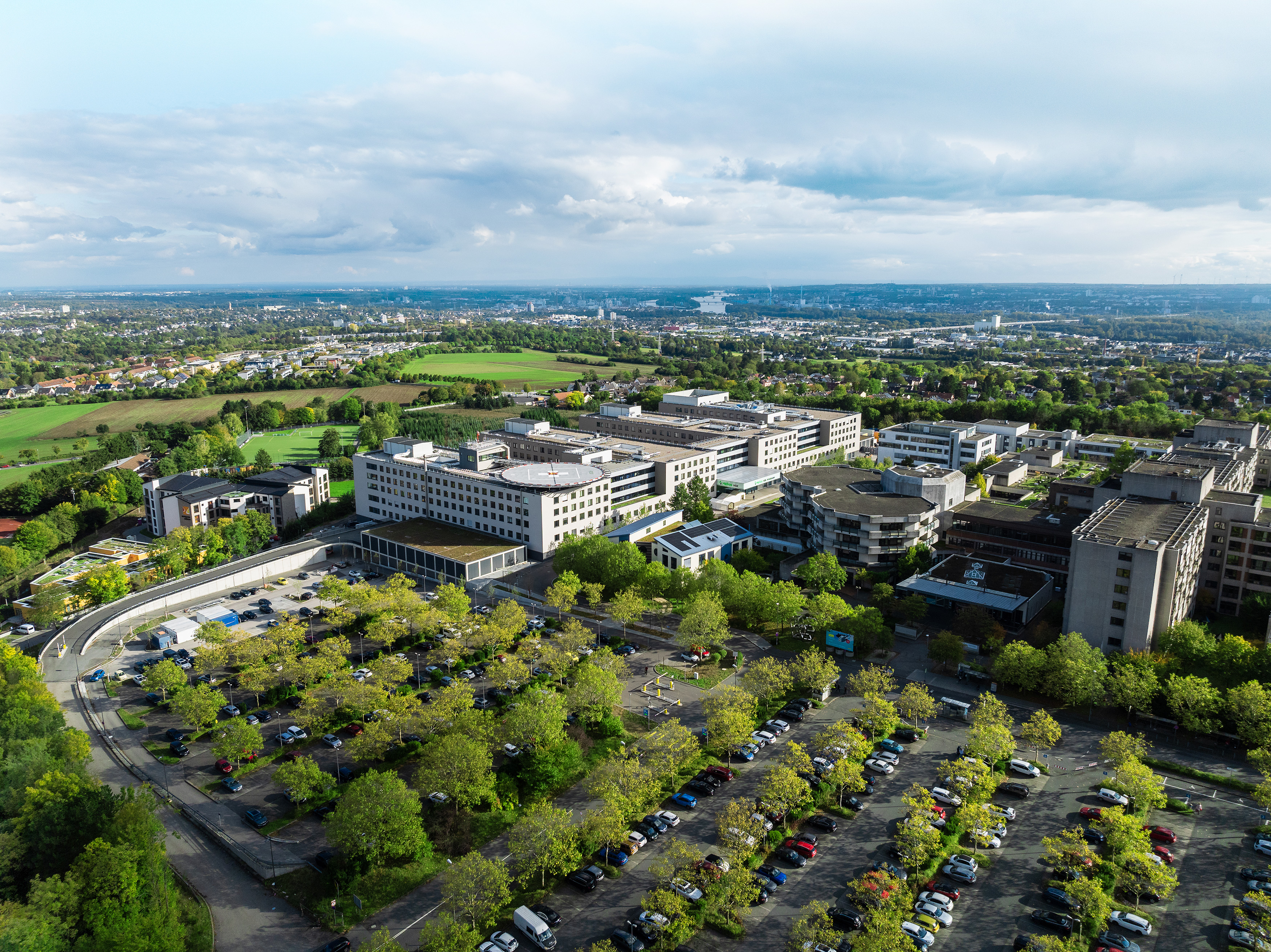
Investment in the future of healthcare: Fresenius has opened with the new construction of Helios HSK in Wiesbaden one of Germany's most modern hospitals.
Investment in the future of healthcare: Fresenius has opened with the new construction of Helios HSK in Wiesbaden one of Germany's most modern hospitals.
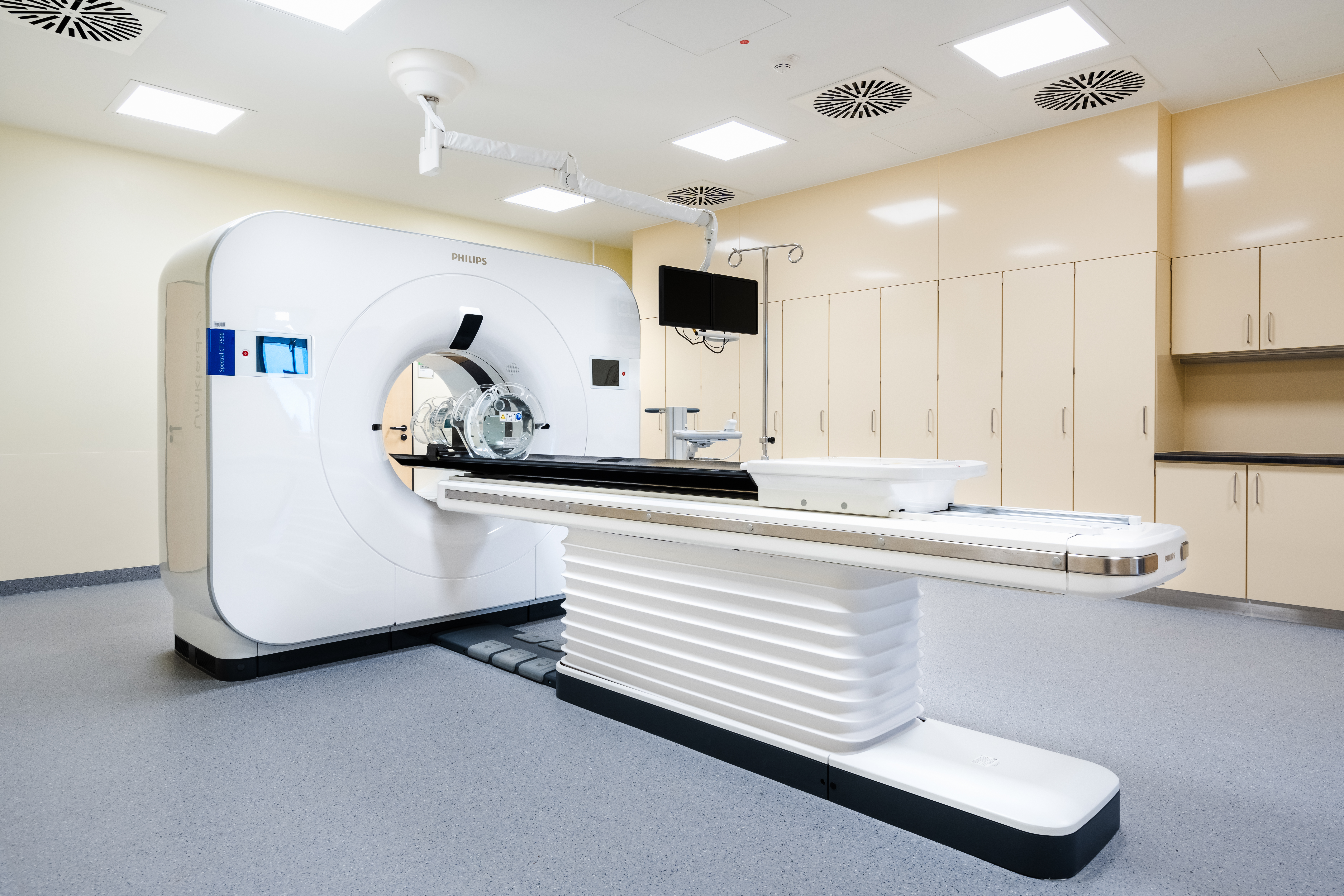
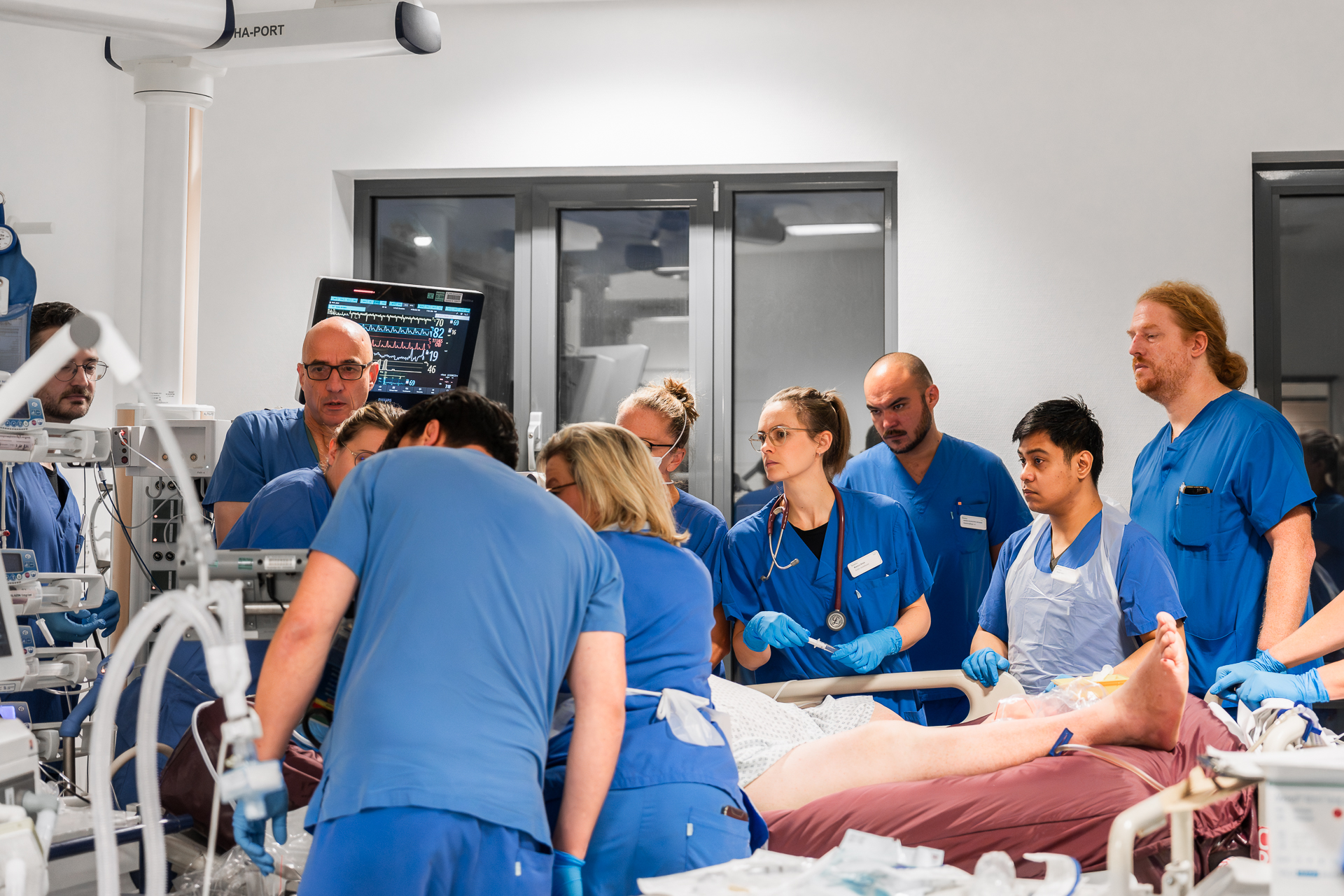
Patient-centered care and state-of-the-art equipment: Helios HSK is an example of medical excellence and high-quality results throughout the entire patient journey.
Patient-centered care and state-of-the-art equipment: Helios HSK is an example of medical excellence and high-quality results throughout the entire patient journey.
Patient-centered care and state-of-the-art equipment: Helios HSK is an example of medical excellence and high-quality results throughout the entire patient journey.
Investment in the future of healthcare in the Rhine-Main region and beyond
Helios HSK as an example of medical excellence and high-quality results throughout the entire patient journey
Boris Rhein: "strong signal of the innovative power of Hessian companies and the strength of our economy"
Fresenius is continuing to develop its Care Provision Platform, of which Helios Germany is a core part: with the recently completed construction of Helios HSK’s new building in Wiesbaden, the company has opened one of Germany's most modern hospitals. Helios HSK is the core of the Wiesbaden-Taunus hospital cluster and is home to 25 specialist clinics and five institutes. At a launch ceremony today, around 400 guests from the worlds of politics, business and medicine paid tribute to the new building. In addition to the Prime Minister of the State of Hesse, Boris Rhein, dignitaries included the Hessian Minister of Health Diana Stolz, and Wiesbaden's Lord Mayor Gert-Uwe Mende.
Boris Rhein, Prime Minister of the State of Hesse: "All the employees of Helios HSK have done a great job of moving to the new clinic building while maintaining ongoing operations. Under challenging conditions, they have impressively demonstrated that patients are in the best of hands here. With this new building, our state capital has gained a maximum-care clinic and the most modern large hospital in Germany, featuring 25 specialist clinics, five institutes, and almost 900 beds. This also sends a strong signal of the innovative power of Hessian companies and the strength of our economy. With the opening ceremony, we are beginning a new chapter in healthcare in Hesse. On behalf of the Hessian state government, I would like to thank everyone involved and wish Helios HSK continued success."
Michael Sen, Fresenius CEO: "The new Helios HSK is a maximum care provider, delivering cutting-edge diagnostics and therapies using the latest technologies. Every day, our colleagues work tirelessly for patient wellbeing, embodying Fresenius’ promise: 'Committed to Life'. Medical progress is advancing more rapidly than at any time in history. From Artificial Intelligence, robotics and digital technologies to breakthroughs in genetic and cell research: today, therapies of a quality once unimaginable are now a reality. As a leading therapy-focused company, our mission is to make these advances available to as many people as possible, as quickly as possible."
Robert Möller, Member of the Fresenius Management Board and Helios CEO: "Top-notch medical care, high-quality treatment outcomes, and patient satisfaction are key to our success. Building a hospital from the ground up allowed us to design it with the latest medical and nursing knowledge, focusing entirely on patient needs. This has been achieved brilliantly here in Wiesbaden. My heartfelt thanks go to all the employees who brought this mammoth project to life. This new clinic will have a great impact beyond Wiesbaden and stands as one of the most modern medical workplaces in Germany."
Diana Stolz, Hessian Minister for Family Affairs, Senior Citizens, Sports, Health and Care: "As the Hessian Minister for Family Affairs and Health, I would like to draw particular attention to the fact that this new building has established the most modern care facilities for maternity, pediatric, and adolescent medicine. Now, all essential services – including obstetrics, neonatology, pediatric intensive care, and the children's hospital – are integrated under one roof and in close proximity. With this new building, we have empowered HSK, as a maximum-care provider, to keep pace with rapid medical advancements, to treat complex illnesses and injuries, to adapt its medical operations to these advances and changes, and to optimize its organization and operational procedures. Our guiding principle remains to deliver high-quality patient care across Hesse."
Investment in patient-centered care and state-of-the-art equipment
At Helios HSK, optimal treatment paths, the latest therapies and equipment with state-of-the-art medical technology enable cutting-edge medicine at a new level of treatment. Patients are welcomed into a hospital designed entirely around their needs from the ground up. Employees benefit from an attractive, state-of-the-art work environment that enables them to focus even more on patient care.
Among other things, Helios HSK is certified as an oncology center with ten certified organ centers and as a supra-regional trauma center. Around 170,000 patients per year can be treated in the seven-storey building with around 900 beds and around 3,000 employees.
The clinic's highlights include 22 surgery rooms, most of which have natural daylight, two intensive care units, a helicopter roof landing pad, a special stroke ward and an emergency room with access to cutting-edge technology. These include a special spectral computer tomograph supported by Artificial Intelligence. Only a few meters separate the arrival hall for ambulances from the shock room and other life-saving areas.
An entire wing of the hospital also houses a modern parent-child center with six delivery rooms, an intensive care unit for premature babies, and its own emergency surgery room. Short distances here too: everything is on one level and all experts for the care of the youngest children work together within easy reach.
The new Helios HSK building marks Fresenius' largest hospital investment project to date. The company financed the majority of the over 300 million euro investment from its own funds, with the state of Hesse contributing around 68 million euros.
This release contains forward-looking statements that are subject to various risks and uncertainties. Future results could differ materially from those described in these forward-looking statements due to certain factors, e.g. changes in business, economic and competitive conditions, regulatory reforms, results of clinical trials, foreign exchange rate fluctuations, uncertainties in litigation or investigative proceedings, the availability of financing and unforeseen impacts of international conflicts. Fresenius does not undertake any responsibility to update the forward-looking statements in this release.
Group organic revenue growth of 9%1,2 to €5.3 billion2 driven by a strong Kabi performance and good organic growth at Helios.
Strong bottom-line traction with Group EBIT2 increase in constant currency of 9%3 to €552 million and EPS growth of 7%2,3,4.
Group outlook for fiscal 2024 upgraded; Organic revenue growth1,2 is now expected to grow between 6% to 8% (previous: between 4% to 7%) and EBIT growth2 in constant currency is now targeted to be in the 8 to 11% range (previous: between 6% to 10%).
Group-wide cost and productivity savings ahead of plan with target for FY/24 already achieved YTD.
Excellent operating cash flow resulting from focused cash management.
Deleveraging continued, and leverage ratio further improved to 3.24x2,5 driven by excellent cash flow; Leverage target corridor under review.
Fresenius Kabi delivering above the top-end of the structural growth band with organic revenue growth of 11%6; strong EBIT margin at 15.9%2.
Growth Vectors at Kabi show continued strong performance, led by dynamic growth at Biopharma, which had yet again positive EBIT in Q3. Tyenne is in line with expectations, building on strong momentum.
Fresenius Helios with excellent organic revenue growth of 8% driven by solid performance in Spain and supported by some favorable technical reclassifications in Germany; EBIT margin of 7.9%2 in line with expectations due to anticipated lower seasonal demand in Spain; last quarter of energy relief funding support.
Dedicated Helios performance program underway to drive further operational excellence and compensate ending energy relief funding in Germany.
Michael Sen, CEO of Fresenius: Team Fresenius delivered an excellent third quarter in 2024 – all financial metrics improved versus the prior year. Revenues grew strongly, with margin expansion across the Group, and significantly improved cash flow generation. Both Kabi and Helios continue to deliver consistent and sustained financial performance. We are more focused and stronger, deploying our cash to reduce debt further, while growing earnings per share and driving shareholder returns. Quarter after quarter we are showing how our #FutureFresenius strategy is paying off. Our mission remains at the core of our activities: saving and improving human lives. Fresenius is: Committed to Life.” Sen continued, “Given the strength of our first nine months, we are upgrading our revenue and earnings guidance for the year.”
1 Organic growth rate adjusted for accounting effects related to Argentina hyperinflation. 2 Before special items 3 Growth rate adjusted for Argentina hyperinflation 4 Excluding Fresenius Medical Care 5 At average exchange rates for both net debt and EBITDA; pro forma closed acquisitions/divestitures, including lease liabilities, including Fresenius Medical Care dividend 6 Organic growth rate adjusted for the accounting effects related to Argentina hyperinflation.
Conference call and Audio webcast
As part of the publication of the results for Q3/24, a conference call will be held on November 6, 2024 at 1:30 p.m. CET (7:30 a.m. EST). All investors are cordially invited to follow the conference call in a live audio webcast at www.fresenius.com/investors. Following the call, a replay will be available on
our website.
Note on the presentation of financial figures
An overview of the presentation of the financial figures are available on page 14 of this Investor News.
Structural productivity improvements: Target achieved ahead of plan
The Group-wide cost and efficiency measures are progressing faster than planned. The target for annual sustainable cost savings of ~€400 million at EBIT level has already been achieved with accumulative savings totaling €408 million until the end of Q3/24. Originally, it was expected to achieve the target by year-end 2025.
Fresenius will continue its efforts to increase structural productivity. So far, Kabi has delivered the majority of the savings. Going forward, it will be Fresenius Helios with its dedicated efficiency program focused on operations excellence including reduction of process and waiting times and digitalization of processes, resource optimization and synergies in particular in logistics and procurement. An update will be provided as part of the FY/24 results in February 2025.
Further efforts to enhance structural efficiency will, however, also be driven forward by Fresenius Kabi and the Corporate Center. Key elements include measures to reduce complexity, optimize supply chains and improve procurement processes.
Group sales and earnings development
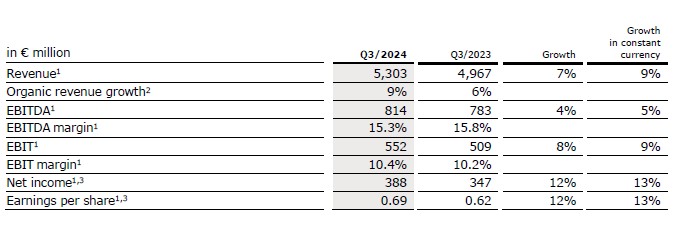
Group revenue before special items increased by 7% (9% in constant currency) to €5,303 million (Q3/23: €4,967 million). Organic growth was 9%2, driven by Kabi and Helios's ongoing strong performance. Currency translation had a negative effect of 2% on revenue growth.
Group EBITDA before special items increased by 4% (5% in constant currency) to €814 million (Q3/23: €783 million).
Group EBIT before special items increased by 8% (9% in constant currency) to €552 million (Q3/23: €509 million), mainly driven by the strong organic revenue growth at Kabi and Helios and the continued progress of the groupwide cost savings program. The EBIT margin before special items was 10.4% (Q3/23: 10.2%). Reported Group EBIT was €492 million (Q3/23: €362 million).
Group net interest before special items increased to -€116 million (Q3/23: -€102 million) mainly due to financing activities in a higher interest rate environment.
Group tax rate before special items was 24.5% (Q3/23: 23.1%).
1 Before special items 2 Organic growth rate adjusted for accounting effects related to Argentina hyperinflation 3 Net income attributable to shareholders of Fresenius SE & Co. KGaA
Constant currency growth rates adjusted for Argentina hyperinflation. Financial figures and growth rates adjusted for the divestment of the fertility services group Eugin and the hospital stake in Peru.
Net income1 from deconsolidated Fresenius Medical Care operations before special items increased by 38% (42% in constant currency) to €76 million (Q3/231: €55 million).
Group net income1 before special items increased by 12% (13% in constant currency) to €388 million (Q3/231: €347 million). The increase was driven by operating strength. Reported Group net income1 increased to €326 million (Q3/231: -€406 million) mainly due to Fresenius Medical Care's positive net income contribution. The negative net income in the prior year period was due to the non-cash valuation effect of Fresenius Medical Care in accordance with IFRS 5.
Group net income1 before special items excluding Medical Care increased by 7% (7% in constant currency) to €312 million (Q3/231: €292 million).
Earnings per share1 before special items increased by 12% (13% in constant currency) to €0.69 (Q3/231: €0.62). Reported earnings per share1 were €0.58 (Q3/231: -€0.72).
1Net income attributable to shareholders of Fresenius SE & Co. KGaA
Constant currency growth rates adjusted for Argentina hyperinflation. Financial figures and growth rates adjusted for the divestment of the fertility services group Eugin and the hospital stake in Peru.
Group Cash flow development
Group operating cash flow (continuing operations) increased to €763 million (Q3/23: €603 million) mainly driven by the very good operational business development and improvements in working capital at Helios and Kabi. Group operating cash flow margin was 14.4% (Q3/23: 12.1%). Before acquisitions, dividends and lease liabilities, free cash flow (continuing operations) increased to €532 million (Q3/23: €346 million). After acquisitions, dividends and lease liabilities, free cash flow (continuing operations) improved to €623 million (Q3/23: €102 million).
Fresenius Kabi’s operating cash flow remained almost stable at €374 million (Q3/23: €380 million) with a margin of 17.7% (Q3/23: 18.8%).
Fresenius Helios’ operating cash flow increased to €454 million (Q3/23: €208 million) due to the strong focus on cash and working capital management in Germany and Spain. The operating cash flow margin improved to 14.7% (Q3/23: 7.3%).
The cash conversion rate (CCR), which is defined as the ratio of adjusted free cash flow1 to EBIT before special items was 1.2 in Q3/24 (LTM) (Q3/23: 0.9, LTM). This positive development is due to the strong cash flow focus across the Group.
The CCR is expected to be around 1 in FY/24.
1Cash flow before acquisitions and dividends; before interest, tax, and special items
Group leverage
Group debt decreased by -16% (-16% in constant currency) to €13,317 million
(Dec. 31, 2023: € 15,830 million) mainly related to the repayment of debt based on the excellent cash flow development and the around €400 million reduction of the leasing liabilities related to the Vamed exit. Group net debt decreased by -11%
(-11% in constant currency) to € 11,823 million (Dec. 31, 2023: € 13,268 million).
As of September 30, 2024, the net debt/EBITDA ratio was 3.24x1,2 (Dec. 31, 2023: 3.76x1,2) corresponding to a reduction of 52 bps compared to Dec. 31, 2023. This achievement is due to a combination of better EBITDA and Free cash flow. The legally required suspension of dividend payments and the Vamed exit further supported the positive development. Compared to Q3/23 (4.03x1,2) this is a 79 bps reduction.
Fresenius anticipates improving net debt/EBITDA ratio further3 towards the lower end of the self-imposed corridor of 3.0 to 3.5x by year-end 2024. This is expected to be driven by further reducing net debt and operational performance of the Operating Companies.
ROIC was 6.1% in Q1-3/24 (FY/23: 5.2%) mainly driven by the improvement in EBIT and the stringent capital allocation. With that, ROIC is within the ambition range of 6% to 8%. For 2024, Fresenius expects ROIC to be above 6.0% (previous: around 6.0%).
1 At average exchange rates for both net debt and EBITDA; pro forma closed acquisitions/divestitures, including lease liabilities, including Fresenius Medical Care dividend 2 Before special items 3 At expected average exchange rates for both net debt and EBITDA; pro forma closed acquisitions/divestitures; excluding further potential acquisitions/divestitures; before special items; including lease liabilities, including Fresenius Medical Care dividend
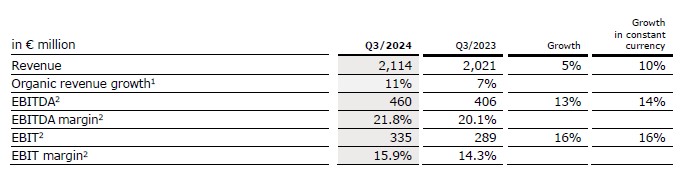
Revenue increased by 5% (10% constant currency) to €2,114 million (Q3/23: €2,021 million). Organic growth was 11%1. This performance was driven by positive pricing effects, particularly in Argentina, and the excellent operating performance of the Growth Vectors.
Revenue of the Growth Vectors (MedTech, Nutrition and Biopharma) increased by 9% (16% in constant currency) to €1,158 million (Q3/23: €1,067 million). Organic growth was excellent at 16%1.
In Nutrition, organic growth of 11%1 benefited from positive pricing effects in Argentina and the good development in the US, driven by the ongoing roll-out of lipid emulsions. China continued to be impacted by a general economic weakness, price declines in connection with tenders, and indirect effects of the government’s countrywide anti-corruption campaign. Biopharma showed excellent organic growth of 66%1 driven by the overall good Biosimilars rollout in Europe and the U.S., with Tyenne standing out. Moreover, mAbxience also performed strongly, driven by bevacizumab and milestone payments. In MedTech, organic growth was of 7%1 driven by a broad-based positive development in the US, Europe and International, reflecting strong performances for infusion and nutrition systems.
1 Organic growth rate adjusted for accounting effects related to Argentina hyperinflation. 2 Before special items
Constant currency growth rates adjusted for Argentina hyperinflation.
Revenue in the Pharma (IV Drugs & Fluids) business increased by 2% (3% in constant currency; organic growth: 6% ) and amounted to €957 million (Q3/23: €941 million). Organic growth was mainly driven by a strong performance in Europe and International and solid growth in the U.S., driven by an improved backorder situation, compensating the softer development in China.
EBIT2 of Fresenius Kabi increased by 16% (16% in constant currency) to €335 million (Q3/23: €289 million) mainly due to the good revenue development, the positive EBIT result of the Biopharma business, and ongoing progress of the cost saving initiatives. EBIT margin2 was 15.9% (Q3/23: 14.3%) and thus at the upper end of 2024 outlook.
EBIT2 of the Growth Vectors increased by 62% (constant currency: 53%) to €168 million (Q3/23: €104 million) due to the positive EBIT of the Biopharma business and the good revenue development. EBIT margin2 was 14.5% (Q3/23: 9.8%). The Biopharma business is now expected to be EBIT break even also in the FY/24.
EBIT2 in the Pharma business decreased by -9% (constant currency: -8%) to €182 million (Q3/23: €200 million) primarily driven by additional costs due to the start of production at the main US plants in Wilson and Melrose Park. EBIT margin2 was 19.0% (Q3/23: 21.3%).
1 Organic growth rate adjusted for accounting effects related to Argentina hyperinflation. 2 Before special items
Constant currency growth rates adjusted for Argentina hyperinflation.
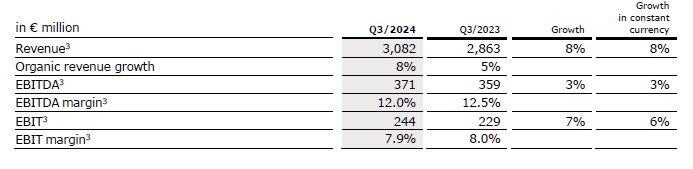
Revenue before special items increased by 8% (8% in constant currency) to €3,082 million (Q3/23: €2,863 million). Organic growth was 8%.
Revenue of Helios Germany increased by 8% (in constant currency: 8%) to €1,940 million (Q3/23: €1,800 million) due to pricing effects coupled with volume growth and supported by some favourable technical reclassifications. Organic growth was 8%.
Revenue of Helios Spain before special items increased by 8% (8% in constant currency) to €1,142 million (Q3/23: €1,062 million) driven by solid activity levels despite the anticipated lower seasonal demand, and favourable price effects. Organic growth was 8%. The clinics in Latin America also showed a good performance, additionally supported by currency exchange rate effects.
EBIT1 of Fresenius Helios increased by 7% (6% in constant currency) to €244 million (Q3/23: €229 million) with an EBIT margin1 of 7.9% (Q3/23: 8.0%).
EBIT1 of Helios Germany increased by 8% to €170 million (Q3/23: €157 million) with an EBIT margin1 of 8.8% (Q3/23: 8.7%). Q3/24 marked the last quarter in which energy relief funding was recognized in the income statement supporting profitability.
EBIT1 of Helios Spain decreased by -3% (0% in constant currency) to €73 million (Q3/23: €75 million) due to the expected seasonal softness and some phasing effects. The EBIT margin1 was 6.4% (Q3/23: 7.1%). On a more comparable nine-months basis, the EBIT margin1 was 11.2% (Q1-3/23: 11.2%).
1 Before special items
Financial figures and growth rates adjusted for the divestment of the fertility services group Eugin and the hospital stake in Peru.
Implications of the Fresenius Vamed exit
As of Q2 2024, Vamed is no longer a reporting segment of Fresenius. The company’s High-End-Services (HES) which offers services for Fresenius Helios and other hospitals, is included under Corporate / Other in the Group consolidated segment reporting.
In Q1-3/24, the divestment of the rehabilitation business and the Vamed operations in Austria led to non-cash special items of €406 million at Group net income level.
Special items related to the gradual scale back of the international project business amounted to €441 million at Group EBIT level in Q1-3/24, and to €357 million2 at Group net income level. A total amount of high triple-digit million euros of special items is expected, which is spread over the next few years and will be mostly cash-effective.
1 Before special items 2 According to ownership share
Financial figures and growth rates adjusted for the divestment of the fertility services group Eugin and the hospital stake in Peru.
Group and segment outlook for 20241
Fresenius upgrades its outlook for FY/24. Based on the excellent first nine months of 2024, Group organic revenue growth2,4,5 is now expected to grow between
6% to 8% (previous: between 4% to 7%) in 2024 and Group constant currency EBIT3,4 is anticipated to grow in a 8% to 11% range (previous: between 6% to 10%).
Fresenius Kabi expects organic revenue growth5 in a mid-to high-single-digit percentage range in 2024. The EBIT margin4 is expected to be in a range of 15% to 16% (structural margin band: 14% to 17%).
Fresenius Helios expects organic revenue4 to grow in mid-single digit percentage range in 2024. The EBIT margin4 is expected to be within 10% to 11% (structural margin band: 10% to 12%).
The Group outlook is given without Fresenius Vamed, i.e. exclusively for the Operating Companies Fresenius Kabi and Fresenius Helios.
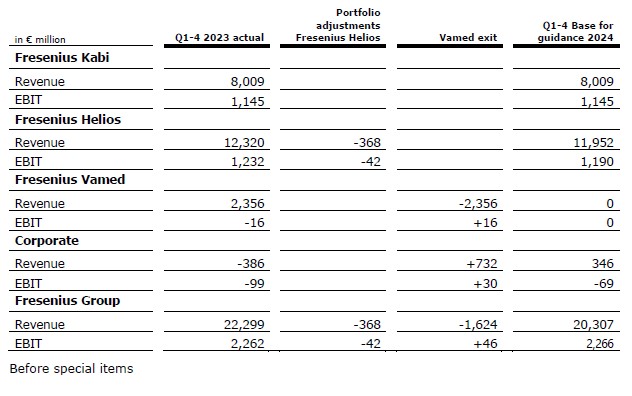
1 For the prior-year basis please see table “Basis for Guidance for 2024” 2 2023 base: €20,307 million 3 2023 base: €2,266 million 4 Before special items 5 Organic growth rate adjusted for accounting effects related to Argentina hyperinflation.
Basis for Guidance for 2024
If no timeframe is specified, information refers to Q3/2024.
An overview of the results for Q3/2024 - before and after special items – is available on our website.
Consolidated results for Q3/24 as well as for Q3/23 include special items. These concern: divestment of the fertility services group Eugin and the hospital stake in Peru, Vamed exit, expenses associated with the Fresenius cost and efficiency program, transaction costs for mAbxience and Ivenix, costs in relation to the change of legal form of Fresenius Medical Care, legacy portfolio adjustments, IT transformation, transformation/exit Vamed, discontinued operations Vamed, special items at Fresenius Medical Care, and impact of PPA due to the application of the equity method to the Fresenius Medical Care investment. The special items shown within the reconciliation tables are reported in the Corporate/Other segment.
Note on the deconsolidation of Fresenius Medical Care
Following the deconsolidation of Fresenius Medical Care, Group financial figures are presented in accordance with IAS 28 (at equity method) since December 1, 2023. The proportionate share of 32% of Fresenius Medical Care is presented as a separate line in Fresenius Group’s P&L and balance sheet. Dividends received from Fresenius Medical Care are reported as a separate line as part of the cash flow statement. Moreover, IAS 28 requires a full purchase price allocation (PPA). The accounting for the PPA is treated as special item. For reasons of simplification and comparability, Fresenius presents net income with and without Fresenius Medical Care`s equity result.
Note on the portfolio optimization at Fresenius Helios
As part of the portfolio optimization, the sale of the fertility services group Eugin was completed on January 31, 2024. The divestment of the majority stake in the hospital Clínica Ricardo Palma hospital in Lima, Peru, was completed on April 23, 2024. Therefore, results of Fresenius Helios and accordingly of the Fresenius Group for Q3/24 and Q3/23 are adjusted.
Note on the growth rates Fresenius Kabi
Growth rates in constant currency of Fresenius Kabi are adjusted. Adjustments relate to the hyperinflation in Argentina. Accordingly, in constant currency growth rates of the Fresenius Group are also adjusted.
Note on the Vamed exit
Due to the application of IFRS 5, the prior year and prior quarter figures of the current year have been adjusted in the consolidated statement of income and the consolidated statement of cash flows. Vamed’s High-End-Services (HES) which offers services for Fresenius Helios and other hospitals, will be transferred to Fresenius and is included under Corporate / Other in the Group consolidated segment reporting. Details on the financial and accounting implications of the Vamed exit and the portfolio adjustments at Fresenius Helios are available on our website.
This release contains forward-looking statements that are subject to various risks and uncertainties. Future results could differ materially from those described in these forward-looking statements due to certain factors, e.g. changes in business, economic and competitive conditions, regulatory reforms, results of clinical trials, foreign exchange rate fluctuations, uncertainties in litigation or investigative proceedings, the availability of financing and unforeseen impacts of international conflicts. Fresenius does not undertake any responsibility to update the forward-looking statements in this release.
Group organic revenue growth of 9%1,2 to €5.3 billion2 driven by a strong Kabi performance and good organic growth at Helios.
Strong bottom-line traction with Group EBIT2 increase in constant currency of 9%3 to €552 million and EPS growth of 7%2,3,4
Group outlook for fiscal 2024 upgraded; Organic revenue growth1,2 is now expected to grow between 6% to 8% (previous: between 4% to 7%) and EBIT growth2 in constant currency is now targeted to be in the 8 to 11% range (previous: between 6% to 10%).
Group-wide cost and productivity savings ahead of plan with target for FY/24 already achieved YTD.
Excellent operating cash flow resulting from focused cash management.
Deleveraging continued, and leverage ratio further improved to 3.24x2,5 driven by excellent cash flow; Leverage target corridor under review.
Fresenius Kabi delivering above the top-end of the structural growth band with organic revenue growth of 11%1; strong EBIT margin at 15.9%2.
Growth Vectors at Kabi show continued strong performance, led by dynamic growth at Biopharma, which had yet again positive EBIT in Q3. Tyenne is in line with expectations, building on strong momentum.
Fresenius Helios with excellent organic revenue growth of 8% driven by solid performance in Spain and supported by some favorable technical reclassifications in Germany; EBIT margin of 7.9%2 in line with expectations due to anticipated lower seasonal demand in Spain; last quarter of energy relief funding support.
Dedicated Helios performance program underway to drive further operational excellence and compensate ending energy relief funding in Germany.
1 Organic growth rate adjusted for accounting effects related to Argentina hyperinflation. 2 Before special items 3 Growth rate adjusted for Argentina hyperinflation 4 Excluding Fresenius Medical Care 5 At average exchange rates for both net debt and EBITDA; pro forma closed acquisitions/divestitures, including lease liabilities, including Fresenius Medical Care dividend Michael Sen, CEO of Fresenius: "Team Fresenius delivered an excellent third quarter in 2024 – all financial metrics improved versus the prior year. Revenues grew strongly, with margin expansion across the Group, and significantly improved cash flow generation. Both Kabi and Helios continue to deliver consistent and sustained financial performance. We are more focused and stronger, deploying our cash to reduce debt further, while growing earnings per share and driving shareholder returns. Quarter after quarter we are showing how our #FutureFresenius strategy is paying off. Our mission remains at the core of our activities: saving and improving human lives. Fresenius is: Committed to Life.”
Sen continued, “Given the strength of our first nine months, we are upgrading our revenue and earnings guidance for the year.”
Group sales and earnings development
Group revenue before special items increased by 7% (9% in constant currency) to €5,303 million (Q3/23: €4,967 million). Organic growth was 9%2, driven by Kabi and Helios' ongoing strong performance. Currency translation had a negative effect of 2% on revenue growth.
Group EBITDA before special items increased by 4% (5% in constant currency) to €814 million (Q3/23: €783 million).
Group EBIT before special items increased by 8% (9% in constant currency) to €552 million (Q3/23: €509 million), mainly driven by the strong organic revenue growth at Kabi and Helios and the continued progress of the groupwide cost savings program. The EBIT margin before special items was 10.4% (Q3/23: 10.2%). Reported Group EBIT was €492 million (Q3/23: €362 million).
Group net interest before special items increased to -€116 million (Q3/23: -€102 million) mainly due to financing activities in a higher interest rate environment.
Group tax rate before special items was 24.5% (Q3/23: 23.1%).
1 Before special items 2 Organic growth rate adjusted for accounting effects related to Argentina hyperinflation 3 Net income attributable to shareholders of Fresenius SE & Co. KGaA
Constant currency growth rates adjusted for Argentina hyperinflation. Financial figures and growth rates adjusted for the divestment of the fertility services group Eugin and the hospital stake in Peru. Net income1 from deconsolidated Fresenius Medical Care operations before special items increased by 38% (42% in constant currency) to €76 million (Q3/231: €55 million).
Group net income1 before special items increased by 12% (13% in constant currency) to €388 million (Q3/231: €347 million). The increase was driven by operating strength. Reported Group net income1 increased to €326 million (Q3/231: -€406 million) mainly due to Fresenius Medical Care's positive net income contribution. The negative net income in the prior year period was due to the non-cash valuation effect of Fresenius Medical Care in accordance with IFRS 5.
Group net income1 before special items excluding Medical Care increased by 7% (7% in constant currency) to €312 million (Q3/231: €292 million).
Earnings per share1 before special items increased by 12% (13% in constant currency) to €0.69 (Q3/231: €0.62). Reported earnings per share1 were €0.58 (Q3/231: -€0.72).
Group Cash flow development
Group operating cash flow (continuing operations) increased to €763 million (Q3/23: €603 million) mainly driven by the very good operational business development and improvements in working capital at Helios and Kabi. Group operating cash flow margin was 14.4% (Q3/23: 12.1%). Before acquisitions, dividends and lease liabilities, free cash flow (continuing operations) increased to €532 million (Q3/23: €346 million). After acquisitions, dividends and lease liabilities, free cash flow (continuing operations) improved to €623 million (Q3/23: €102 million).
1 Net income attributable to shareholders of Fresenius SE & Co. KGaA
Constant currency growth rates adjusted for Argentina hyperinflation. Financial figures and growth rates adjusted for the divestment of the fertility services group Eugin and the hospital stake in Peru.
Group debt decreased by -16% (-16% in constant currency) to €13,317 million (Dec. 31, 2023: € 15,830 million) mainly related to the repayment of debt based on the excellent cash flow development and the around €400 million reduction of the leasing liabilities related to the Vamed exit. Group net debt decreased by -11% (-11% in constant currency) to € 11,823 million (Dec. 31, 2023: € 13,268 million).
As of September 30, 2024, the net debt/EBITDA ratio was 3.24x1,2 (Dec. 31, 2023: 3.76x1,2) corresponding to a reduction of 52 bps compared to Dec. 31, 2023. This achievement is due to a combination of better EBITDA and Free cash flow. The legally required suspension of dividend payments and the Vamed exit further supported the positive development. Compared to Q3/23 (4.03x1,2) this is a 79 bps reduction.
Fresenius anticipates improving net debt/EBITDA ratio further3 towards the lower end of the self-imposed corridor of 3.0 to 3.5x by year-end 2024. This is expected to be driven by further reducing net debt and operational performance of the Operating Companies.
Structural productivity improvements: Target achieved ahead of plan
The Group-wide cost and efficiency measures are progressing faster than planned. The target for annual sustainable cost savings of ~€400 million at EBIT level has already been achieved with accumulative savings totaling €408 million until the end of Q3/24. Originally, it was expected to achieve the target by year-end 2025.
Fresenius will continue its efforts to increase structural productivity. So far, Kabi has delivered the majority of the savings. Going forward, it will be Fresenius Helios with its dedicated efficiency program focused on operations excellence including reduction of process and waiting times and digitalization of processes, resource optimization and synergies in particular in logistics and procurement. An update will be provided as part of the FY/24 results in February 2025.
Further efforts to enhance structural efficiency will, however, also be driven forward by Fresenius Kabi and the Corporate Center. Key elements include measures to reduce complexity, optimize supply chains and improve procurement processes.
1 At average exchange rates for both net debt and EBITDA; pro forma closed acquisitions/divestitures, including lease liabilities, including Fresenius Medical Care dividend 2 Before special items 3 At expected average exchange rates for both net debt and EBITDA; pro forma closed acquisitions/divestitures; excluding further potential acquisitions/divestitures; before special items; including lease liabilities, including Fresenius Medical Care dividend
Revenue increased by 5% (10% constant currency) to €2,114 million (Q3/23: €2,021 million). Organic growth was 11%1. This performance was driven by positive pricing effects, particularly in Argentina, and the excellent operating performance of the Growth Vectors.
Revenue of the Growth Vectors (MedTech, Nutrition and Biopharma) increased by 9% (16% in constant currency) to €1,158 million (Q3/23: €1,067 million). Organic growth was excellent at 16%1.
In Nutrition, organic growth of 11%1 benefited from positive pricing effects in Argentina and the good development in the US, driven by the ongoing roll-out of lipid emulsions. China continued to be impacted by a general economic weakness, price declines in connection with tenders, and indirect effects of the government’s countrywide anti-corruption campaign. Biopharma showed excellent organic growth of 66%1 driven by the overall good Biosimilars rollout in Europe and the U.S., with Tyenne standing out. Moreover, mAbxience also performed strongly, driven by bevacizumab and milestone payments. In MedTech, organic growth was of 7%1 driven by a broad-based positive development in the US, Europe and International, reflecting strong performances for infusion and nutrition systems.
1 Organic growth rate adjusted for accounting effects related to Argentina hyperinflation. 2 Before special items
Constant currency growth rates adjusted for Argentina hyperinflation.
Revenue in the Pharma (IV Drugs & Fluids) business increased by 2% (3% in constant currency; organic growth: 6%1) and amounted to €957 million (Q3/23: €941 million). Organic growth was mainly driven by a strong performance in Europe and International and solid growth in the U.S., driven by an improved backorder situation, compensating the softer development in China.
EBIT2 of Fresenius Kabi increased by 16% (16% in constant currency) to €335 million (Q3/23: €289 million) mainly due to the good revenue development, the positive EBIT result of the Biopharma business, and ongoing progress of the cost saving initiatives. EBIT margin2 was 15.9% (Q3/23: 14.3%) and thus at the upper end of 2024 outlook.
EBIT2 of the Growth Vectors increased by 62% (constant currency: 53%) to €168 million (Q3/23: €104 million) due to the positive EBIT of the Biopharma business and the good revenue development. EBIT margin2 was 14.5% (Q3/23: 9.8%). The Biopharma business is now expected to be EBIT break-even also in the FY/24.
EBIT2 in the Pharma business decreased by -9% (constant currency: -8%) to €182 million (Q3/23: €200 million) primarily driven by additional costs due to the start of production at the main US plants in Wilson and Melrose Park. EBIT margin2 was 19.0% (Q3/23: 21.3%).
Operating Company Fresenius Helios
Revenue before special items increased by 8% (8% in constant currency) to €3,082 million (Q3/23: €2,863 million). Organic growth was 8%.
Revenue of Helios Germany increased by 8% (in constant currency: 8%) to €1,940 million (Q3/23: €1,800 million) due to pricing effects coupled with volume growth and supported by some favourable technical reclassifications. Organic growth was 8%.
Revenue of Helios Spain before special items increased by 8% (8% in constant currency) to €1,142 million (Q3/23: €1,062 million) driven by solid activity levels despite the anticipated lower seasonal demand, and favourable price effects. Organic growth was 8%. The clinics in Latin America also showed a good performance, additionally supported by currency exchange rate effects.
EBIT1 of Fresenius Helios increased by 7% (6% in constant currency) to €244 million (Q3/23: €229 million) with an EBIT margin1 of 7.9% (Q3/23: 8.0%).
EBIT1 of Helios Germany increased by 8% to €170 million (Q3/23: €157 million) with an EBIT margin1 of 8.8% (Q3/23: 8.7%). Q3/24 marked the last quarter in which energy relief funding was recognized in the income statement supporting profitability.
EBIT1 of Helios Spain decreased by -3% (0% in constant currency) to €73 million (Q3/23: €75 million) due to the expected seasonal softness and some phasing effects. The EBIT margin1 was 6.4% (Q3/23: 7.1%). On a more comparable nine-months basis, the EBIT margin1 was 11.2% (Q1-3/23: 11.2%).
1 Organic growth rate adjusted for accounting effects related to Argentina hyperinflation. 2 Before special items
Constant currency growth rates adjusted for Argentina hyperinflation.
3 Before special items
Financial figures and growth rates adjusted for the divestment of the fertility services group Eugin and the hospital stake in Peru.
As of Q2 2024, Vamed is no longer a reporting segment of Fresenius. The company’s High-End-Services (HES) which offers services for Fresenius Helios and other hospitals, is included under Corporate / Other in the Group consolidated segment reporting.
In Q1-3/24, the divestment of the rehabilitation business and the Vamed operations in Austria led to non-cash special items of €406 million at Group net income level.
Special items related to the gradual scale back of the international project business amounted to €441 million at Group EBIT level in Q1-3/24, and to €357 million1 at Group net income level. A total amount of high triple-digit million euros of special items is expected, which is spread over the next few years and will be mostly cash-effective.
Group and segment outlook for 20242
Fresenius upgrades its outlook for FY/24. Based on the excellent first nine months of 2024, Group organic revenue growth3,5,6 is now expected to grow between 6% to 8% (previous: between 4% to 7%) in 2024 and Group constant currency EBIT4,5is anticipated to grow in an 8% to 11% range (previous: between 6% to 10%).
Fresenius Kabi expects organic revenue growth6 in a mid-to high-single-digit percentage range in 2024. The EBIT margin5 is expected to be in a range of 15% to 16% (structural margin band: 14% to 17%).
Fresenius Helios expects organic revenue5 to grow in mid-single digit percentage range in 2024. The EBIT margin5 is expected to be within 10% to 11% (structural margin band: 10% to 12%).
The Group outlook is given without Fresenius Vamed, i.e. exclusively for the Operating Companies Fresenius Kabi and Fresenius Helios.
1 According to ownership share 2 For the prior-year basis please see table “Basis for Guidance for 2024” 3 2023 base: €20,307 million 4 2023 base: €2,266 million 5 Before special items 6 Organic growth rate adjusted for accounting effects related to Argentina hyperinflation Basis for Guidance for 2024
# # #
If no timeframe is specified, information refers to Q3/2024.
An overview of the results for Q3/2024 - before and after special items – is available on our website.
Consolidated results for Q3/24 as well as for Q3/23 include special items. These concern: divestment of the fertility services group Eugin and the hospital stake in Peru, Vamed exit, expenses associated with the Fresenius cost and efficiency program, transaction costs for mAbxience and Ivenix, costs in relation to the change of legal form of Fresenius Medical Care, legacy portfolio adjustments, IT transformation, transformation/exit Vamed, discontinued operations Vamed, special items at Fresenius Medical Care, and impact of PPA due to the application of the equity method to the Fresenius Medical Care investment. The special items shown within the reconciliation tables are reported in the Corporate/Other segment.
Note on the deconsolidation of Fresenius Medical Care
Following the deconsolidation of Fresenius Medical Care, Group financial figures are presented in accordance with IAS 28 (at equity method) since December 1, 2023. The proportionate share of 32% of Fresenius Medical Care is presented as a separate line in Fresenius Group’s P&L and balance sheet. Dividends received from Fresenius Medical Care are reported as a separate line as part of the cash flow statement. Moreover, IAS 28 requires a full purchase price allocation (PPA). The accounting for the PPA is treated as special item. For reasons of simplification and comparability, Fresenius presents net income with and without Fresenius Medical Care`s equity result.
Note on the portfolio optimization at Fresenius Helios
As part of the portfolio optimization, the sale of the fertility services group Eugin was completed on January 31, 2024. The divestment of the majority stake in the hospital Clínica Ricardo Palma hospital in Lima, Peru, was completed on April 23, 2024. Therefore, results of Fresenius Helios and accordingly of the Fresenius Group for Q3/24 and Q3/23 are adjusted.
Note on the growth rates Fresenius Kabi
Growth rates in constant currency of Fresenius Kabi are adjusted. Adjustments relate to the hyperinflation in Argentina. Accordingly, in constant currency growth rates of the Fresenius Group are also adjusted.
Note on the Vamed exit
Due to the application of IFRS 5, the prior year and prior quarter figures of the current year have been adjusted in the consolidated statement of income and the consolidated statement of cash flows. Vamed’s High-End-Services (HES) which offers services for Fresenius Helios and other hospitals, will be transferred to Fresenius and is included under Corporate / Other in the Group consolidated segment reporting. Details on the financial and accounting implications of the Vamed exit and the portfolio adjustments at Fresenius Helios are available on our website.
This release contains forward-looking statements that are subject to various risks and uncertainties. Future results could differ materially from those described in these forward-looking statements due to certain factors, e.g. changes in business, economic and competitive conditions, regulatory reforms, results of clinical trials, foreign exchange rate fluctuations, uncertainties in litigation or investigative proceedings, the availability of financing and unforeseen impacts of international conflicts. Fresenius does not undertake any responsibility to update the forward-looking statements in this release.