

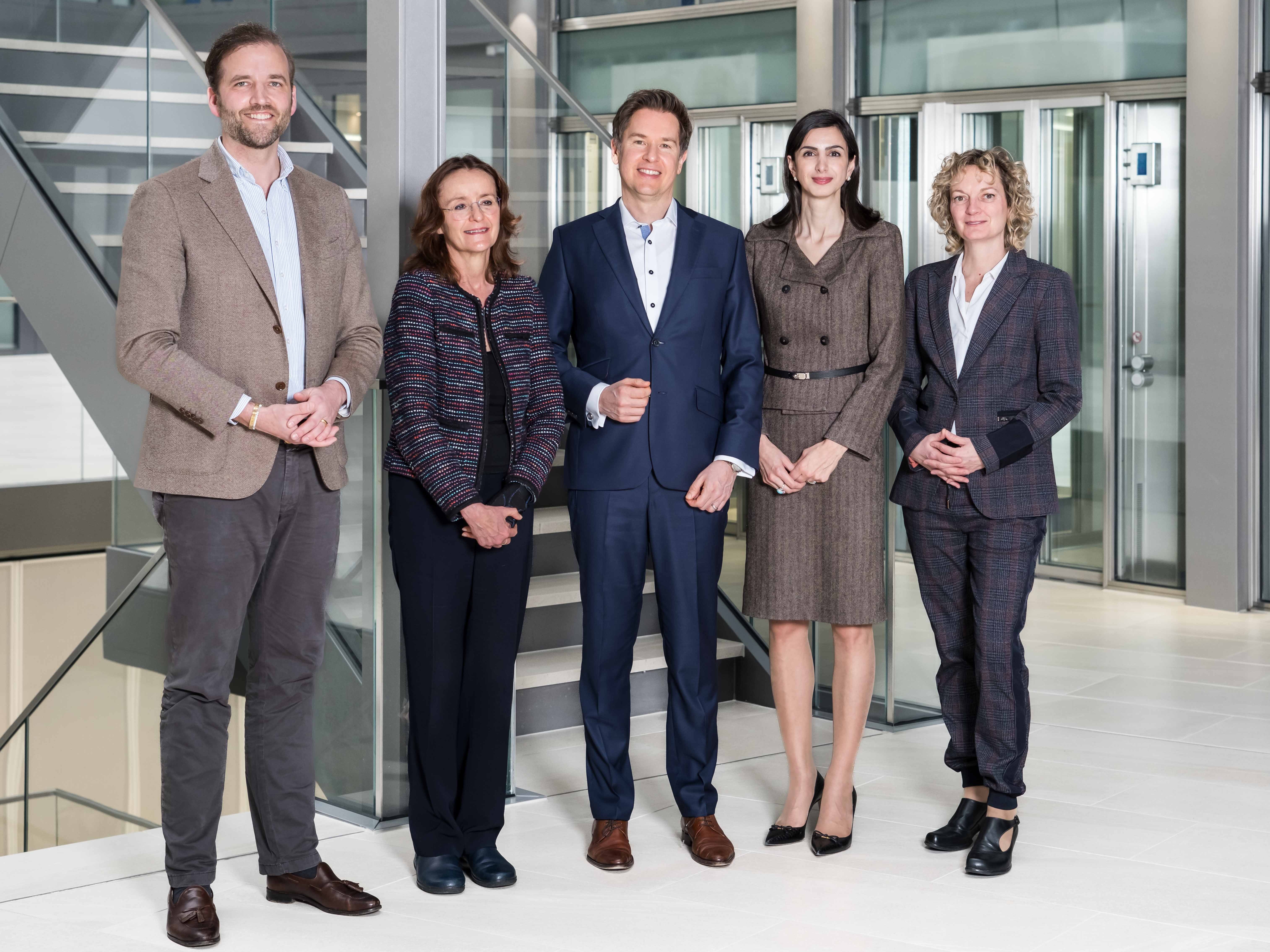

The Fresenius healthcare group has appointed an independent advisory board for sustainability issues. Four leading international experts from science, business, and consulting will in future support Fresenius in further development of its sustainability strategy. They will advise Michael Moser, who is the Management Board member responsible for environmental, social and governance (ESG).
"As a leading healthcare company, we contribute with our products and services to improving access to high-quality healthcare. We see it as our responsibility to lead by example when it comes to environment, social, and governance. Consistent further development of our ESG agenda is therefore an integral part of our #FutureFresenius strategy. This is how we fulfill our corporate purpose of advancing patient care," said Michael Sen, CEO of Fresenius.
"Together with the newly established sustainability advisory board, we are working on a concrete sustainability plan for the next five years. We want to set new priorities within the company and find answers to the most pressing questions of our time. I am very much looking forward to further expanding our expertise in this crucial area and to working together with leading as well as inspiring advisors," said Michael Moser.
The ESG Advisory Board is going to aid in developing the company’s ESG program further. Its members are extremely knowledgeable in Fresenius' key areas of action in the field of sustainability: from the design and implementation of health concepts and climate protection, through corporate sustainability principles, to future-oriented management and sustainable leadership as well as sustainability transformation.
Fresenius is making good progress in the area of sustainability: It reduced its CO2 emissions by 22 percent compared to the base year of 2020, for example. Fresenius is thus on track to halve its CO2 emissions by 2030 and to be climate neutral by 2040. In order to achieve health equity and enable equal opportunities in healthcare even more efficiently, Fresenius committed to the World Economic Forum's Zero Health Gaps Pledge at the beginning of the year. Fresenius thus commits, among other companies and organizations, to acting responsibly for equal opportunities in healthcare.
The ESG Advisory Board consists of the following members:
- Anahita Thoms (chairwoman): Anahita Thoms leads Baker McKenzie's international trade practice in Germany and is a member of the EMEA Steering Committee für Compliance & Investigations. She is Global Lead Sustainability Partner for the Industrials, Manufacturing & Transportation industry group. She holds a seat on the National Committee of UNICEF Germany and the Board of Atlantik-Brücke. She has also been a member of the German government's Sustainable Finance Advisory Committee and the American Bar Association's International Human Rights Steering Committee.
- Fiona Adshead: Fiona Adshead is the former Deputy Chief Medical Officer in the UK Government and a leading expert on sustainability and health. She currently chairs the Sustainable Healthcare Coalition, an organization that brings partners together to promote sustainable healthcare.
- Fabian Kienbaum: Fabian Kienbaum has been a managing partner in the third generation at Kienbaum since 2014 and has co-led the company together with Dr. Bibi Hahn since 2021. He focuses on advising family businesses on corporate governance and succession planning, and is the author of numerous publications on leadership and New Work.
- Prof. Judith Walls: Judith Walls is Chair of Sustainability Management and Director of the Institute for Economy and the Environment at the University of St. Gallen. She conducts research at the intersection between business and environmental sustainability.
This release contains forward-looking statements that are subject to various risks and uncertainties. Future results could differ materially from those described in these forward-looking statements due to certain factors, e.g. changes in business, economic and competitive conditions, regulatory reforms, results of clinical trials, foreign exchange rate fluctuations, uncertainties in litigation or investigative proceedings, the availability of financing and unforeseen impacts of international conflicts.
Fresenius does not undertake any responsibility to update the forward-looking statements in this release.
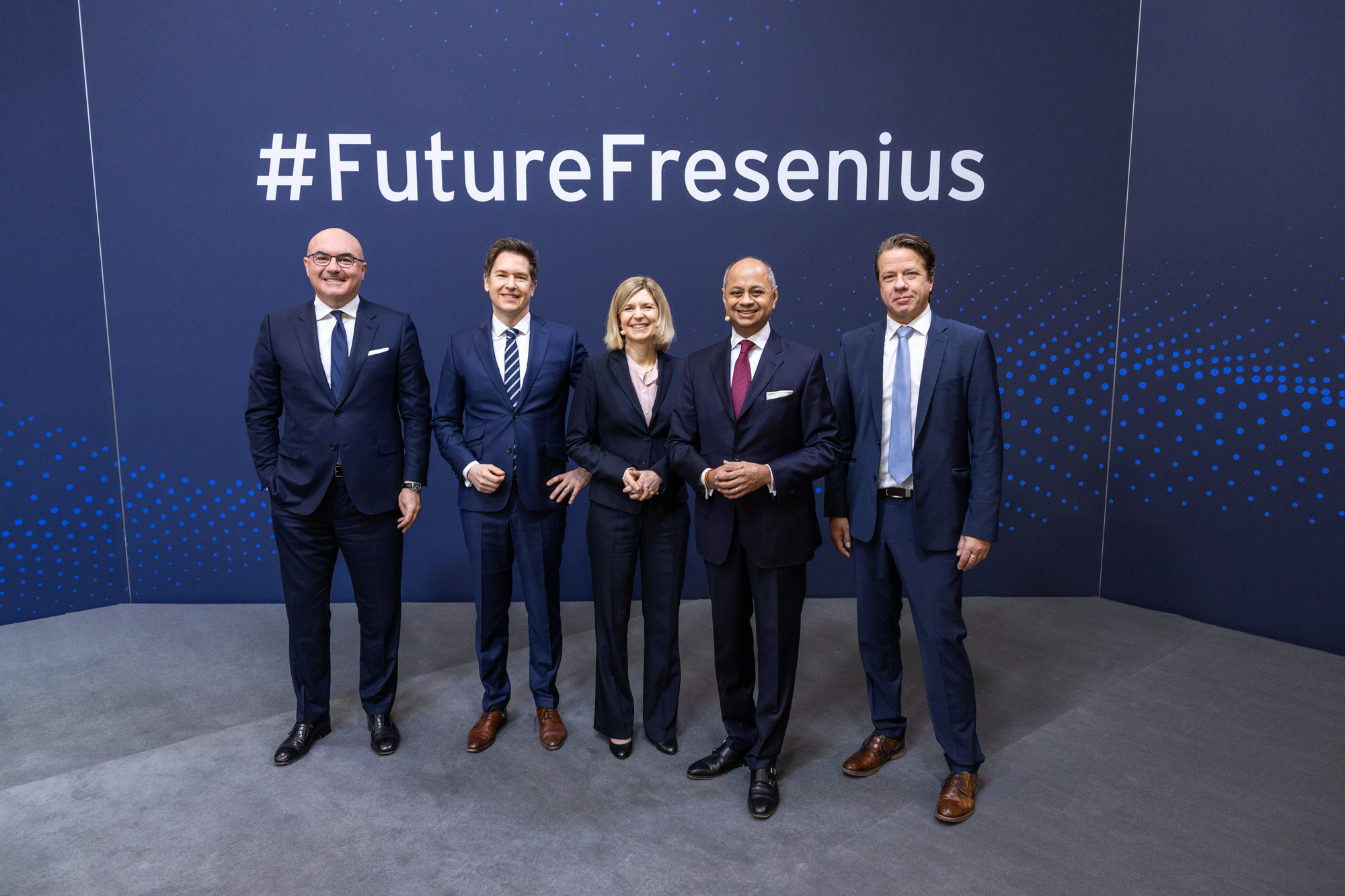
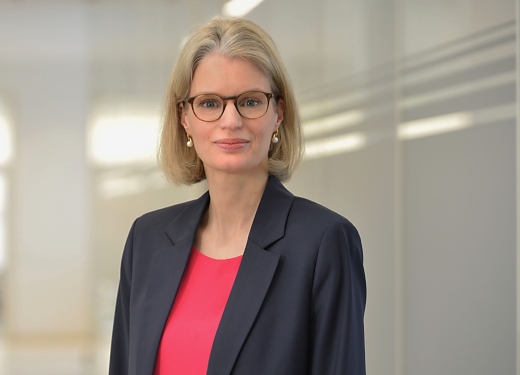
- Fresenius achieves the raised outlook for FY/23. Strong final quarter with continued good development of the Operating Companies Fresenius Kabi and Fresenius Helios and progress in the turnaround of the Investment Company Fresenius Vamed.
- Group 2024 outlook: Organic revenue growth expected between 3% and 6%; EBIT expected to grow between 4% and 8%.
- Leverage ratio declines: expected to be within the self-defined target corridor of 3.0x to 3.5x by the end of 2024.
- Revenue of €22.3 billion in FY/23: Strong organic Group revenue growth of 6%; Group EBIT increased 2% in constant currency to €2.3 billion; excellent Group operating cash flow totaled €2.1 billion.
- Group cost savings target for 2023 with ~40 % significantly exceeded – FY/25 structural productivity savings target raised to ~€400 million at EBIT level (before: ~€350 million).
- Group revenue increased organically by 5% in Q4; Group EBIT increased by 8% in constant currency.
- Fresenius Kabi with excellent organic revenue growth of 7% in Q4 at top-end of structural growth band and EBIT margin of 14.1% within structural band.
- Fresenius Helios with strong organic revenue growth of 5% in Q4 at top-end of structural growth band and excellent EBIT margin of 11.6 % well above structural margin band.
- Fresenius Vamed’s transformation progressing well; ongoing operational improvement with positive EBIT second consecutive quarter.
- Deconsolidation of Fresenius Medical Care together with many structural improvements in the context of #FutureFresenius implemented in 2023; one-off, non-cash special effects reported in 2023.
If no timeframe is specified, information refers to Q4/2023.
Michael Sen, CEO of Fresenius: “We took decisive actions in fiscal year 2023 and put Fresenius back on track. #FutureFresenius is driving improvements throughout the company and creating value. We added focus, simplified the structure, and delivered better financial performance. We will build on that momentum to further grow our businesses and accelerate earnings growth driven by the Operating Companies Fresenius Kabi and Fresenius Helios. Fresenius is uniquely positioned to address the rising demand for healthcare leveraging innovations also in digitalization and AI. We are deepening our purpose of Advancing Patient Care.”
An overview of the results for Q4/2023 and the 2023 financial year – before and after special items – is available on our website.
Following the deconsolidation of Fresenius Medical Care Group financial figures have been presented in accordance with IAS 28 (at equity method) since December 1, 2023. Prior-year figures have been adjusted due to the application of IFRS 5 to the deconsolidated operations of Fresenius Medical Care.
Information on the performance indicators are available on our website at https://www.fresenius.com/alternative-performance-measures.
Conference call and video webcast
As part of the publication of the results for FY/23, a press conference will be held on February 21, 2024 at 10:00 a.m. CET. You are cordially invited to follow the press conference in a live online broadcast at https://www.fresenius.com/calendar. Following the conference, a recording will be available on our website.
Consolidated results for FY/23 as well as for FY/22 in-clude special items. These concern: revaluations of biosimilars contingent purchase price liabilities, expenses associated with the Fresenius cost and efficiency program, impacts related to the war in Ukraine, transaction costs for mAbxience and Ivenix, hyperinflation in Turkey, retroactive duties, costs in relation to the change of legal form of Fresenius Medical Care, the transformation of Fresenius Vamed, legacy portfolio adjustment, effects from the valuation of the investment in Fresenius Medical Care in ac-cordance with IFRS 5, and expenses PPA equity method Fresenius Medical Care. The special items shown within the reconciliation tables are reported in the Corporate/Other segment.
2024 Strategic priorities
After a year of significant structural progression in the Group and improved operating performance, Fresenius’ priorities in 2024 will focus on financial progression. This includes driving down leverage, execute on raised cost savings target and a rigorous focus on capital efficiency and returns. This bundle of measures is expected to translate into accelerated earnings growth in 2024 and beyond.
Fresenius is uniquely positioned to benefit from the mega trends of the healthcare sector, including growing and ageing populations, and digitalization. With its leading position in the European private hospital market and at a vast number of ambulatory clinics, the company has direct access to about 26 million patients. In addition, innovative MedTech devices and an integrated end-to-end Biopharma platform enable crucial therapies for the future. These strong platforms form a highly robust, earnings-enhancing business model in attractive growth areas.
Group business development
Group revenue remained nearly unchanged (4% increase in constant currency) at €5,678 million (Q4/22: €5,670 million). Organic growth was 5% driven by an ongoing strong performance of our Operating Companies. Divestitures reduced revenue growth by 1%. Currency translation had a negative effect of 4% on revenue growth. In FY/23, Group revenue increased by 4% (6% in constant currency) to €22,299 million (FY/22: €21,532 million). Organic growth was 6%. Currency translation decreased revenue growth by 2%.
In Q4/23, the revenue of the Operating Companies increased by 2% (7% in constant currency) to €5,165 million (Q4/22: €5,047 million). In FY/23, revenue of the Operating Companies increased by 4% (7% in constant currency) to €20,255 million (FY/22: €19,494 million).
Group EBITDA before special items increased by 6% (4% in constant currency) to €942 million (Q4/221: €890 million). In FY/23, Group EBITDA before special items increased by 3% (3% in constant currency) to €3,422 million (FY/221: €3,315 million).
Group EBIT before special items increased by 13% (8% in constant currency) to €634 million (Q4/221: €559 million) mainly driven by the good earnings development at the Operating Companies and the progress of the operational turnaround at Fresenius Vamed. The EBIT margin before special items was 11.2% (Q4/221: 9.9%). Reported Group EBIT was €85 million (Q4/22: €337 million). In FY/23 Group EBIT before special items increased by 3% (2% in constant currency) at €2,262 million (20221: €2,190 million). The EBIT margin before special items was 10.1% (20221: 10.2%). Reported Group EBIT was €1,143 million (2022: €1,812 million).
The Operating Companies showed an 8% increase of EBIT before special items (2% in constant currency) to €613 million (Q4/221: € 568 million) with an EBIT margin of 11.9% (Q4/221: 11.3%). In FY/23, the EBIT before special items of the Operating Companies increased by 5% (4% in constant currency) to €2,278 million (FY/221: €2,170 million) with an EBIT margin of 11.2% (FY/221: 11.1%).
Group net interest before special items increased to -€118 million (Q4/221: -€80 million) mainly due to financing activities in a higher interest rate environment. In FY/23, Group net interest before special items increased to -€418 million (20221: -€241 million).
Group tax rate before special items was 36.4% (Q4/221: 23.2%). The higher tax rate in Q4/23 is mainly due to the closing of tax audit procedures as well as a valuation adjustment of a deferred tax asset in Germany. In FY/23, the Group tax rate before special items was 28.3% (20221: 22.4%).
1 Before special items
For a detailed overview of special items please see the reconciliation tables at Financial Results | FSE (fresenius.com)
Net income1 from deconsolidated Fresenius Medical Care operations before special items remained unchanged (4% increase in constant currency) at €83 million (Q4/222: €83 million). In FY/23 net income1 from deconsolidated Fresenius Medical Care operations before special items decreased by 18% (-16% in constant currency) to €243 million (20222: €295 million).
Group net income1 before special items decreased by 11% (-17% in constant currency) to €397 million (Q4/222: €445 million). The decrease was mainly driven by rising interest expenses and a higher tax rate. Reported Group net income1 decreased to -€614 million (Q4/22: €255 million) and mainly results from the valuation effect of Fresenius Medical Care in accordance with IFRS 5 in the amount of €521 million (see “Deconsolidation of Fresenius Medical Care”). The effect has no cash impact. Furthermore, legacy portfolio adjustments and expenses for the cost and efficiency program, and the Vamed transformation had a negative impact on the Group net income income1. Group net income1 before special items excluding Medical Care decreased by 13% (-22% in constant currency) to €314 million (Q4/222: €362 million).
In FY/23, Group net income1 before special items decreased by 13% (-14% in constant currency) to €1,505 million (20222: €1,729 million). The decrease was driven by rising interest costs and a higher tax rate. Reported Group net income1 decreased to -€594 million (2022: €1,372 million) and was negative mainly due to the Fresenius Medical Care’s valuation effects according to IFRS 5 of €1,115 million (see chapter “Deconsolidation of Fresenius Medical Care” on page 11). These effects have no cash impact. Furthermore, expenses in connection with the Vamed transformation, legacy portfolio adjustments as well as expenses for the cost and efficiency program had a negative impact on the Group net income1. Group net income1 before special items excluding Medical Care decreased by 12% (-14% in constant currency) to €1,262 million (20222: €1,434 million).
1 Net income attributable to shareholders of Fresenius SE & Co. KGaA
2 Before special items
Earnings per share1 before special items decreased by 11% (-17% in constant currency) to €0.70 (Q4/222: €0.79). Reported earnings per share1 were -€1.09 (Q4/22: €0.45). In FY/23, earnings per share1 before special items decreased by 13% (-15% in constant currency) to €2.67 (FY/222: €3.08). Reported earnings per share1 were -€1.05 (FY/22: €2.44).
Group operating cash flow increased by 4% to €1,272 million (Q4/22: €1,225 million) mainly driven by the strong cash flow development across the Group. Group operating cash flow margin was 22.4% (Q4/22: 21.6%). Free cash flow before acquisitions, dividends and lease liabilities increased to €888 million (Q4/22: €822 million). Free cash flow after acquisitions, dividends and lease liabilities increased to €814 million (Q4/22: €742 million).
In FY/23, Group operating cash flow increased by 5% to €2,131 million (FY/22: €2,031 million) with a margin of 9.6% (2022: 9.4%). Free cash flow before acquisitions, dividends and lease liabilities increased to €1,024 million
(FY/22: €942 million). Free cash flow after acquisitions, dividends and lease liabilities improved to €115 million (FY/22: -€317 million).
Fresenius Kabi’s operating cash flow increased by 46% to €434 million (Q4/22: €298 million) with a margin of 21.7% (Q4/22: 14.6%) mainly driven mainly driven by an improved working capital management. In FY/23, operating cash flow increased by 21% to €1,015 million (2022: €841 million) with a margin of 12.7% (FY/22: 10.7%).
Fresenius Helios’ operating cash flow decreased by 9% to €867 million (Q4/22: €956 million) mainly due to phasing effects of receivables in Spain and the very strong cash flow in the prior year. The operating cash flow margin was 27.2% (Q4/22: 31.5%). In FY/23, operating cash flow decreased by 9% to €1.244 million (FY/22: €1.367 million) with a margin of 10.1% (FY/22: 11.7%).
Fresenius Vamed’s operating cash flow increased to €36 million (Q4/22: €12 million) with a margin of 6.1% (Q4/22: 1.7%) due to positive phasing effects. In FY/23, operating cash flow improved to €20 million (2022: -€44 million) with a margin of 0.8% (2022: -1.9%).
1 Net income attributable to shareholders of Fresenius SE & Co. KGaA
2 Before special items
The cash conversion rate (CCR), which is defined as the ratio of adjusted free cash flow1 to EBIT before special items was 1.0 in FY/23 (2022: 0.9). This positive development is due to the increased cash flow focus across the Group including inventory management, working capital management and cash collection.
Group debt increased by 8% (8% in constant currency) to €15,830 million
(Dec. 31, 20222: € 14,708 million). Group net debt remained broadly flat at € 13,268 million (Dec. 31, 20222: € 13,307 million). In constant currency, Group net debt decreased by 1%.
As of December 31, 2023, the net debt/EBITDA ratio was 3.76x3,4 (Dec. 31, 2022: 3.80x2,3,4). This is a strong 27 bps reduction compared to Q3/23 (4,03x3,4) and is mainly driven by the good cash flow development in Q4/23.
Fresenius expects the net debt/EBITDA5 ratio to be within the self-imposed corridor of 3.0 to 3.5x by the end of 2024. This is expected to be driven by reducing net debt and by the operational performance at the Operating Companies.
This assumption does not include further potential divestment activities, however, includes the fact that due to legal restrictions as a result of the use of government compensation and reimbursement payments for increased energy costs provided for in the Hospital Financing Act, however, Fresenius will not propose to the 2024 Annual General Meeting to distribute a dividend for the 2023 fiscal year. Irrespective of the legally required suspension of dividend payments for the 2023 fiscal year, Fresenius will maintain its progressive dividend policy in the future and continues to aim to increase the dividend in line with growth in earnings per share (in constant currency, before special items), or at least maintain the dividend at the previous year's level.
1 Cash flow before acquisitions and dividends; before interest, tax, and special items
2 Proforma deconsolidation Fresenius Medical Care
3 At average exchange rates for both net debt and EBITDA; pro forma closed acquisitions/divestitures, including lease liabilities, including Fresenius Medical Care dividend
4 Before special items
5 At average exchange rates for both net debt and EBITDA; pro forma closed acquisitions/divestitures; excluding further potential acquisitions/divestitures; before special items; including lease liabilities, including Fresenius Medical Care dividend
ROIC was 5.2% in FY/23 (FY/22: 5.6%) mainly due to the higher tax rate. The Operating Companies showed a ROIC of 5.6%.
Structural productivity targets significantly exceeded – 2025 target raised
The groupwide cost savings program progressed well ahead of plan. Within the program, Fresenius realized ~€280 million of structural cost savings at EBIT level in FY/23. With that, the originally anticipated saving of ~€200 million for FY/23 was significantly exceeded. In the same period, one-time costs of ~€220 million were incurred to achieve these savings.
Due to the excellent progress of the measures implemented across the entire Group, Fresenius raises its target for the second time. Fresenius now expects to achieve annual sustainable cost savings of ~€400 million at EBIT level by 2025 (before: ~€350 million). To reach this new target, one-time costs between ~€80 and €100 million are anticipated between 2024 and 2025. For 2024, total cost savings of ~€330 to €350 million are expected. This corresponds to incremental cost savings of ~€50 to €70 million compared to 2023.
The targeted programs involve all business segments and the Corporate Center. Key elements include measures to optimize procurement, processes, sales and administrative costs, as well as fostering digitalization.
Operating Company Fresenius Kabi
Revenue decreased by 2% (increased 9 % in constant currency) to €1,996 million (Q4/22: €2,036 million) mainly driven by negative currency translation effects relating to the US dollar and the hyperinflation in Argentina. Organic growth was 7% . This strong performance was mainly driven by the strong business development of all Growth Vectors. In FY/23, revenue increased by 2% (9% in constant currency) to €8,009 million (2022: €7,850 million). Organic growth was 7%1.
1 To show the underlying business development, the organic growth definition was adjusted to fully exclude the significant inflation accounting effects in Argentina. According to the previous methodology, organic growth for Fresenius Kabi would have been Q1: 7%, Q2: 8%, Q3:7%, Q4: 14% and FY/23: 9%
Revenue of the Growth Vectors (MedTech, Nutrition and Biopharma) decreased by 3% to €997 million (Q4/22: €1,026 million) driven by negative currency exchange effects (increased 14% in constant currency). Organic growth was outstanding at 11%. In Nutrition, organic growth of 6% was driven by the good development in the US and Latin America whereas China was impacted by indirect effects of the government’s countrywide anti-corruption campaign. Biopharma showed very strong organic growth of 66% driven by successful product launches in Europe and the US, as well as licensing agreements. MedTech had excellent organic growth of 8% driven by a broad-based positive development across most regions and many product groups. In FY/23, the revenue of the Growth Vectors increased by 4% (14% in constant currency; organic growth: 10%) to €4,177 million (FY/22: €4,005 million).
Revenue in the Pharma (IV Drugs & Fluids) business decreased by 1% (increased 3% in constant currency; organic growth: 3%) and amounted to €1,000 million (Q4/22: €1,010 million). The solid organic growth was mainly driven by a positive development across many regions. In FY/23, revenue in the Pharma business remained broadly stable (increased 3% in constant currency; organic growth: 3%) and amounted to €3,832 million (2022: €3,845 million).
EBIT1 of Fresenius Kabi increased by 19% (6% in constant currency) to €282 million (Q4/22: €236 million) due to the good revenue development and the well-progressing cost saving initiatives. EBIT margin1 was 14.1% (Q4/22: 11.6%) and thus within the structural EBIT margin band. In FY/23, EBIT1 increased by 6% (constant currency: 3%) to €1,145 million (FY/22: €1,080 million). EBIT margin1 was 14.3% (FY/22: 13.8%).
EBIT1 of the Growth Vectors increased by 69% (constant currency: 12%) to €102 million (Q4/22: €60 million) due to the excellent revenue development and the very well-progressing cost saving initiatives. EBIT1 margin was 10.2% (Q4/22: 5.9%). In FY/23, EBIT1 of the Growth Vectors increased by 15% (constant currency: 6%) to €390 million (FY/22: €339 million) with a margin1 of 9.3% (FY/22: 8.5%).
EBIT1 in the Pharma business remained nearly stable (increased 2% in constant currency) to €189 million (Q4/22: €190 million) due to the very well-progressing cost saving initiatives. EBIT1 margin was 18.9% (Q4/22: 18.8%). In FY/23, EBIT1 in the Pharma business increased by 3% (constant currency: 6%) to €792 million (FY/22: €769 million) with a margin of 20.7% (FY/22: 20.0%).
1 Before special items
Operating Company Fresenius Helios
Revenue increased by 5% (5% in constant currency) to €3,188 million (Q4/23: €3,031 million) Organic growth was 5%. In FY/23, revenue increased by 5% (5% in constant currency) to €12,320 million (FY/22: €11,716 million). Organic growth was 5%.
Revenue of Helios Germany increased by 5% (organic growth: 5%) to €1,828 million (Q4/22: €1,749 million), mainly driven by solid admissions numbers. In FY/23, revenue of Helios Germany increased by 4% (organic growth: 4%) to €7,279 million (FY/22: €7,021 million).
Revenue of Helios Spain increased despite the already strong prior year quarter by 6% (5% in constant currency) to €1,289 million (Q4/22: €1,214 million) driven by ongoing strong activity levels. The clinics in Latin America also showed a good performance. Organic growth was 5%. In FY/23, revenue of Helios Spain increased by 7% (8% in constant currency, organic growth: 8%) to €4,770 million (FY/22: €4,441 million).
Revenue of Helios Fertility increased by 8% (17% in constant currency) to €71 million (Q4/22: €66 million) driven by favorable price and mix effects as well as the positive development of activity levels, especially in the US. Organic growth was 22%. In FY/23, revenue of Helios Fertility increased by 8% (14% in constant currency) to €269 million (FY/22: €250 million).
EBIT1 of Fresenius Helios increased by 5% (5% in constant currency) to €371 million (Q4/22: €354 million) with an EBIT margin1 of 11.6% (Q4/22: 11.7%). In FY/23, EBIT1 increased by 4% (increased 4% in constant currency) to €1,232 million (2022: €1,185 million) with an EBIT margin1 of 10.0% (2022: 10.1%).
EBIT1 of Helios Germany decreased by 6% to €164 million (Q4/22: €174 million) with an EBIT margin1 of 9.0% (Q4/22: 9.9%) in particular due to the high prior-year basis. The prior-year quarter was not affected by any major negative inflation effects, which, however, had a significant negative impact on Q4/23. This could not be fully compensated despite the good revenue development as well as the progressing cost savings program and the Government compensation for higher energy costs. In FY/23, EBIT1 of Helios Germany increased by 1% to €630 million (2022: €623 million) with an EBIT margin1 at 8.7% (2022: 8.9%).
EBIT1 of Helios Spain increased by 9% due to the strong revenue development as well as the progressing cost savings program (8% in constant currency) to €188 million (Q4/22: €172 million). The EBIT margin1 was 14.6% (Q4/22: 14.2%). In FY/23, EBIT1 of Helios Spain increased by 4% (5% in constant currency) to €580 million (2022: €556 million). The EBIT margin1 was 12.2% (2022: 12.5%).
EBIT1 of Helios Fertility was €10 million (Q4/22: €6 million) with an EBIT margin1 of 14.1% (Q4/22: 9.1%). In FY/23, EBIT1 of Helios Fertility was €26 million (2FY/22: €21 million) with an EBIT margin1 of 9.7% (FY/22: 8.4%).
1 Before special items
Deconsolidation of Fresenius Medical Care successfully completed
Fresenius successfully completed the deconsolidation of Fresenius Medical Care. This was a historic step and a landmark on the way forward to #FutureFresenius. The complexity of the Group structure was significantly reduced, and the governance structure were simplified, enabling more targeted, faster, and agile decisions at both, Fresenius and Fresenius Medical Care. Fresenius remains the largest shareholder of Fresenius Medical Care with an unchanged 32% stake.
The change in legal form took effect on November 30, 2023. Fresenius Medical Care now operates as Fresenius Medical Care AG. As a result of the deconsolidation, the investment in Fresenius Medical Care is now classified in accordance with IAS 28 (at equity method).
As part of the subsequent IFRS 5 remeasurements as of September 30, 2023 and November 30, 2023, a non-cash special item of €1,115 million attributable to the shareholders of Fresenius SE & Co. KGaA was recognized in the consolidated financial statements of Fresenius as of December 31, 2023.
Going forward, the proportionate share of 32% of Fresenius Medical Care will be presented as a separate line in Fresenius Group’s P&L and balance sheet. Dividends received from Fresenius Medical Care will also be reported as a separate line as part of the cash flow statement.
IAS 28 requires a full purchase price allocation (PPA) from the date on which the investment in Fresenius Medical Care was recognized as an associated company. The accounting for the PPA will be treated as special item.
For reasons of simplification and comparability, Fresenius will present net income with and without the equity result in the future.
Transformation Fresenius Vamed progressing well
Further good progress was made in Q4/23 with the far-reaching restructuring program toincrease Fresenius Vamed’s profitability which was initiated during 2023. After €10 million in Q3/23, Fresenius Vamed has for the second consecutive quarter shown a positive EBIT1 with €21 million in Q4/23 (FY/23: -€16 million). The EBIT margin1 in Q4/23 was 3.5% and -0.7% in 2023 (20221: 0.8%).
Revenue from continued business was €589 million in Q4/23. Organic growth of the continued business declined by 5 % mainly due to some contract timing issues as well as more rigorous vetting in the Project Business. In 2023, revenue from continued businesses was €2,201 million.
1 Before special items
Total revenue of Fresenius Vamed amounted to €595 million (Q4 2022: €712 million) and declined by 16% (-17% in constant currency). The decline is primarily related to discontinued businesses as part of the transformation and the associated adjustments and postponements in the Project business. In 2023, total revenue of Fresenius Vamed remained flat at €2,356 million (2022: €2,359 million).
The ongoing transformation resulted in negative special items of €113 million in Q4/23 mainly related to cessation of activities, asset re-evaluations and restructuring costs resulting in write-downs and provisions. The negative special items were predominantly booked as non-cash items. In 2023, a total of negative special items of €554 million were incurred.
The positive development is expected to continue in 2024. Fresenius Vamed reiterates its targets and expects to reach the structural EBIT margin band of 4% to 6% by 2025 as set out in the #FutureFresenius Financial Framework.
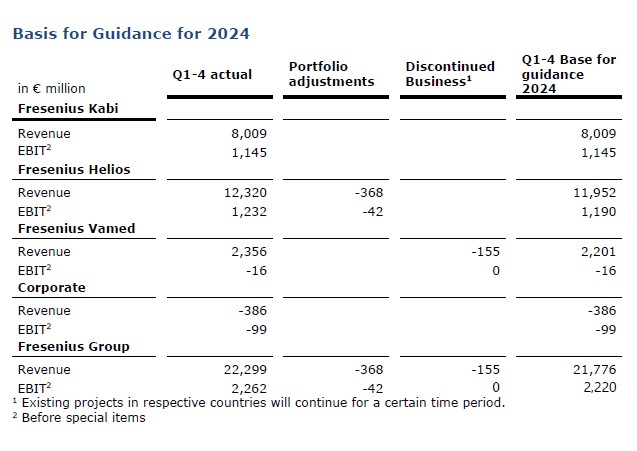
Group and segment outlook for 20241
Fresenius expects general cost inflation to continue at a slightly lower level in the 2024 financial year and the current geopolitical tensions to persist. Fresenius also expects interest rates to remain at a similar level to 2023. Irrespective of this, the Management Board considers the business outlook for the Group to be positive and expects a successful financial year 2024.
For 2024, Group organic revenue is expected to grow between 3% to 6%. Group constant currency EBIT2 is expected to grow in the rage of 4% to 8%.
Fresenius Kabi expects organic revenue growth in a mid-single-digit percentage range in 2024. The EBIT margin2 is expected to be around 15% (structural margin band: 14% to 17%). Fresenius Helios expects organic revenue to grow in a low to mid-single digit percentage range in 2024. The EBIT margin2 is expected to be within the structural margin band of 9% to 11%. Fresenius Vamed expects organic revenue to grow (Continued Business) in a mid-single-digit percentage range in 2024. The EBIT margin2 is expected to be 1 to 2 below the structural margin band of 4% to 6%.
1 For the prior-year basis please see table “Basis for Guidance for 2024”
2 Before special items
This release contains forward-looking statements that are subject to various risks and uncertainties. Future results could differ materially from those described in these forward-looking statements due to certain factors, e.g. changes in business, economic and competitive conditions, regulatory reforms, results of clinical trials, foreign exchange rate fluctuations, uncertainties in litigation or investigative proceedings, the availability of financing and unforeseen impacts of international conflicts. Fresenius does not undertake any responsibility to update the forward-looking statements in this release.
The Fresenius Group achieved a sound climate-rating from the non-profit organization CDP of B. Further, our joint efforts as a healthcare Group in increasing ESG reporting transparency and coordinated climate-related protection measures resulted in an improved water-ranking of B-. CDP is one of the most renowned climate and environmental rankings in the capital market. Investors use the annual results to evaluate climate protection activities and climate-related risks and opportunities of the companies assessed. As a healthcare Group, we have a special responsibility both to ensure the quality of our products and services, and to protecting health and the environment.

Fresenius has successfully completed the divestment of fertility services group Eugin. As announced in November 2023, global fertility group IVI RMA (a KKR portfolio company) and GED Capital acquired Eugin for up to €500 million including earn-outs. The transaction has received all regulatory approvals.
The divestment marks another milestone in the implementation of #FutureFresenius and is in line with the company’s commitment to a simplified structure, sharper focus and accelerated performance. Furthermore, the sale proceeds will benefit Fresenius’ financial flexibility.
The sale only comprises the Eugin Group. Fresenius Helios' well-established legacy business of fertility treatments in selected hospitals and outpatient centers of Quirónsalud and Helios Germany will remain with Fresenius Helios and continue to offer fertility treatments.
This release contains forward-looking statements that are subject to various risks and uncertainties. Future results could differ materially from those described in these forward-looking statements due to certain factors, e.g. changes in business, economic and competitive conditions, regulatory reforms, results of clinical trials, foreign exchange rate fluctuations, uncertainties in litigation or investigative proceedings, the availability of financing and unforeseen impacts of international conflicts. Fresenius does not undertake any responsibility to update the forward-looking statements in this release.
Fresenius Helios will be linking digitalization even more closely with its core activities in inpatient and outpatient healthcare. The company will strengthen areas such as the digitalization of clinical processes and clinical decision making, for example through the responsible use of artificial intelligence.
Furthermore, a Digital Innovation Officer within the German Helios organization will explore innovative directions in digitalization. The implementation of digitalization processes and solutions will be the core task of the newly created function of the Head of Transformation Management at Helios. Also Quirónsalud in Spain is successfully driving forward the expansion of its leading digital processes.
In this context, Fresenius Helios will discontinue the activities of Curalie, which specializes in health apps, from the end of 2023. The Curalie subsidiaries meditec and ibs will be sold. Respective binding agreements have been signed. The business operations of the parent company Curalie GmbH and its other subsidiaries will be discontinued. The measures are in line with #FutureFresenius' intention to further focus business activities and reduce complexity.
- Fresenius makes use of the governmental compensation and reimbursement payments of up to €300 million (from the current perspective) provided for in the relief package for compensating additional costs caused by the increase in energy prices and implements the associated restrictions.
- Fresenius subsequently suspends dividend for fiscal year 2023; Fresenius Management Board members and management bodies of other companies covered by the statutory bans cannot be granted bonuses or other variable compensation components for fiscal year 2023.
- With the combination of the cash inflow of compensation and reimbursement payments and the dividend suspension, Fresenius reduces its leverage ratio (net debt/EBITDA) by around 20 to 25 basis points.
- Increasing the value of the company is clear priority on the way to #FutureFresenius.
Today, the Fresenius Management Board has decided to make use of the compensation and reimbursement payments for German hospitals in the amount of up to €300 million (from the current perspective) provided for by the "Energy Relief Package" (“Entlastungspaket Energiehilfen“) under the Hospital Financing Act (“Krankenhausfinanzierungsgesetz”) to cover increased energy costs. Today's decision of the Management Board is subject to the approval of the Supervisory Board of Fresenius Management SE, which is expected to decide on this matter on December 6, 2023. Fresenius' use of the compensation and reimbursement payments is subject to far-reaching conditions.
Fresenius therefore implements the related restrictions of the legislator. Fresenius Management Board will propose to the Annual General Meeting 2024 of Fresenius SE & Co. KGaA not to distribute a dividend for the fiscal year 2023. In addition, the Management Board members of Fresenius Management SE and management bodies of other companies covered by the statutory bans cannot be granted bonuses or other variable compensation components in the fiscal year 2023.
The decision is in line with the central objective of the #FutureFresenius strategy: the sustainable development and value enhancement of the company. The cash inflow of compensation and reimbursement payments as well as the dividend suspension will reduce the company's debt and consequently improve the leverage ratio by around 20 to 25 basis points. The reduction in debt will have a positive effect on net interest expense and ultimately on earnings per share. Furthermore, the compensation and reimbursement payments of up to €300 million (from the current perspective) will largely offset the additional costs of Helios Germany in 2023 caused directly or indirectly by the increase in energy prices.
"#FutureFresenius is our guideline for making and implementing strategically important decisions. Against this background, this is the right step for our company. We are strengthening our company’s intrinsic value. The lower level of debt affords us greater flexibility to make even better use of our market opportunities. We act with foresight and keep an eye on the sustainable development of the company and thus the future of patient care," said Fresenius CEO Michael Sen.
Fresenius is of the opinion that the statutory bans provided for in the "Energy Relief Package" („Entlastungspaket Energiehilfen“) are unconstitutional and that Fresenius' fundamental rights have been violated in view of the significant interference in the hospital financing system associated with this. Fresenius is therefore examining whether and in what form legal action should be taken.
In addition to operating performance improvement of the core business, the successfully progressing cost and efficiency program, the simplification of the Group structure through the deconsolidation of Fresenius Medical Care as well as the divestments of non-core businesses within the business segments, the compensation and reimbursement payments and the suspension of the dividend support the long-term strengthening of the Company.
Notwithstanding the legally required suspension of dividend payments for the fiscal year 2023, Fresenius maintains its dividend policy for the future. In line with its progressive dividend policy, Fresenius continues to aim to increase the dividend in line with growth in earnings per share (in constant currency, before special items), or at least maintain the dividend at the previous year's level.
This release contains forward-looking statements that are subject to various risks and uncertainties. Future results could differ materially from those described in these forward-looking statements due to certain factors, e.g. changes in business, economic and competitive conditions, regulatory reforms, results of clinical trials, foreign exchange rate fluctuations, uncertainties in litigation or investigative proceedings, the availability of financing and unforeseen impacts of international conflicts.
Fresenius does not undertake any responsibility to update the forward-looking statements in this release.
- Deconsolidation is a landmark in the implementation of the #FutureFresenius program and a historic day for both companies
- Reducing complexity is a prerequisite for greater flexibility as well as more efficient and faster decision-making and the basis for long-lasting economic success
- Fresenius remains the largest shareholder of Fresenius Medical Care with an unchanged 32 percent of the share capital
Fresenius has successfully completed the deconsolidation of Fresenius Medical Care: The change in legal form was entered in the commercial register on November 30, 2023, and thereby took effect after the Senate of the Bamberg Higher Regional Court had granted Fresenius Medical Care's applications for approval in full.
"The deconsolidation of Fresenius Medical Care is a landmark in the implementation of our #FutureFresenius strategy and a historic day for both companies. We are reducing complexity and creating the conditions for greater flexibility and more efficient and faster decision-making. Fresenius Medical Care will gain a greater degree of freedom as a result of the deconsolidation. This also means greater responsibility. Both companies can now concentrate on what they do best: working for the well-being of patients in their respective segments," said Michael Sen, CEO of Fresenius. "We are redirecting the company's focus with #FutureFresenius and creating the basis for long-lasting economic success. The solid business performance in recent quarters shows that this is the right path for us."
The shareholders of Fresenius Medical Care had already approved the change in legal form from a partnership limited by shares (KGaA) to a stock corporation (AG) by a majority of more than 99% at an Extraordinary General Meeting held on July 14, 2023. Following the change in legal form, Fresenius Medical Care is no longer part of the consolidated subsidiaries of Fresenius. Fresenius continues to hold 32 percent of Fresenius Medical Care's share capital and therefore remains the company's largest shareholder. With the deconsolidation, Fresenius Medical Care's accounting treatment will change from IFRS 5 to equity method accounting.
Fresenius Medical Care was formed in 1996 from the merger of Fresenius' dialysis division with the U.S. dialysis provider National Medical Care (NMC). The combination of Fresenius' product business and NMC's service business has made the company the world's leading and uniquely vertically integrated dialysis provider. Since then, Fresenius Medical Care has increased considerably in size and value as a result of organic growth and acquisitions: Revenue and the number of patients have increased sevenfold, while the number of employees has increased fivefold.
This press release contains forward-looking statements that are subject to certain risks and uncertainties. Future results may differ substantially from those currently anticipated due to various risk factors and uncertainties, such as changes in the business, economic, and competitive situation, changes in legislation, results of clinical trials, exchange rate fluctuations, uncertainties regarding litigation or investigative proceedings, the availability of financing, and unforeseen effects of international conflicts. Fresenius assumes no responsibility to update the forward-looking statements contained in this press release.
Fresenius Medical Care, the world's leading provider of products and services for individuals with renal diseases, resolved a legal dispute with the U.S. government, for accounts receivable in legal dispute, and entered into a final and legally binding settlement agreement today, whereby the company will receive a payment from the U.S. government.
Fresenius Medical Care had filed a complaint against the United States in 2019. This complaint sought to recover monies owed to the company by the U. S. Department of Defense under the Tricare program, for services on or before January 11, 2023.
Tricare provides reimbursement for dialysis treatments and other medical care provided to members of the military services, their dependents and retirees. The litigation challenged unpublished administrative actions by Tricare administrators to reduce the rate of compensation paid for dialysis treatments provided to Tricare beneficiaries based on a recasting of invoicing codes. Tricare administrators had acknowledged the unpublished administrative action and declined to change or abandon it.
The now executed settlement agreement resolves the dispute underlying the complaint and concludes the litigation.
As a consequence of the settlement agreement, both revenue and operating income will be positively impacted. In previous reporting periods, the negative impact related to this matter had not been treated as special item due to its operational nature. Fresenius Medical Care therefore expects a net positive impact on operating income (guidance basis)1 of approx. EUR 175 million in the 4th quarter 2023.
The company had previously expected in fiscal year 2023 operating income (guidance basis)1 to grow by a low-single-digit percentage rate, compared to previous year (2022 basis: EUR 1,540 million).
As a consequence of the settlement agreement, Fresenius Medical Care today raises its earnings outlook. The company now expects operating income (guidance basis)1 to grow by 12 to 14 percent in fiscal year 2023, compared to previous year. All other elements of the 2023 outlook, as published, remain unchanged.
In line with its disciplined financial policy, Fresenius Medical Care intends to use the agreed settlement payment to reduce its net financial debt and therefore deleverage the balance sheet.
1 Operating income, as presented in the outlook, is on a constant currency basis and excluding special items. Special items will be provided as separate KPI (“Operating income excluding special items”) to capture effects that are unusual in nature and have not been foreseeable or not foreseeable in size or impact at the time of giving guidance. These items are excluded to ensure comparability of the figures presented with the Company’s financial targets which have been defined excluding special items.
As described in FME’s public reports for FY 2022, special items included costs related to the FME25 program, the impact of the war in Ukraine, the impact of hyperinflation in Turkiye, the Humacyte investment remeasurement and the net gain related to InterWell Health. Additionally, the FY 2022 basis for the 2023 outlook was adjusted for U.S. Provider Relief Funding. For FY 2023, special items include costs related to the FME25 program, the Humacyte investment remeasurement, the costs associated with the legal form conversion and effects from legacy portfolio optimization.
This release contains forward-looking statements that are subject to various risks and uncertainties. Actual results could differ materially from those described in these forward-looking statements due to various factors, including, but not limited to, changes in business, economic and competitive conditions, legal changes, regulatory approvals, impacts related to the COVID-19 pandemic results of clinical studies, foreign exchange rate fluctuations, uncertainties in litigation or investigative proceedings, and the availability of financing. These and other risks and uncertainties are detailed in Fresenius Medical Care AG & Co. KGaA's reports filed with the U.S. Securities and Exchange Commission. Fresenius Medical Care AG & Co. KGaA does not undertake any responsibility to update the forward-looking statements in this release.
- Next step in implementing #FutureFresenius
- Divestment of Eugin Group simplifies portfolio
- Proceeds create financial flexibility
Fresenius divests Eugin Group to global fertility group IVI RMA (a KKR portfolio company) and GED Capital for up to €500 million including earn-outs. Eugin is a global leader in fertility and reproduction services offering a comprehensive range of treatments and solutions for patients on their journey to parenthood. In 2022, Eugin generated sales of €227 million.
Michael Sen, CEO of Fresenius, said: “Today, we reached another milestone in the implementation of #FutureFresenius. The decision to divest Eugin comes after careful consideration, and we believe it is in the best interest of all parties involved. This will allow us to further prioritize and strengthen our efforts in our core business areas, which, in turn, will also benefit our patients. This transaction demonstrates our active portfolio management and underlines our commitment to a simplified structure, sharper focus and accelerated performance.”
“We are thrilled to add Eugin’s operations in the US and Canada to the IVI RMA group. Our ethos of compassionate, personalized care will help ensure we deliver a world-class patient experience and successful outcomes for more patients,” said Javier Sanchez Prieto, CEO of IVI RMA. “We are pleased to have partnered with GED in this creative transaction. We’re confident that our shared vision and complementary strengths make this partnership greater than the sum of its parts, allowing IVI RMA to continue its growth in North America and GED to invest behind a leading platform in Europe and Latin America.”
Subject to regulatory approvals, closing of the transaction is expected to take place in Q1 2024.
The sale only comprises the Eugin Group. Fresenius Helios' well-established legacy business of fertility treatments in selected hospitals and outpatient centers of Quirónsalud and Helios Germany will remain with Fresenius Helios and continue to offer fertility treatments.
Lazard is acting as financial advisor and Freshfields Bruckhaus Deringer is serving as legal advisor to Fresenius.
About IVI RMA Global
IVI RMA is a world-leading Reproductive Medicine group, backed by KKR. It is committed to providing evidence-based fertility solutions with the greatest chance of success in the shortest time necessary to patients seeking treatment anywhere in the world. IVI RMA employs more than 4,400 people across +150 locations in 14 countries. The group maintains a team of highly trained physicians as well as renowned scientists and researchers, aligned with its vision of pioneering in the field of Reproductive Medicine.
About GED
GED is a Spanish, private, and independent asset manager, founded in 1996 by a group of professionals with large experience in the sector and with a consolidated industrial and management track record. It currently manages more than 1,000 million euros through different investment vehicles. This acquisition is the seventh transaction of the GED’s Fund VI, and the third within the health sector.
Fresenius is a global healthcare group. We offer system-critical products and services for leading therapies for care of critically and chronically ill patients. The Fresenius Group comprises the Operating Companies Fresenius Kabi and Fresenius Helios and the Investment Companies Fresenius Medical Care (in accordance with IFRS 5) and Fresenius Vamed.
- Continued solid organic growth in Care Enablement and Care Delivery including sequentially stable same market treatment growth in the U.S.
- Successful execution on turnaround plan driving productivity improvements in Care Delivery and pricing in Care Enablement
- FME25 transformation savings fully on track
- Continued execution on portfolio optimization strategy
- FY 2023 earnings outlook raised
Helen Giza, Chief Executive Officer of Fresenius Medical Care, said: “Our unwavering focus on executing against our strategic plan and the successful implementation of turnaround measures to date, continue to translate into improved operating performance. Notably in the third quarter, we continued to unlock sustainable savings with our FME25 program, further improved our labor productivity and continued to execute on our portfolio optimization plan. Given our improving performance for the first nine months of the year and solid expectations for the remainder of the year, we confidently upgrade our full year earnings outlook.”
Successful execution against the strategic plan
Fresenius Medical Care has continuously advanced its structural change. After implementing the new operating model along with the corresponding new financial reporting, the simplification of the governance structure through a legal form conversion remains on track to be completed by 1 December 2023.
Fresenius Medical Care continues to successfully execute on its operational efficiency and turnaround plans. In the third quarter, the FME25 transformation program delivered EUR 97 million of savings, resulting in EUR 232 million for the first nine months of the year. The Company is fully on track to achieve sustainable savings of EUR 250 to 300 million by year end 2023 and EUR 650 million by year end 2025.
Moreover, Fresenius Medical Care is executing its portfolio optimization plan to exit non-core and dilutive assets. In the third quarter, the Company entered into an agreement to sell National Cardiovascular Partners (NCP) with 21 facilities providing outpatient cardiac catheterization and vascular laboratory services, which are included in the U.S. Care Delivery business, in connection with its Legacy Portfolio Optimization program.
1 For FY 2022, special items included costs related to the FME25 program, the impact of the war in Ukraine, the impact of hyperinflation in Turkiye, the Humacyte investment remeasurement and the net gain related to InterWell Health. Additionally, the FY 2022 basis for the 2023 outlook was adjusted for U.S. Provider Relief Funding. For FY 2023, special items include costs related to the FME25 program, the Humacyte investment remeasurement, the costs associated with the legal form conversion and effects from legacy portfolio optimization. For further details please see the reconciliation attached to the Press Release.
2 Net income attributable to shareholders of Fresenius Medical Care AG & Co. KGaA
In line with the Company’s disciplined financial policy, Fresenius Medical Care has already refinanced a bond of EUR 650 million, maturing in November 2023. The Company is using a mix of long-term bank financing at very attractive financing conditions as well as cash and short-term debt. Upcoming extraordinary cash inflows will enable the Company to further delever.
Revenue development supported by solid organic growth
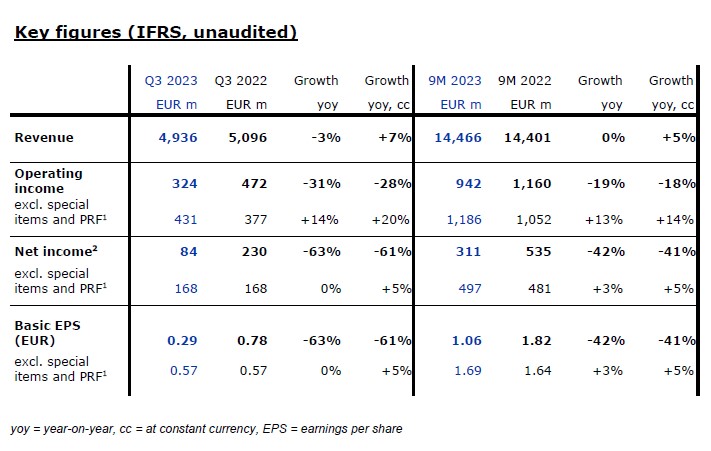
Revenue decreased by 3% to EUR 4,936 million in the third quarter (+7% at constant currency, +7% organic).
Care Delivery revenue decreased by 4% to EUR 3,974 million (+6% at constant currency, +7% organic).
In Care Delivery U.S., revenue declined by 3% (+4% at constant currency, +5% organic). A negative exchange rate effect and a decrease in dialysis days was partially offset by organic growth, which was supported by a favorable impact from the value-based care business, reimbursement rate increases and a favorable payor mix. The annualization effect of COVID-19-related excess mortality in the late-stage CKD (Chronic Kidney Disease) and ESRD (End-Stage Renal Disease) population continues to weigh on same market treatment growth (-0.4%). Adjusted for the exit from less profitable acute care contracts same market treatment growth was at +0.2%.
In Care Delivery International, revenue declined by 7% (+14% at constant currency, +16% organic). A negative exchange rate effect and the impact of closed or sold clinics was partially offset by organic growth, which was driven by a significant effect of hyperinflation in various markets. Despite the annualization effect of COVID-19-related excess mortality, same market treatment growth was positive at 1.6%.
Care Enablement revenue declined by 3% to EUR 1,330 million (+5% at constant currency, +5% organic). The negative exchange rate effects have been partly offset by higher sales of in-center disposables, machines for chronic treatment and home hemodialysis products as well as higher average sales prices.
Within Inter-segment eliminations, revenue for products transferred between the operating segments at fair market value declined by 10% to EUR 368 million (-1% at constant currency).
In the first nine months, revenue was stable at EUR 14,466 million (+5% at constant currency, +5% organic). Care Delivery revenue was stable at EUR 11,602 million (+4% at constant currency, +5% organic), with stable revenue for Care Delivery U.S. (+2% at constant currency, +3% organic), and a revenue decline of 1% for Care Delivery International (+13% at constant currency, +14% organic). Care Enablement revenue was stable at EUR 3,965 million (+5% at constant currency, +5% organic). Inter-segment eliminations declined by 5% and amounted to EUR 1,101 million (stable at constant currency).3
3 The Company transfers products between segments at fair market value. The associated internal revenues and expenses and any remaining internally generated profit or loss for the product transfers are recorded within the operating segments initially, are eliminated upon consolidation and are included within “Inter-segment eliminations”.
Earnings development driven by productivity improvements and FME25 savings
Operating income decreased by 31% to EUR 324 million (-28% at constant currency), resulting in a margin of 6.6% (Q3 2022: 9.3%). Operating income excluding special items and U.S. Provider Relief Funding (PRF)1 increased by 14% to EUR 431 million (+20% at constant currency), resulting in a margin of 8.7% (Q3 2022: 7.4%).
Operating income in Care Delivery decreased by 34% to EUR 332 million (-29% at constant currency), resulting in a margin of 8.4% (Q3 2022: 12.1%). Operating income excluding special items and PRF1 increased by 11% to EUR 410 million (+17% at constant currency), resulting in a margin of 10.3% (Q3 2022: 9.0%). This was mainly driven by business growth, savings from the FME25 program and lower personnel expenses resulting from improved productivity. The operating income development was negatively impacted by lower income attributable to a non-recurring consent payment for certain pharmaceuticals, inflationary cost increases as well as by foreign currency translation.
Operating income in Care Enablement amounted to EUR -1 million (Q3 2022: EUR -26 million), resulting in a margin of -0.1% (Q3 2022: -1.9%). Operating income excluding special items increased by 197% to EUR 22 million (+217% at constant currency), resulting in a margin of 1.7% (Q3 2022: 0.5%). The improvement compared to the previous year’s quarter was mainly driven by increased volumes, improved pricing and savings from the FME25 program. These effects were partially offset by inflationary cost increases and negative foreign currency transaction effects.
Operating income for Corporate amounted to EUR -8 million (Q3 2022: EUR -7 million). Excluding special items, operating income amounted to EUR -2 million (Q3 2022: EUR -6 million).
In the first nine months, operating income decreased by 19% to EUR 942 million (-18% at constant currency), resulting in a margin of 6.5% (9M 2022: 8.1%). Excluding special items and PRF1, operating income increased by 13% to EUR 1,186 million (+14% at constant currency), resulting in a margin of 8.2% (9M 2022: 7.3%). In Care Delivery, operating income declined by 19% to EUR 1,001 million (-18% at constant currency), resulting in a margin of 8.6% (9M 2022: 10.6%). In Care Enablement, operating income decreased to EUR -24 million (9M 2022: EUR 33 million), resulting in a margin of -0.6% (9M 2022: 0.8%). Operating income for Corporate amounted to EUR -23 million (9M 2022: EUR -101 million).
Net income2 decreased by 63% to EUR 84 million (-61% at constant currency). Excluding special items and PRF1, net income2 remained stable at EUR 168 million (+5% at constant currency).
In the first nine months, net income2 declined by 42% to EUR 311 million (-41% at constant currency). Excluding special items and PRF1, net income2 increased by 3% to EUR 497 million (+5% at constant currency).
Basic earnings per share (EPS) decreased by 63% to EUR 0.29 (-61% at constant currency). EPS excluding special items and PRF1 remained stable at EUR 0.57 (+5% at constant currency).
In the first nine months, EPS declined by 42% to EUR 1.06 (-41% at constant currency). Excluding special items and PRF1, EPS increased by 3% to EUR 1.69 (+5% at constant currency).
Strong cash flow development
In the third quarter, Fresenius Medical Care generated EUR 760 million of operating cash flow (Q3 2022: EUR 658 million), resulting in a margin of 15.4% (Q3 2022: 12.9%). The increase in net cash provided by operating activities is the result of the change in certain working capital items, in particular due to the recoupment of advanced payments during 2022, which had been received under the U. S. Medicare Accelerated and Advance Payment Program in 2020.
In the first nine months, operating cashflow amounted to EUR 1,910 million (9M 2022: EUR 1,568 million), resulting in a margin of 13.2% (9M 2022: 10.9%).
Free cash flow4 amounted to EUR 626 million in the third quarter (Q3 2022:
EUR 501 million), resulting in a margin of 12.7% (Q3 2022: 9.8%). In the first nine months, Fresenius Medical Care generated free cash flow of EUR 1,480 million (9M 2022: EUR 1,082 million), resulting in a margin of 10.2% (9M 2022: 7.5%).
Outlook
The Company continues to expect for 2023 revenue to grow at a low to mid-single digit percentage rate (2022 basis: EUR 19,398 million).
Based on the earnings development for the first nine months of the year and solid business expectations for the remainder of the year, Fresenius Medical Care raises its earnings outlook for 2023. The Company now expects operating income to grow at a low-single digit percentage rate (2022 basis: EUR 1,540 million; previous target: remain flat or decline by up to a low-single digit percentage rate)5.
The Company’s target to achieve an operating income margin of 10 to 14% by 2025 remains unchanged.
4 Net cash provided by / used in operating activities, after capital expenditures, before acquisitions, investments, and dividends
5 Revenue and operating income, as referred to in the outlook, are both on a constant currency basis and excluding special items. Special items will be provided as separate KPI (“Revenue excluding special items”, “Operating income excluding special items”) to capture effects that are unusual in nature and have not been foreseeable or not foreseeable in size or impact at the time of giving guidance. These items are excluded to ensure comparability of the figures presented with the Company’s financial targets which have been defined excluding special items.
For FY 2022, special items included costs related to the FME25 program, the impact of the war in Ukraine, the impact of hyperinflation in Turkiye, the Humacyte investment remeasurement, and the net gain related to InterWell Health. Additionally, the basis (FY 2022) for the 2023 outlook was adjusted for Provider Relief Funding. For FY 2023, special items include costs related to the FME25 program, the Humacyte investment remeasurement, the costs associated with the legal form conversion and effects from legacy portfolio optimization. For further details please see the reconciliation attached to the Press Release.
Patients, clinics and employees
As of September 30, 2023, Fresenius Medical Care treated 341,793 patients in 4,014 dialysis clinics worldwide and had 123,106 employees (headcount) globally, compared to 130,295 employees as of September 30, 2022.
Conference call
Fresenius Medical Care will host a conference call to discuss the results of the third quarter on November 2, 2023 at 3:30 p.m. CET / 10:30 a.m. EDT. Details will be available on the Fresenius Medical Care website in the “Investors” section. A replay will be available shortly after the call.
Please refer to our statement of earnings included at the end of this news and to the attachments as separate PDF files for a complete overview of the results of the third quarter and first nine months of 2023. Our 6-K disclosure provides more details.
This release contains forward-looking statements that are subject to various risks and uncertainties. Actual results could differ materially from those described in these forward-looking statements due to various factors, including, but not limited to, changes in business, economic and competitive conditions, legal changes, regulatory approvals, impacts related to COVID-19, results of clinical studies, foreign exchange rate fluctuations, uncertainties in litigation or investigative proceedings, and the availability of financing. These and other risks and uncertainties are detailed in Fresenius Medical Care AG & Co. KGaA's reports filed with the U.S. Securities and Exchange Commission. Fresenius Medical Care AG & Co. KGaA does not undertake any responsibility to update the forward-looking statements in this release.
Implementation of measures as presented herein may be subject to information and consultation procedures with works councils and other employee representative bodies, as per local laws and practice. Consultation procedures may lead to changes on proposed measures.